The Ultimate Travel Guide to Jökulsárlón Glacier Lagoon and the Blue Ice Caves of Iceland
In the vast, otherworldly landscape of Iceland’s southeast coast lies a place where time itself feels frozen. The Jökulsárlón Glacier Lagoon and its neighboring Blue Ice Caves represent the raw, beating heart of the island’s glacial forces. This is not merely a destination; it is an experience that engages all the senses, a profound encounter with the power and beauty of nature. From the serene, iceberg-dotted waters of the lagoon to the crystalline, sapphire depths of a millennia-old ice cave, this region offers a journey into a dynamic, living geology. This comprehensive guide will navigate you through every aspect of planning your visit, ensuring you are prepared to witness one of the planet’s most spectacular natural wonders.
Part 1: Jökulsárlón Glacier Lagoon – The Diamond Beach’s Icy Playground
Jökulsárlón (pronounced yoe-koo-sar-lon) is Iceland’s deepest and most famous glacier lagoon. Formed only in the mid-1930s due to the rapid retreat of the Breiðamerkurjökull glacier, it has been growing ever since, now covering an area of over 18 square kilometers. The lagoon serves as a holding bay for icebergs that calve from the glacier’s edge, beginning a slow, majestic journey towards the Atlantic Ocean.
The Lagoon Experience
Your first sight of Jökulsárlón is unforgettable. A vast expanse of milky-blue, ice-choked water stretches before you, backed by the towering, craggy face of the glacier. The silence is punctuated only by the groans and cracks of the ice and the calls of seabirds. The icebergs themselves are sculptures in motion, displaying an astonishing palette of colors—from stark, brilliant white and deep, aquatic blue to streaky, volcanic black from ancient ash layers. This is a landscape in constant, gentle flux.
Boat Tours: The absolute best way to experience the lagoon is from the water. Two main types of tours are available:
Amphibious Boat Tours: These are large, open-air vehicles that drive directly from the shore into the water. They are stable, suitable for all ages, and provide an excellent, elevated vantage point. The guides offer insightful commentary on the lagoon’s formation and ecology.
Zodiac Tours: For a more adventurous and intimate experience, Zodiac boats allow you to weave deeper into the lagoon, getting closer to the glacier face and larger icebergs. You will be provided with a flotation suit to stay warm and dry. This option is more thrilling but has age and height restrictions.
Shoreline Walk: Simply walking along the eastern shore of the lagoon is a rewarding activity. You can spend hours watching the icebergs drift by, each one a unique masterpiece. The perspective from land offers fantastic photographic opportunities, especially with the glacier in the background.
Diamond Beach (Breiðamerkursandur)
Directly across the road, where the lagoon meets the sea via a short channel, lies the world-famous Diamond Beach. This is where the icebergs from Jökulsárlón make their final journey, washing up on the black sand beach in a stunning contrast of ice and volcanic material.
The sight of these glittering, crystal-clear ice chunks scattered across the stark black sand is surreal. The waves crash, rearranging the ice sculptures with each tide. Sunrise and sunset are particularly magical times to visit, as the low sun sets the ice ablaze with golden and pink light. It’s a photographer’s paradise and a place for quiet contemplation of nature’s endless cycle of creation and decay.
Part 2: The Blue Ice Caves – A Journey into the Glacier’s Heart
While Jökulsárlón shows you the end of a glacier’s life, a visit to a Blue Ice Cave allows you to step inside its living body. These are not permanent structures; they form naturally each winter inside glaciers like Vatnajökull (Europe’s largest ice cap) as meltwater carves channels and tunnels through the ice. When the water freezes in winter, it leaves behind ethereal, crystal-blue caverns that are accessible for a limited season.
The Ice Cave Experience
Visiting an ice cave is a profound and humbling adventure. It requires a guided tour for safety, as conditions are constantly changing. After meeting your guide at a designated location, you’ll typically be driven in a modified 4×4 “super jeep” across rugged glacial terrain to the cave entrance.
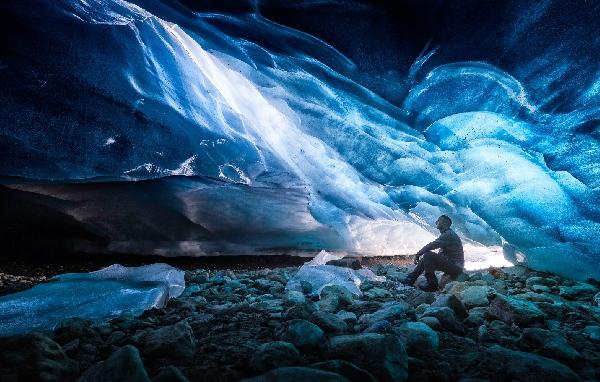
Stepping inside is like entering another world. The outside noise fades, replaced by a profound silence. The ice absorbs light, creating an intense, saturated blue glow that seems to emanate from within the walls themselves. This blue color is a result of the ice being so densely compressed that it absorbs all colors of the spectrum except blue, which it scatters back to our eyes. You will walk on frozen riverbeds, touch ice that is centuries old, and witness stunning formations like frozen waterfalls and intricate ice patterns.
Seasonality is Crucial: The prime season for visiting natural ice caves is from November to March. Outside of this window, the caves are generally unstable and too dangerous to enter due to melting. Always book with a reputable tour operator who monitors conditions daily.
Physical Requirements: While not overly strenuous, you should be prepared for a short hike over uneven terrain and be able to bend and crouch in certain sections of the cave.
Safety First: Your guide will provide necessary safety equipment, usually a helmet and crampons for your shoes. It is imperative to follow their instructions at all times.
Part 3: Planning Your Visit – A Practical Itinerary
Getting There
The Jökulsárlón area is located in southeast Iceland, approximately 380 km (236 miles) from Reykjavík.
By Car: The most flexible option. Drive Route 1 (the Ring Road) east from Reykjavík. The journey is spectacular but long (about 5 hours non-stop). It is highly recommended to break up the drive with stops at waterfalls like Seljalandsfoss and Skógafoss, the black sand beach at Vík, and Skaftafell National Park.
By Guided Tour: Numerous multi-day tours depart from Reykjavík, covering the South Coast highlights, including Jökulsárlón and an ice cave tour. This is a hassle-free option that provides expert local knowledge.
By Bus: Public bus services like Straeto run along the Ring Road, but schedules can be infrequent, and they do not take you to specific tour meeting points for ice caves. This option offers limited flexibility.
Local Insight: Do not rely on Google Maps or other apps for real-time road conditions in winter. Always check www.road.is and www.safetravel.is before setting out. Winter driving requires extreme caution, a 4×4 vehicle, and familiarity with driving in icy and windy conditions.
Sample One-Day Itinerary
Morning (8:00 AM): Arrive at Jökulsárlón. If you’ve booked a boat tour, this is a great time to do it, as the morning light is beautiful and it’s often less crowded.
Late Morning (10:30 AM): Cross the road to Diamond Beach. Spend an hour exploring, taking photos, and watching the waves interact with the ice.
Lunch (12:00 PM): Have a packed lunch in your car or visit the nearby food truck or café for warm soup and coffee.
Afternoon (1:30 PM): Meet your guided ice cave tour at their designated meeting point (usually a 20-30 minute drive from the lagoon). Embark on your 3-4 hour ice cave adventure.
Late Afternoon (5:00 PM): Return from the ice cave tour. If energy permits, take one last stroll along the lagoon as the late afternoon light casts long shadows.
Where to Stay & Eat
This is a remote region, so accommodation options are limited and book up quickly.
Accommodation: Look for hotels, guesthouses, or farm stays in the towns of Höfn (about an hour’s drive east), Skaftafell (about an hour’s drive west), or in smaller rural guesthouses along Route 1. Booking many months in advance is essential, especially for summer.
Food: There is a small café at Jökulsárlón serving basic snacks, hot drinks, and light meals. Your best bet is to:
Pack a Lunch: Bring sandwiches, fruit, and snacks from a supermarket in a larger town like Vík or Höfn.
Food Trucks: Often parked near the lagoon, offering excellent lobster rolls (Höfn is famous for its langoustine) and hearty lamb soup.
Höfn: This fishing town has several excellent restaurants specializing in fresh seafood. It’s the perfect place for a rewarding dinner after a long day of exploration.
Part 4: Cultural and Environmental Context
The Power of Vatnajökull
The entire experience is dominated by Vatnajökull, Europe’s largest ice cap by volume. In Icelandic culture, glaciers are not just frozen water; they are powerful entities, almost living beings. They shape the land, dictate the weather, and feature prominently in Icelandic sagas and folklore as places of both danger and mystery. The respect Icelanders have for their glaciers is palpable and something visitors should emulate.
A Landscape in Flux
Visiting Jökulsárlón is also a direct lesson in climate change. The lagoon’s rapid expansion since its formation is a visible testament to glacial retreat. The icebergs calving into the lagoon are a dramatic display of a process accelerated by warming global temperatures. This lends a certain poignancy to the visit—you are witnessing something breathtakingly beautiful that is also a sign of significant planetary change.
Local Insight: The Icelandic word “jökull” means glacier. You will see it in many place names, like Vatnajökull (“Water Glacier”) and Breiðamerkurjökull (“Broad Forest Glacier”). Understanding this simple term helps you read the map and connect with the language.
Essential Travel Tips and Final Insights
When to Go:
Summer (June-August): Accessible for lagoon tours; 24-hour daylight; lush green landscapes; no natural ice caves.
Winter (November-March): Prime for ice caves; dramatic light with short days; chance to see Northern Lights; challenging weather and road conditions.
Shoulder Seasons (April-May, September-October): A good balance with fewer crowds, but natural ice caves are typically inaccessible.
What to Wear: There is no bad weather, only bad clothing. This is an Icelandic mantra for a reason.
Base Layer: Thermal wool or synthetic underwear.
Mid Layer: Fleece or down jacket for insulation.
Outer Layer: Waterproof and windproof jacket and pants.
Footwear: Sturdy, waterproof hiking boots with good grip.
Accessories: Hat, gloves, scarf/buff. For ice caves, your tour operator will provide crampons.
Booking Tours: Book your boat tour and especially your ice cave tour well in advance. Ice cave tours have very limited group sizes and sell out months ahead for the peak season.
Photography:
- A tripod is essential for low-light conditions at Diamond Beach or inside ice caves.
- A polarizing filter can help reduce glare on the water and ice.
- Bring extra batteries, as cold weather drains them quickly.
- A wide-angle lens is perfect for capturing the vastness of the lagoon and interior of caves.
Respect the Environment: This is a fragile ecosystem. Do not climb on icebergs on Diamond Beach (it’s extremely dangerous), and do not leave any litter behind. Take only photographs, leave only footprints.
A journey to Jökulsárlón Glacier Lagoon and the Blue Ice Caves is more than a checkbox on a travel itinerary; it is an immersion into the elemental forces that have shaped Iceland. It’s the crunch of ice underfoot, the profound silence of an ancient cave, the awe-inspiring sight of a diamond-strewn beach, and the humbling realization of nature’s immense power and transience. With careful planning and respectful curiosity, this trip will leave you with memories that are as enduring as the ice itself.