The Golden Circle & Reykjavík: A Comprehensive Travel Guide
This guide details one of Iceland’s most iconic and accessible routes: a journey from the vibrant capital of Reykjavík, through the historic and geological wonders of Þingvellir (Thingvellir) National Park, to the explosive geothermal activity of the Geysir Geothermal Area, and culminating in the powerful beauty of Gullfoss waterfall. Collectively known as the Golden Circle, this route offers a profound insight into Iceland’s unique landscape, history, and culture, all within a day’s trip from the capital.
1. Reykjavík: The Northernmost Capital
Reykjavík, often a traveler’s first and last stop in Iceland, is a city that perfectly blends small-town charm with cosmopolitan energy. Its colorful rooftops, innovative culinary scene, and rich artistic culture make it more than just a gateway; it’s a destination in itself.
Key Attractions in Reykjavík
Hallgrímskirkja Church: This towering Lutheran parish church is Reykjavík’s most iconic landmark. Its unique expressionist architecture is inspired by the basalt lava flows of Iceland’s landscape. Visitors can take an elevator to the top of the bell tower for a panoramic 360-degree view of the city and its surrounding mountains and ocean.
Harpa Concert Hall: A stunning architectural masterpiece on the waterfront, Harpa’s facade is made of geometric glass panels that reflect the sky, sea, and city lights. Even without attending a concert, it’s worth exploring its interior, enjoying the views, and visiting its shops and cafes.
Perlan (The Pearl): Situated on Öskjuhlíð hill, Perlan offers another excellent viewpoint. It houses a natural history museum and a stunning indoor ice cave, providing a taste of Iceland’s glaciers regardless of the season.
Sun Voyager (Sólfar): This elegant steel sculpture on the seaside promenade resembles a Viking longship but is officially an “ode to the sun.” It’s a popular spot for photography, especially at sunset.
The Old Harbour: A hub of activity, the old harbour is the departure point for whale watching, puffin tours, and ferry trips to Viðey Island. It’s also home to excellent seafood restaurants and the Icelandic Maritime Museum.
Food & Drink in Reykjavík
Reykjavík’s food scene is a highlight, moving far beyond its infamous fermented shark.
Traditional Icelandic Fare: For an authentic taste, try Plokkfiskur (a hearty fish stew), Lamb Soup (Kjötsúpa), or fresh seafood like Arctic char and cod. Aðalbær Jörundur is a classic spot for Plokkfiskur.
The Hot Dog (Pylsa): A national institution. The must-try is “eina með öllu” (one with everything) from Bæjarins Beztu Pylsur, a famous hot dog stand.
New Nordic Cuisine: Reykjavík boasts several world-class restaurants. Dill and Óx offer innovative tasting menus using local, foraged ingredients. For a more accessible yet exceptional experience, try Grillmarkaðurinn (Grill Market) or Matarkjallarinn (Food Cellar).
Café Culture: Icelanders are avid coffee drinkers. Spend a morning in a cozy café like Reykjavík Roasters or Kaffibrennslan, enjoying a coffee and a kleina (a twisted donut).
Accommodation in Reykjavík
Accommodation ranges from luxury hotels to budget-friendly hostels and guesthouses.
Luxury: Canopy by Hilton Reykjavík City Centre, Tower Suites Reykjavík, 101 Hotel.
Mid-Range: Alda Hotel, Reykjavík Konsulat Hotel, Curio Collection by Hilton.
Budget/Hostels: Kex Hostel, Loft Hostel, Galaxy Pod Hostel.
Tip: Book well in advance, especially during the summer and winter holiday seasons.
Transportation: Getting To and Around Reykjavík
Keflavík International Airport (KEF): The main international airport is about 50 minutes from Reykjavík. The most common ways to get to the city are by airport bus (Flybus or Airport Direct), which offers drop-offs at major bus terminals and select hotels, or by rental car.
Within Reykjavík: The city center is very walkable. For longer distances, the Strætó public bus system is reliable. Taxis are available but expensive. Renting a car is unnecessary for exploring just the city but is ideal for the Golden Circle.
2. Þingvellir (Thingvellir) National Park
A UNESCO World Heritage Site, Þingvellir is a place of immense historical, cultural, and geological significance. It is located approximately 40 km (25 miles) northeast of Reykjavík.
Geological Wonder: The Mid-Atlantic Ridge
Þingvellir lies in a rift valley on the Mid-Atlantic Ridge, the boundary between the North American and Eurasian tectonic plates. These plates are pulling apart at a rate of about 2.5 cm per year, and visitors can literally walk between two continents. The dramatic landscape is marked by sheer cliff faces, fissures, and lava fields.
Almannagjá Gorge: This massive gorge forms the North American plate’s boundary. A well-maintained path runs through it, offering stunning views and leading to the iconic Öxarárfoss waterfall.
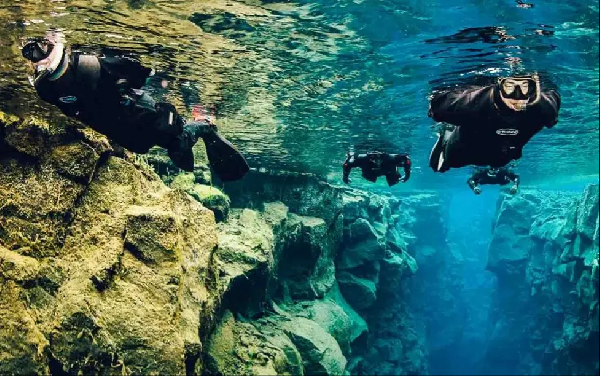
Silfra Fissure: A crack filled with unbelievably clear glacial meltwater between the tectonic plates. It is one of the world’s top snorkeling and diving spots, offering visibility of over 100 meters. This activity requires a pre-booked tour with a specialized operator and a drysuit.
Historical Significance: The Birthplace of a Nation
In 930 AD, Iceland’s founding fathers established the Alþingi, one of the world’s oldest extant parliamentary institutions. It met annually at Þingvellir for over 800 years. Chieftains and their followers would travel from across the country to settle disputes, make laws, and govern the Icelandic Commonwealth.
Lögberg (Law Rock): The focal point of the Alþingi. From this rocky outcrop, the Lawspeaker would recite the laws of the land aloud to the assembled crowd. Its exact location has shifted over the centuries.
Þingvallakirkja (The Church) and Þingvallabær (The Farm): The small church and the old farmstead add to the historical atmosphere of the site.
Practical Information for Þingvellir
Transportation: The park is easily accessible by car via Route 36. Parking fees apply and can be paid at service centers or via automated machines. Many guided bus tours of the Golden Circle include Þingvellir as their first stop.
Facilities: The main visitor center (Þingvallabaer) offers exhibitions, a café, restrooms, and information. There are multiple walking trails of varying lengths and difficulty.
Time Required: Plan for at least 2-3 hours to explore the main sites on foot.
3. Geysir Geothermal Area
Located in the Haukadalur Valley, about 60 km from Þingvellir, this geothermal field is a bubbling, steaming, and explosive display of the earth’s raw power. The area is home to numerous hot springs, fumaroles, and two prominent geysers.
The Geysers: Strokkur and The Great Geysir
Strokkur: This is the star of the show today. Strokkur erupts reliably every 5-10 minutes, shooting a column of boiling water 15-20 meters (50-65 feet) into the air. Watching the water dome bulge and then explosively release is a mesmerizing experience.
The Great Geysir: This is the namesake for all geysers worldwide. While it is mostly dormant now, it has been known to erupt infrequently after earthquake activity. Its history is far more impressive than its current state, but it remains a historically significant site.
Exploring the Area
The geothermal field is compact and easily walkable via a circular path. Visitors can get very close to Strokkur (while staying on marked paths for safety) and feel the heat from the steam vents and see vividly colored mineral deposits around the hot springs.
Practical Information for the Geysir Area
Transportation: The area is right off Route 35. Large parking lots are available for cars and tour buses.
Facilities: There is a large service center with a hotel, restaurant, café, gift shop, and restrooms.
Safety: It is imperative to stay on marked paths at all times. The ground can be thin and unstable, and the water is scalding hot.
Time Required: One hour is typically sufficient to witness several eruptions of Strokkur and walk around the main area.
4. Gullfoss: The Golden Waterfall
The final majestic stop on the Golden Circle is Gullfoss, or “Golden Falls.” This colossal two-tiered waterfall on the Hvítá River is one of Iceland’s most powerful and breathtaking natural wonders.
The Power and Beauty of Gullfoss
The Hvítá river plummets 32 meters (105 feet) in two dramatic steps into a rugged canyon. On a sunny day, the mist from the falls creates vibrant rainbows, giving the waterfall its name. The sheer volume of water, the thunderous roar, and the raw energy are awe-inspiring. Viewing platforms at both the upper and lower levels offer different perspectives of the falls’ immense scale.
A Story of Preservation
In the early 20th century, foreign investors sought to harness Gullfoss for hydroelectric power. The story goes that Sigríður Tómasdóttir, the daughter of the farmer who owned the land, fought tirelessly to protect the waterfall. She reportedly threatened to throw herself into the falls if the project proceeded. Her efforts were ultimately successful, and she is now revered as Iceland’s first environmentalist. A memorial stone stands near the upper path in her honor.
Practical Information for Gullfoss
Transportation: Located just off Route 35, about 10 minutes from the Geysir area.
Facilities: The Gullfoss Café and shop offer food, drinks, souvenirs, and restrooms. It’s a great place to warm up after experiencing the often windy and misty conditions at the falls.
Weather & Clothing: The area is notoriously windy and wet from the spray. A waterproof and windproof jacket is essential, even on a sunny day.
Time Required: Plan for about 45 minutes to an hour to walk to both viewing platforms and take in the views.
Crafting Your Golden Circle Journey
Transportation Options
Rental Car: Offers maximum flexibility. You can start early to avoid crowds, spend as much time as you like at each location, and even add detours like the Friðheimar tomato farm or the Kerið volcanic crater. A standard 2WD car is sufficient for this route in summer; in winter, check road conditions on road.is.
Guided Bus Tour: A hassle-free option that includes transportation and commentary. Tours range from large coaches to smaller mini-bus experiences. This is ideal for those who do not wish to drive.
Private Tour: Offers a customized experience with a personal guide/driver.
A Sample One-Day Itinerary
8:00 AM: Depart from Reykjavík.
9:00 AM – 11:30 AM: Explore Þingvellir National Park. Walk through Almannagjá gorge, see Öxarárfoss waterfall, and learn about its history at the visitor center.
12:00 PM – 1:15 PM: Witness the power of the Geysir Geothermal Area. Watch Strokkur erupt multiple times and explore the steam vents.
1:30 PM – 2:30 PM: Be awed by Gullfoss waterfall. Walk to both upper and lower viewing platforms.
2:30 PM: Have lunch at the Gullfoss Café or consider a pre-booking at Friðheimar tomato farm for a unique lunch inside a greenhouse.
3:30 PM: Begin the return journey to Reykjavík, with possible stops at Kerið crater or other points of interest.
5:00 PM: Arrive back in Reykjavík.
Cultural Insights & Etiquette
Sustainability: Icelanders have a deep respect for their fragile nature. The phrase “Þetta reddast” (it will all work out) reflects a resilient spirit forged by living in a demanding environment.
Tipping: Tipping is not customary or expected in Iceland. It is not practiced in taxis, restaurants, or for tour guides. A service charge is always included in the bill.
The Elements:The weather in Iceland is famously unpredictable. The key to comfort is layering. Always have a waterproof outer layer, even if the sky is clear when you set out.
Shopping & Costs: Iceland is an expensive country. For souvenirs, consider locally made woolens (lopapeysa sweaters), skincare products from Blue Lagoon or other geothermal spas, or unique Icelandic design items.
A Journey Through Fire and Ice
The Golden Circle route from Reykjavík to Þingvellir, Geysir, and Gullfoss encapsulates the very essence of Iceland in a single, manageable loop. It connects visitors with the nation’s dramatic geological forces at Þingvellir and Geysir, its raw natural beauty at Gullfoss, and its modern cultural heart in Reykjavík. Whether experienced under the midnight sun of summer or the ethereal light of a winter’s day, this journey provides an unforgettable introduction to the Land of Fire and Ice.