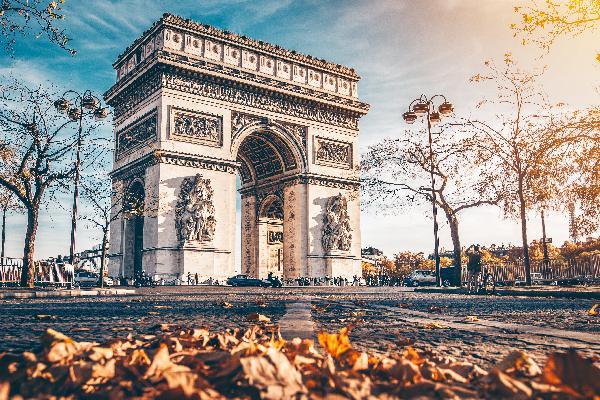
Central European Grand Tour: Frankfurt to the Rhine, Benelux, and Paris
This comprehensive travel guide details a classic circuit through the heart of Western Europe, connecting the financial hub of Germany with the romantic Rhine, the picturesque canals of the Benelux nations, and the unparalleled grandeur of Paris. The journey is a rich tapestry of history, art, architecture, and diverse cultures, all within a relatively compact geographical area.
Overview and Itinerary
This multi-country tour typically spans 14 to 21 days, allowing for a thorough exploration of each destination. The route is designed for efficiency, primarily utilizing Europe’s excellent rail network, with occasional use of regional buses or rental cars for specific segments.
Core Route: Frankfurt (Germany) -> Cologne -> Amsterdam (Netherlands) -> Zaanse Schans (Windmill Village) -> The Hague -> Rotterdam -> Antwerp (Belgium) -> Bruges -> Brussels -> Paris (France) -> Luxembourg City (Luxembourg) -> Trier (Germany) -> Heidelberg -> Frankfurt.
Best Time to Travel: Late spring (May-June) and early autumn (September-October) offer mild weather, fewer crowds, and beautiful scenery. Summer (July-August) is peak season with higher prices and more tourists, while winter can be cold but features charming Christmas markets.
Germany
Frankfurt
Often the gateway to this tour due to its major international airport, Frankfurt am Main is a city of contrasts, where modern skyscrapers stand alongside reconstructed historical buildings.
Main Attractions:
Römerberg: The historic heart of Frankfurt, featuring the Römer city hall and picturesque half-timbered houses.
St. Bartholomew’s Cathedral (Kaiserdom): A Gothic cathedral that was the election and coronation site for Holy Roman Emperors.
Museumsufer (Museum Embankment): A unique concentration of museums on both sides of the River Main, including the Städel Museum (art) and the German Film Museum.
Main Tower: The only skyscraper with a public viewing platform, offering panoramic views of the city.
Practical Information:
Getting There: Frankfurt Airport (FRA) is one of Europe’s largest hubs. The central station (Hauptbahnhof) is a major rail nexus.
Getting Around: Compact city center is walkable. An excellent tram and U-Bahn (subway) system covers the wider city.
Food Specialties: “Grüne Soße” (green sauce with herbs), “Handkäs mit Musik” (sour cheese with onions), and Apfelwein (apple wine).
Cologne (Köln)
A vibrant city on the Rhine, world-famous for its breathtaking cathedral and its jovial carnival culture.
Main Attractions:
Cologne Cathedral (Kölner Dom): A UNESCO World Heritage site and a masterpiece of High Gothic architecture. Climb the 533 steps to the south tower for a stunning view.
Old Town (Altstadt): Rebuilt after WWII, it offers charming cobblestone streets, traditional breweries (Brauhaus), and the Great St. Martin Church.
Hohenzollern Bridge: Famous for the thousands of “love locks” attached by couples. Offers excellent photo opportunities of the cathedral and river.
Museum Ludwig: Houses an excellent collection of modern art, including one of the largest Pop Art collections in Europe.
Practical Information:
Getting There: A 1-1.5 hour high-speed train (ICE) ride from Frankfurt. Cologne’s airport (CGN) also serves many European destinations.
Getting Around: The city center is very walkable. Trams and buses are efficient for longer distances.
Food Specialties: Kölsch beer (served in small, cylindrical glasses) and “Himmel un Ääd” (black pudding with mashed potatoes and applesauce).
Trier
Germany’s oldest city, founded by the Romans in 16 BC. It boasts an impressive collection of well-preserved Roman monuments.
Main Attractions:
Porta Nigra: The largest Roman city gate north of the Alps and a UNESCO World Heritage site.
Trier Cathedral (Trierer Dom): The oldest church in Germany, housing the Holy Tunic, a revered relic.
Imperial Baths (Kaiserthermen): The vast ruins of a Roman public bath complex.
Roman Amphitheatre: Once hosted gladiator battles and can hold up to 20,000 spectators.
Practical Information:
Getting There: Easily accessible by train from Luxembourg City (approx. 50 minutes) or Koblenz.
Getting Around: The main Roman sites are within walking distance of each other in the city center.
Heidelberg
A romantic city renowned for its picturesque castle ruins, historic university, and beautiful baroque old town nestled in the Neckar River valley.
Main Attractions:
Heidelberg Castle: A magnificent red sandstone ruin overlooking the city. Take the funicular railway or walk up. Don’t miss the Great Vat, a gigantic wine barrel.
Old Town (Altstadt): A long, cobblestone main street (Hauptstrasse) lined with shops, cafes, and historical buildings.
Old Bridge (Karl-Theodor-Brücke): A beautiful stone bridge offering iconic views of the castle and old town.
Philosophers’ Walk (Philosophenweg): A path on the opposite side of the Neckar River providing the best panoramic views of the city and castle.
Practical Information:
Getting There: About 1 hour by train from Frankfurt. The main station (Hauptbahnhof) is a short tram ride from the old town.
Getting Around: The core of the old town is pedestrianized. Trams and buses connect the station to the city center and castle funicular.
The Netherlands
Amsterdam
The vibrant capital known for its elaborate canal system, cycling culture, world-class museums, and tolerant, liberal spirit.
Main Attractions:
Canal Belt (Grachtengordel): A UNESCO World Heritage site. Explore by foot, bike, or a canal cruise.
Rijksmuseum: Home to Rembrandt’s “The Night Watch” and other Dutch masterpieces from the Golden Age.
Van Gogh Museum: Houses the largest collection of Vincent van Gogh’s paintings and drawings in the world.
Anne Frank House: The secret annex where Anne Frank wrote her diary. Book tickets online months in advance.
Jordaan District:A charming neighborhood with narrow streets, small bridges, indie shops, and cozy cafes.
Practical Information:
Getting There: A 3-4 hour train ride from Cologne with a change often required in Utrecht. Schiphol Airport (AMS) is a major international hub.
Getting Around: Walking and cycling are the best ways to explore the center. The GVB public transport system (trams, buses, metro) is extensive and efficient.
Food Specialties: Stroopwafels (syrup waffles), Bitterballen (deep-fried meatballs), raw herring with onions, and Dutch cheese.
Zaanse Schans (Windmill Village)
An open-air museum and working heritage site just north of Amsterdam, showcasing traditional Dutch life and industry from the 18th and 19th centuries.
Main Attractions:
Windmills: Several fully functioning windmills used for sawing wood, producing paint, and grinding mustard seeds and oil.
Clog Workshop: Demonstrations of how traditional Dutch wooden shoes (klompen) are made.
Cheese Farm: See how Dutch cheese is produced and sample various types.
Historical Houses: Green-painted wooden houses and warehouses that were relocated here to preserve them.
Practical Information:
Getting There: A 15-20 minute train ride from Amsterdam Central Station to Koog-Zaandijk, followed by a 10-minute walk. Alternatively, take a direct bus or a guided tour.
Admission: Entry to the village is free, but there are fees to enter the windmills and museums.
The Hague (Den Haag)
The seat of the Dutch government and royal family, as well as the International Court of Justice. It is an elegant city with a sophisticated cultural scene.
Main Attractions:
Binnenhof & Ridderzaal:The inner court of the Dutch parliament complex, centered around the Knights’ Hall, a stunning Gothic building.
Mauritshuis:A world-class art museum housing masterpieces like Vermeer’s “Girl with a Pearl Earring” and Rembrandt’s “The Anatomy Lesson of Dr. Nicolaes Tulp.”
Peace Palace:The iconic building housing the International Court of Justice. The visitor center is informative.
Scheveningen Pier:A popular seaside resort district within The Hague, featuring a long beach, a pier with attractions, and a promenade.
Rotterdam
A dynamic port city known for its bold modern architecture, innovative urban design, and maritime heritage, having been largely rebuilt after WWII bombing.