An Italian Grand Tour: Rome, The Tuscan Countryside, Cinque Terre, Milan & The Venetian Riviera
This comprehensive travel guide outlines a classic and immersive circuit through Italy, taking you from the ancient heart of the Roman Empire, through the rolling hills of Tuscany, along the dramatic Ligurian coast, into the fashion capital of the north, and across the romantic waterways of Venice, before returning to Rome. The journey is designed to offer a rich tapestry of art, history, cuisine, and breathtaking landscapes.
Part 1: Rome – The Eternal City (3-4 Days)
Begin your Italian adventure in Rome, a city where millennia of history are layered upon each other in a vibrant, chaotic, and utterly captivating open-air museum.
Key Attractions:
The Colosseum, Roman Forum, and Palatine Hill: Start with the iconic symbol of Rome. Booking a “skip-the-line” ticket or a guided tour is essential to save hours of waiting. The Forum was the political and social heart of the empire, while the Palatine Hill offers stunning views and is considered the birthplace of Rome.
The Vatican City: A day is needed for the world’s smallest independent state. Marvel at the artistic zenith of the St. Peter’s Basilica and climb the dome for a panoramic view. The Vatican Museums house an unparalleled collection, culminating in the sublime Sistine Chapel. Book tickets online months in advance.
The Pantheon: A breathtaking feat of Roman engineering with its unsupported dome and oculus. It’s free to enter and a quick visit.
Trevi Fountain and Spanish Steps: Visit these Baroque masterpieces early in the morning or late at night to avoid the overwhelming crowds. Tossing a coin into the Trevi Fountain ensures your return to Rome.
Piazza Navona and Campo de’ Fiori: Experience the Roman piazza life. Piazza Navona is elegant with its Bernini fountains, while Campo de’ Fiori is lively with a morning market and evening aperitivo scene.
Food & Drink:
Pasta Classics: Try Cacio e Pepe (cheese and pepper), Carbonara (egg, cheese, guanciale), and Amatriciana (tomato, guanciale, pecorino).
Supplì: Deep-fried rice balls with a mozzarella core, a perfect street food snack.
Carciofi alla Romana/Judía: Artichokes cooked Roman style (with herbs) or Jewish style (deep-fried).
Gelato: Seek out artisanal gelaterias (avoid brightly colored, piled-high displays).
Transportation & Tips:
- Rome is best explored on foot, but the Metro system is efficient for connecting major sites like the Colosseum and Vatican.
- Consider the Roma Pass for discounted entry and public transport.
- Be vigilant for pickpockets in crowded areas and on public transport.
- Dinner typically starts after 7:30 PM. Do as the Romans do and enjoy an
aperitivo (a pre-dinner drink with snacks) around 6 PM.
Part 2: Civita di Bagnoregio & Siena – The Tuscan Dream (2 Days)
Pick up your rental car and leave Rome for the Tuscan countryside. This part of the journey requires a vehicle for maximum flexibility and scenic enjoyment.
Civita di Bagnoregio – The Dying Town
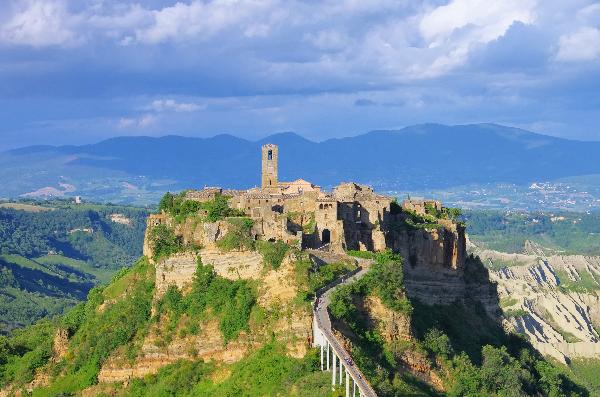
Your first stop is the magical
Civita di Bagnoregio, often called “The Dying Town.” Perched on a eroding tufa rock plateau, it is accessible only by a long pedestrian footbridge. The town feels suspended in time, with its silent alleys, ancient stone houses, and sweeping views of the “calanchi” valleys below. It’s a small visit but an unforgettable one.
Travel Tip: Arrive early to secure parking at the paid lots in Bagnoregio and to experience Civita before the day-trip crowds arrive. The walk across the bridge is steep but manageable.
Siena – The Gothic Jewel
Continue to Siena, a medieval city built on three hills, rivaling Florence in its artistic and cultural heritage.
Piazza del Campo: One of Europe’s greatest medieval squares, shell-shaped and sloping. It’s the site of the famous Palio horse race twice a year.
Siena Duomo (Cathedral): A stunning masterpiece of Italian Gothic architecture. Don’t miss the intricate marble floor, Piccolomini Library with its vibrant frescoes, and the panoramic view from the “Facciatone.”
Climb the Torre del Mangia: For the best view over the piazza and the red-tiled roofs of Siena, climb this 102-meter tall tower.
Food & Drink:
Pici Cacio e Pepe: A thicker, hand-rolled version of spaghetti served with the classic cheese and pepper sauce.
Riciarelli: Classic Sienese almond cookies.
Panforte: A dense, chewy fruit and nut cake, a traditional Christmas treat available year-round.
- Enjoy wines from the surrounding Chianti region.
Part 3: Florence & Pisa – Cradle of the Renaissance (2-3 Days)
Drive north to Florence, the birthplace of the Renaissance. You can return your car here as the city center is best explored on foot and has a ZTL (Limited Traffic Zone).
Florence Attractions:
Uffizi Gallery: Home to the world’s finest collection of Renaissance art, including works by Botticelli (“The Birth of Venus”), Leonardo da Vinci, and Michelangelo. Pre-book tickets.
Galleria dell’Accademia: Primarily visited to see Michelangelo’s monumental “David.” Booking ahead is non-negotiable.
Florence Cathedral (Duomo): Dominating the skyline with Brunelleschi’s magnificent dome. You can climb the dome for an incredible close-up view of its interior frescoes and the city panorama.
Ponte Vecchio: The only Florentine bridge to survive WWII, famous for its jewelry shops built along its edges.
Piazzale Michelangelo: Cross the river to this square for the definitive postcard view of Florence, especially at sunset.
Day Trip to Pisa
A short train ride from Florence takes you to Pisa. The main event is the
Piazza dei Miracoli (Field of Miracles), a vast green lawn holding three stunning white marble monuments:
The Leaning Tower: Climb the tilting bell tower for a unique, slightly dizzying experience. Book tickets well in advance for a timed slot.
The Cathedral (Duomo): A magnificent example of Pisan Romanesque architecture.
The Baptistery: Known for its remarkable acoustics.
Local Insight: Pisa is more than just the tower. Take an hour to wander into the city center along the Arno River for a more local experience.
Part 4: Cinque Terre – The Five Lands (2 Days)
Take a train from Florence to La Spezia, the gateway to the Cinque Terre. A car is a major hindrance here; use the efficient Cinque Terre Express train and your feet.
The Cinque Terre are five picturesque villages clinging to cliffs along the rugged Ligurian coast: Monterosso al Mare, Vernazza, Corniglia, Manarola, and Riomaggiore.
Exploring the Villages:
Hiking: The famous Blue Trail connects the villages. Check which sections are open before you go. The hike from Monterosso to Vernazza is particularly stunning but challenging.
By Train: The train is the easiest way to hop between villages. Purchase a Cinque Terre Trekking Card for trail access and unlimited train travel between the villages.
By Boat: A boat tour offers a spectacular perspective of the villages from the sea.
Food & Drink:
Trofie al Pesto: This is the birthplace of pesto. Enjoy it with trofie, a short, twisted pasta that holds the sauce perfectly.
Fritto Misto: A mixed fry of fresh fish and seafood.
Focaccia: Ligurian focaccia is world-renowned—crispy, oily, and salted to perfection.
Sciacchetrà: A prized sweet dessert wine from the region.
Travel Tip:
Stay in one of the five villages (book far ahead) or in La Spezia for more affordable options. To avoid crowds, visit in the shoulder seasons (April-May, September-October) and explore early in the morning or later in the evening after day-trippers have left.
Part 5: Milan & Sirmione – Fashion & Lake Garda (2 Days)
Catch a train from La Spezia to Milan, Italy’s dynamic financial and fashion capital.
Milan Attractions:
Milan Duomo: An astonishingly elaborate Gothic cathedral. Walk on the roof terraces for a forest of spires and statues against the skyline.
Galleria Vittorio Emanuele II: A magnificent 19th-century shopping arcade next to the Duomo. Tradition says spinning on your heel on the bull’s mosaic in the floor brings good luck.
Leonardo da Vinci’s “The Last Supper”: Housed in the refectory of Santa Maria delle Grazie. You must book tickets months in advance for a strict 15-minute viewing.
Sforza Castle: A vast fortress containing several museums, including Michelangelo’s final Pietà.
Sirmione on Lake Garda
A day trip by train or car from Milan to Sirmione is a perfect contrast to the city’s hustle. This picturesque peninsula on Lake Garda is famed for its thermal spas, azure waters, and romantic old town.
Scaliger Castle (Rocca Scaligera): A stunning moated castle at the entrance to the old town.
The Grottoes of Catullus: The extensive ruins of a Roman villa at the very tip of the peninsula, set in an olive grove with breathtaking lake views.
Spa Experience: Indulge in the natural thermal waters at one of Sirmione’s many spa facilities.
Part 6: Venice – The Floating City (2-3 Days)
A train from Milan will deliver you directly to the surreal and beautiful city of Venice, built on over 100 islands in a lagoon.
Key Attractions:
St. Mark’s Square (Piazza San Marco): The city’s main square, home to St. Mark’s Basilica with its golden mosaics and the Campanile (bell tower) for unparalleled views.
The Doge’s Palace: A masterpiece of Gothic architecture, showcasing the power and wealth of the Venetian Republic. The tour includes the Bridge of Sighs.
The Grand Canal:The city’s main “street.” Experience it by Vaporetto (water bus), specifically taking Line 1 from Piazzale Roma to St. Mark’s for a full tour.
The Rialto Bridge & Market:The iconic bridge spanning the Grand Canal. Explore the vibrant Rialto Market nearby for fish and produce.
A Gondola Ride:A classic, if touristy, experience. To make it special, take a ride in a quieter neighborhood (like Cannaregio) away from the Grand Canal chaos, preferably at dusk.
Cicchetti & Food Culture:
Cicchetti: Venice’s answer to tapas—small snacks like fried seafood, crostini, and polenta bites. Enjoy them with an “ombra” (small glass of wine) at a traditional bacaro (wine bar).
Sarde in Saor: Sweet and sour sardines with onions and raisins, a classic Venetian dish.
Risotto al Nero di Seppia: Black squid ink risotto.
Avoiding Crowds & Transportation:
- The further you wander from St. Mark’s Square, the more you’ll discover the quiet magic of Venice. Get lost in Cannaregio or Dorsoduro districts.
- The Vaporetto is your primary mode of transport. A multi-day travel card is cost-effective if you plan on moving around frequently.
The Final Leg: Rimini & Assisi – Adriatic Coast & Spiritual Heart (2 Days)
Catch a train south from Venice towards Rimini on Italy’s Adriatic coast before heading inland for a final spiritual stop in Assisi.
A Glimpse of Rimini
A popular seaside resort known for its long sandy beaches and vibrant nightlife. While often seen as just a beach town, its historic core holds gems like:
- The
Tempio Malatestiano, a remarkable Renaissance church.
- The Roman
Tiberius Bridge, still in use after 2000 years.
- The Arch of Augustus.
Ascending to Assisi
A short train ride inland brings you to Assisi, the birthplace of St. Francis. This hilltop town in Umbria is a place of profound peace and spiritual significance, even for non-religious visitors.
The Basilica of San Francesco d’Assisi: A two-level basilica built into the side of a hill. The lower church is dark and mystical, while the upper church is bright and filled with Giotto’s famous frescoes depicting the life of St. Francis.
The Basilica di Santa Chiara (St. Clare): Dedicated to St. Francis’s follower, St. Clare.
The Roman Temple of Minerva: Located in Assisi’s main square.
The Rocca Maggiore: A massive medieval fortress overlooking the town.
The Journey Concludes: Return to Rome
A final train ride from Assisi will bring you back to Rome, completing this grand loop through Italy’s most iconic regions. You will have experienced ancient history, Renaissance art, coastal drama, fashion-forward design, romantic canals, spiritual serenity—a true taste of “il bel paese.” Remember to validate regional train tickets before boarding at the green or white machines on the platform to avoid fines. Buon Viaggio!