A Traveler’s Guide to Paris, Bruges, and Brussels: A Tale of Two Capitals and a Medieval Gem
This travel guide outlines a classic European itinerary connecting the romantic French capital of Paris with two of Belgium’s most captivating destinations: the vibrant, multicultural heart of Europe, Brussels, and the perfectly preserved medieval city of Bruges. This journey offers a rich tapestry of experiences, from world-class art and grand boulevards to whimsical architecture, exquisite chocolates, and tranquil canal-side moments.
Trip Overview and Itinerary
This circular route typically starts and ends in Paris, utilizing the high-speed train network for efficient and comfortable travel. A suggested 7 to 10-day itinerary could be structured as follows:
Days 1-4: Paris – Arrival and immersion in the City of Light.
Day 5: Paris to Brussels – A short train ride to the Belgian capital.
Days 5-7: Brussels – Exploring the EU hub and its historic core.
Day 7: Day Trip to Bruges – A journey back in time to the medieval city.
Day 8: Brussels to Paris – Return to Paris for a final evening or departure.
For a more relaxed pace, an overnight stay in Bruges is highly recommended to experience the city’s magical atmosphere after the day-trippers have left.
Part 1: Paris, The City of Light
Major Attractions
The Eiffel Tower (La Tour Eiffel): The quintessential symbol of Paris. Visitors can ascend to one of its three levels for breathtaking panoramic views of the city. The surrounding Champ de Mars park is perfect for a picnic.
The Louvre Museum (Musée du Louvre): Housed in a former royal palace, the Louvre is the world’s largest art museum. Key masterpieces include the Mona Lisa, the Venus de Milo, and the Winged Victory of Samothrace. Pre-booking tickets online is essential to avoid long queues.
Notre-Dame Cathedral: While the interior remains closed for restoration after the 2019 fire, the exterior of this Gothic masterpiece is still a awe-inspiring sight on the Île de la Cité.
Arc de Triomphe and Champs-Élysées: Climb to the top of the Arc de Triomphe for one of the best views of Paris’s grand avenues, including the famous Champs-Élysées, and witness the chaos of the Étoile roundabout.
Montmartre and the Sacré-Cœur Basilica: This historic artistic neighborhood perched on a hill offers charming, winding streets, the stunning white-domed basilica of Sacré-Cœur, and panoramic views over Paris.
Culinary Delights
Parisian cuisine is an art form. Beyond the Michelin-starred restaurants, authentic experiences await.
Croissants and Patisseries: Start the day with a buttery, flaky croissant from a local boulangerie.
Steak Frites: A simple yet classic bistro dish of steak served with golden French fries.
Crêpes: Both savory (galettes, made with buckwheat) and sweet (with Nutella, sugar, or jam) are a must-try street food.
Onion Soup (Soupe à l’Oignon): A hearty, cheesy soup perfect for a cool evening.
Macarons: Delicate, colorful almond meringue sandwiches with ganache or buttercream filling. Ladurée and Pierre Hermé are famous purveyors.
Transportation in Paris
Paris has an extensive and efficient public transport system run by RATP, comprising the Métro (subway), RER (commuter trains), buses, and trams. The Paris Visite travel pass offers unlimited travel for a set number of days. Walking is also one of the best ways to discover the city’s hidden gems.
Accommodation Tips
Neighborhood choice defines a Parisian stay. The Marais is trendy and historic, Saint-Germain-des-Prés is chic and literary, the Latin Quarter is lively and student-oriented, and Montmartre is romantic and village-like. For first-time visitors, central arrondissements (1st-8th) offer proximity to major sights.
Part 2: Brussels, The Heart of Europe
Getting from Paris to Brussels
The most convenient way to travel between Paris and Brussels is by high-speed train (Thalys, now part of Eurostar). The journey takes approximately 1 hour and 30 minutes from Paris Gare du Nord to Brussels-Midi station. Booking tickets in advance is highly recommended to secure the best fares.
Major Attractions
Grand-Place (Grote Markt): A UNESCO World Heritage site and one of the most beautiful town squares in Europe. The ornate Gothic and Baroque guildhalls, the Town Hall, and the King’s House are breathtaking, especially when illuminated at night.
Manneken Pis: A small but famous bronze statue of a urinating boy, a quirky symbol of Brussels’ irreverent spirit. He is often dressed in costumes for special occasions.
Atomium: Built for the 1958 World’s Fair, this iconic structure represents an iron crystal magnified 165 billion times. Visitors can explore its spheres for exhibitions and city views.
Royal Palace of Brussels: The official palace of the King and Queen of the Belgians (though they do not live there). It is open to the public during the summer months.
European Quarter: Home to the European Parliament, Commission, and Council. The Parlamentarium visitor center offers insightful free tours into the workings of the EU.
Culinary Delights
Belgian food is hearty, delicious, and world-renowned.
Moules-Frites: The national dish – a pot of steamed mussels served with a mountain of crispy fries and a side of mayonnaise.
Belgian Waffles: Two main types: the lighter, crispier Brussels waffle (rectangular) and the denser, sweeter Liège waffle (oval with pearl sugar). Top with whipped cream, chocolate, or fruit.
Chocolate: Belgium is synonymous with high-quality chocolate. Visit artisan chocolatiers like Neuhaus, Pierre Marcolini, or Leonidas for a tasting experience.
Frites: Belgian fries are a cultural institution, typically double-fried for a crispy exterior and fluffy interior, served in a paper cone with a choice of sauces.
Beer: With over a thousand different varieties, Belgian beer is diverse and complex. From Trappist ales (e.g., Chimay, Westvleteren) to fruity Lambics (e.g., Kriek), there is a beer for every palate.
Transportation in Brussels
The STIB/MIVB network operates metro, tram, and bus services throughout Brussels. The city center is very walkable, but public transport is useful for reaching sites like the Atomium or the EU quarter. A 24 or 48-hour pass offers good value.
Accommodation Tips
The most popular areas for tourists are around the Grand-Place (Ilot Sacré) for its historic charm, the Sablon for its antique shops and upscale vibe, and Ixelles for a more local, trendy atmosphere. The EU quarter offers many business hotels but can be quiet in the evenings.
Part 3: Bruges, The Medieval Fairy-Tale
Getting from Brussels to Bruges
Regular trains run from Brussels-Midi/Central to Bruges (Brugge) approximately every 30 minutes. The journey is direct and takes about one hour. It is one of the easiest and most popular day trips from Brussels.
Major Attractions
The Belfry (Belfort) of Bruges: Dominating the main market square (Markt), this 83-meter-tall medieval bell tower offers a stunning view for those who climb its 366 steps. The carillon still rings regularly.
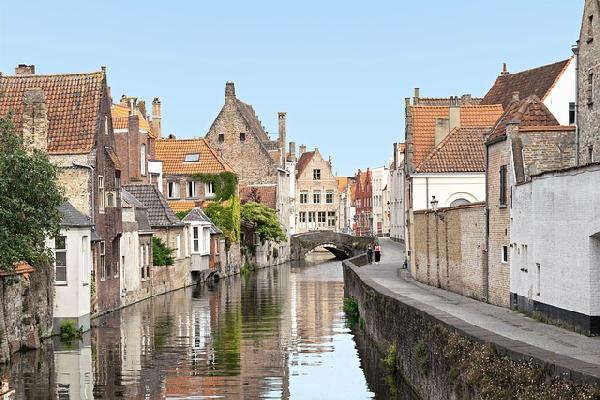
Boat Tour on the Canals: Often called the “Venice of the North,” a boat tour is the quintessential Bruges experience, offering unique perspectives of its gabled houses, romantic bridges, and hidden gardens.
The Markt and Burg Square: The two main squares are surrounded by magnificent historic buildings. The Markt is lively with cafes and horse-drawn carriages, while the Burg Square houses the stunning Gothic-style City Hall (Stadhuis).
Basilica of the Holy Blood (Heilig-Bloedbasiliek): This double chapel houses a venerated relic: a cloth believed to contain a drop of Christ’s blood brought from the Holy Land.
Begijnhof (Beguinage): A serene courtyard of white-washed houses founded in the 13th century for religious women. It is now home to Benedictine nuns and is a peaceful oasis away from the crowds.
Culinary Delights in Bruges
While similar to Brussels, Bruges has its own culinary charm.
Chocolate Shops: The city is filled with exceptional chocolatiers. Taking a chocolate-making workshop is a popular activity.
Local Beer: Seek out Brugse Zot or Straffe Hendrik, beers brewed at the local Halve Maan Brewery, which offers informative tours.
Flemish Stew (Stoverij / Carbonade Flamande):A hearty beef stew slow-cooked in Belgian beer, typically served with fries or bread.
Waterzooi:A creamy stew from Ghent, typically made with chicken (Kippenwaterzooi) or fish.
Transportation in Bruges
The historic center of Bruges is compact and best explored on foot. Cycling is also an excellent way to get around; bicycles can be rented easily. There is no need for public transport within the core medieval area.
The Overnight Advantage
A day trip captures Bruges’ beauty but misses its soul. Staying overnight allows visitors to experience the city in the early morning and late evening when the streets are quiet, the canals are still, and the medieval atmosphere is at its most magical.
Practical Information and Cultural Insights
Language
Paris: French is the official language. While English is widely spoken in tourist areas, learning a few basic phrases like “Bonjour” (Hello), “Merci” (Thank you), and “S’il vous plaît” (Please) is greatly appreciated.
Brussels & Bruges: Belgium has three official languages. Brussels is officially bilingual (French and Dutch/Flemish). Bruges is located in the Flemish region, where Dutch is the official language. English is commonly spoken in both cities’ tourist sectors.
Currency
The currency in both France and Belgium is the Euro (€). Credit and debit cards are widely accepted, but it is always wise to carry some cash for small purchases at markets or in smaller cafes.
Tipping Culture
France & Belgium: Service charge is typically included in the bill (service compris). It is customary to leave small change or round up the bill for good service. For exceptional service, leaving an extra 5-10% in cash on the table is a generous gesture.
Shopping and Souvenirs
Paris: Luxury fashion, perfume, macarons, wine, and artisnal products from markets like Marché aux Puces de Saint-Ouen.
Brussels/Bruges: High-quality chocolate, Belgian beer (check customs limits), lace (especially in Bruges), Speculoos cookies, and comic books (Belgium is the home of Tintin and The Smurfs).
A Journey Concluded
The journey from Paris to Brussels to Bruges offers a remarkable contrast of experiences: the global grandeur of Paris, the political and cultural mosaic of Brussels, and the timeless enchantment of Bruges. This itinerary weaves together art, history, gastronomy, and architecture into an unforgettable European adventure that showcases both iconic capitals and hidden gems. With efficient transportation linking these destinations, travelers can seamlessly immerse themselves in the unique character of each city.