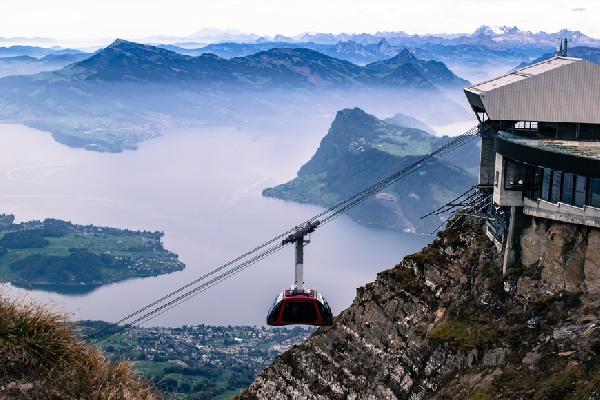
A Swiss Journey: Zurich, Lucerne, and Mount Pilatus
This travel guide details a classic Swiss itinerary, a loop starting and ending in Zurich, with Lucerne as a base for exploring the dramatic Mount Pilatus. This route is perfect for first-time visitors, offering a condensed yet rich experience of Switzerland’s urban charm, historical depth, and breathtaking alpine landscapes.
Part 1: Zurich – The Global Financial Hub with a Historic Heart
Zurich is often mistaken as Switzerland’s capital (which is actually Bern), but it undoubtedly holds the title of the country’s economic and cultural powerhouse. Nestled at the northwestern tip of Lake Zurich and straddling the Limmat River, the city seamlessly blends a modern, cosmopolitan atmosphere with a beautifully preserved Old Town.
Getting to and Around Zurich
Most international travelers will arrive at
Zurich Airport (ZRH), one of Europe’s major hubs. The airport is exceptionally well-connected to the city center.
Train: The airport has its own train station located directly beneath the terminal. Trains to Zurich Hauptbahnhof (Main Station) run every few minutes, and the journey takes only 10-15 minutes. This is the fastest and most efficient method.
Tram: Tram line 10 also connects the airport to the city center, taking about 35 minutes.
Public Transport in City: Zurich has an outstanding public transportation network of trams, buses, and S-Bahn (commuter trains). A ZurichCARD can be a great value, offering unlimited travel within the city, free or discounted museum entry, and other perks.
Key Attractions in Zurich
Altstadt (Old Town): Spend your first hours getting lost in the labyrinthine streets of the Old Town on both sides of the Limmat River. The area is a treasure trove of medieval and Renaissance buildings, charming squares, and hidden courtyards.
Bahnhofstrasse: Starting right at the main station, this is one of the world’s most exclusive and expensive shopping avenues. Even if window-shopping is your limit, the tree-lined boulevard’s elegant atmosphere is worth experiencing.
Lindenhof: This quiet hilltop square, once the site of a Roman castle, offers a stunning panoramic view over the Old Town’s rooftops, the Limmat River, and the Grossmünster. It’s a perfect spot for a peaceful break.
Grossmünster: The iconic twin-towered cathedral is a landmark of Zurich. According to legend, it was founded by Charlemagne. Climb the 187 steps of the Karlsturm tower for an unparalleled 360-degree view of the city.
Fraumünster: Directly across the river from the Grossmünster, this church is famous for its stunning stained-glass windows created by the renowned artist Marc Chagall. The vibrant blues and intricate storytelling in the glass are mesmerizing.
Lake Zurich (Zürichsee): A stroll along the lake’s promenades is a must-do. For a more immersive experience, take a boat trip. Several companies offer short round trips or longer journeys to towns along the lake, providing beautiful vistas of the city skyline and the distant Alps.
Food and Drink in Zurich
Traditional Dish: You must try Zürcher Geschnetzeltes – thinly sliced veal in a creamy white wine and mushroom sauce, typically served with Rösti (a Swiss-style hash brown). It’s the city’s signature dish.
Swiss Classics: Don’t miss Fondue or Raclette, especially in cooler weather. Many traditional restaurants, particularly in the Old Town, specialize in these cheese delicacies.
Sausages: For a quick and authentic bite, visit a Würststand (sausage stand) and try a Cervelat or Bratwurst, often served with a hard roll and mustard.
Confectionery: Satisfy your sweet tooth at one of Zurich’s legendary confiseries like Sprüngli, famous for its Luxemburgerli (mini macarons) and exquisite chocolates.
Part 2: Lucerne – The Picture-Perfect Lakeside City
The journey from Zurich to Lucerne is a short and scenic train ride of about 45-50 minutes. As you approach Lucerne, the landscape becomes more dramatic, with the lake and mountains coming into view. Lucerne feels like a storybook come to life, with its preserved medieval architecture, stunning lake setting, and the majestic Pilatus and Rigi mountains framing the horizon.
Getting from Zurich to Lucerne
Direct trains depart from Zurich Hauptbahnhof (HB) to Lucerne Hauptbahnhof frequently throughout the day. No reservation is needed; you can just buy a ticket and hop on the next train. The ride itself is part of the attraction, passing by lovely Swiss countryside and the Zugersee lake.
Key Attractions in Lucerne
Kapellbrücke (Chapel Bridge): This iconic covered wooden footbridge, dating from 1333, is the symbol of Lucerne. As you walk across, look up at the 17th-century triangular roof paintings depicting events from Lucerne’s history. Note the adjacent Wasserturm (Water Tower), an octagonal stone tower that has served as a prison, treasury, and archive.
Altstadt (Old Town): Lucerne’s Old Town, located on the north side of the Reuss River, is a compact area filled with beautifully painted historic buildings, bustling squares like the Weinmarkt, and small specialty shops. It’s perfect for an afternoon of exploration.
Museggmauer (Musegg Wall): This well-preserved 14th-century city wall stretches along the northern edge of the Old Town. You can climb up and walk along a section of it, and even enter four of its nine towers (like the Zyt Tower with its oldest clock in Lucerne) for fantastic views over the city and lake. It’s free to access.
Lion Monument (Löwendenkmal): Carved into a cliff face of sandstone, this dying lion monument is a profoundly moving tribute to the Swiss Guards who were massacred during the French Revolution in 1792. Mark Twain described it as “the most mournful and moving piece of stone in the world.”
Lake Lucerne (Vierwaldstättersee): The lake is the heart and soul of the city. A boat cruise on its fjord-like waters, surrounded by mountains, is an essential experience. Cruises range from short one-hour trips to full-day excursions to various lakeside villages.
Food and Cultural Aspects in Lucerne
Local Cuisine: Being in Central Switzerland, Lucerne offers hearty fare. Try Luzerner Chügelipastete, a vol-au-vent pastry case filled with a ragout of diced meat (often veal and pork) and mushrooms in a creamy sauce.
Lakeside Dining: Many restaurants along the lake offer beautiful views. Enjoying a coffee or a meal while watching the boats and swans is a quintessential Lucerne experience.
Cultural Insight: Lucerne has a strong musical tradition, home to a renowned symphony orchestra and an annual international music festival. Check the schedule for concerts at the Kultur- und Kongresszentrum Luzern (KKL), an architecturally stunning concert hall designed by Jean Nouvel.
Part 3: Mount Pilatus – The Dragon Mountain
The journey to the summit of Mount Pilatus (2,132 m / 6,995 ft) is not just about the destination; it’s about one of the world’s most spectacular round trips, famously known as the “Golden Round Trip.” This excursion encapsulates the Swiss mastery of engineering and their deep connection to nature.
The Golden Round Trip Itinerary
This popular route involves four different modes of transport, creating a seamless and unforgettable loop. You can start from either Lucerne or Alpnachstad. The classic route described below starts from Lucerne.
Lake Cruise from Lucerne to Alpnachstad: Begin your day with a scenic boat ride across Lake Lucerne. The journey takes about 90 minutes and offers constantly changing, breathtaking views of the mountains and shoreline villages.
Cogwheel Railway from Alpnachstad to Pilatus Kulm: At Alpnachstad, you disembark and board the Pilatus Railway. This is the world’s steepest cogwheel railway, with a maximum gradient of 48%. The 30-minute ascent is an engineering marvel, climbing through meadows, rocky outcrops, and tunnels to the summit station.
Explore Pilatus Kulm: At the top, you are rewarded with panoramic views over Lake Lucerne and 73 Alpine peaks. Walk along various viewing platforms and short hiking paths. Visit the “Dragon’s Path,” a tunnel walk through the rock with windows looking out over sheer drops, playing on the local legend that dragons once lived on the mountain.
Aerial Cableways down to Kriens: For the descent, take the large “Dragon Ride” aerial cableway down to Fräkmüntegg. From there, transfer to the smaller, panoramic “Pilatus Bob” gondolas that take you all the way down to Kriens.
Bus from Kriens to Lucerne: In Kriens, it’s a short walk to the bus stop where bus number 1 will take you back to Lucerne’s city center in about 15 minutes.
Practical Tips for Mount Pilatus
Tickets: Purchase a combined ticket for the entire Golden Round Trip. It simplifies everything and is often better value. The Swiss Travel Pass covers most of the journey (boat, bus, cableways) but only offers a 50% discount on the cogwheel railway.
Weather: Mountain weather is notoriously fickle. Check the live webcams on the Pilatus website before you go. Aim for a clear day for the best views. Even in summer, it can be cold and windy at the summit, so dress in layers.
Time: Allocate a full day for this excursion—roughly 5-6 hours from start to finish, not including extensive time at the summit.
Food: There are several restaurants at Pilatus Kulm, including a self-service restaurant and a fine-dining hotel restaurant. You can also bring your own snacks.
Crowds: This is a very popular trip. To avoid the biggest crowds, try to start early in the morning.
The Return: Lucerne to Zurich
After your descent from Mount Pilatus and your return to Lucerne, you can choose to spend another evening in Lucerne or head directly back to Zurich. The return train journey is just as straightforward as the arrival. Trains run frequently from Lucerne HB to Zurich HB until late in the evening. If you have an early flight the next day, it’s often more convenient to spend your last night in Zurich to minimize travel stress on your departure day.
General Travel Tips for Switzerland
The Swiss Travel Pass: If you are doing extensive travel within Switzerland, this pass can be an excellent investment. It offers unlimited travel on trains, buses, and boats across the country, as well as free entry to many museums and discounts on mountain excursions like Pilatus.
Punctuality: Swiss public transport is famously punctual. Trains, buses, and boats depart exactly on time. Be sure to be at your platform a few minutes early.
Costs: Switzerland is an expensive country. Budget accordingly for meals, accommodation, and activities. Picnicking with supplies from grocery stores like Coop or Migros is a great way to save money while enjoying high-quality local produce.
Language: The language in Zurich is Swiss German (though everyone speaks standard German), while in Lucerne it’s also Swiss German. However, English is widely spoken in tourist areas, hotels, and restaurants. Learning a few basic phrases like “Grüezi” (hello) and “Merci” (thank you) is always appreciated.
Shopping Hours: Most shops close by 6:30 or 7:00 PM on weekdays and are closed on Sundays, except for those in major train stations which have longer hours.
Tipping: Service charge is included in all bills. It is customary to round up the bill to the nearest franc or leave a few francs for good service in restaurants, but it is not obligatory.
A journey through Zurich, Lucerne, and Mount Pilatus offers a perfect microcosm of Switzerland’s diverse appeal—the sophistication of its cities, the charm of its history, and the raw, majestic beauty of its alpine world. It’s a trip that creates memories to last a lifetime.