A Quintessential English Journey: London, Oxford, Stratford-upon-Avon, and Warwick Castle
This circular route from London takes you through the very heart of England’s historical, academic, and cultural heritage. From the relentless energy of the capital, you’ll journey into the dreaming spires of Oxford, walk in the footsteps of the world’s greatest playwright, and stand before a mighty medieval fortress. It’s a trip that encapsulates centuries of English history, intellect, and artistry.
Part 1: London – The Vibrant Capital
Your journey begins and ends in London, a sprawling metropolis where ancient history and cutting-edge culture collide. A minimum of three days is recommended to scratch the surface of this world city.
Key Attractions in London
The Historic Heart: Start at Westminster, where you can see the Houses of Parliament and the iconic clock tower, Big Ben (officially the Elizabeth Tower). Across the street stands Westminster Abbey, the storied site of coronations, royal weddings, and burials. A short stroll down Whitehall takes you past Downing Street to Trafalgar Square, home to the National Gallery.
Royal London: Walk through St. James’s Park to Buckingham Palace. Time your visit for the Changing of the Guard ceremony—a spectacle of British pomp and precision. Check the official schedule online as it is not daily. Continue to the Royal Mews to see the State Coaches.
The South Bank: Cross the Thames via the Golden Jubilee Bridges for stunning views. On the South Bank, you’ll find the London Eye (a giant Ferris wheel offering panoramic views), the Shakespeare’s Globe Theatre (a reconstruction of the Bard’s original playhouse), and the Tate Modern art gallery, housed in a former power station.
The City of London: Explore the financial district, known as “The City,” where Roman walls once stood. Here, the historic St. Paul’s Cathedral (with its magnificent dome) contrasts with the modern skyscrapers like The Gherkin and The Shard. Don’t miss the Tower of London, a former palace and prison where you can see the Crown Jewels and hear tales from the Beefeaters.
Food & Drink in London
London’s food scene is incredibly diverse. For a classic experience, visit a local pub for a Sunday Roast (typically beef, chicken, or lamb with roast potatoes, Yorkshire pudding, and vegetables) and a pint of real ale. Borough Market, near London Bridge, is a foodie’s paradise with countless stalls offering everything from gourmet cheeses to international street food. For a more refined experience, afternoon tea at a prestigious hotel like The Ritz or Fortnum & Mason is a beloved tradition.
Transportation in London
The London Underground (“the Tube”) is the most efficient way to get around. Purchase an Oyster card or use a contactless bank card for the cheapest fares. The city is also very walkable, and exploring on foot often reveals hidden gems. Black cabs are reliable but expensive; ride-sharing apps are widely available.
Cultural Insights & Tips for London
- Book major attractions like the Tower of London and Westminster Abbey online in advance to save time and sometimes money.
- Many of London’s world-class museums, including the British Museum, National Gallery, and Victoria & Albert Museum, offer free general admission.
- Stand on the right side of escalators on the Tube to allow people in a hurry to pass on the left.
- Tipping is customary; around 10-15% in restaurants if service isn’t included.
Part 2: Oxford – The City of Dreaming Spires
A short train or coach ride from London (about 60-90 minutes) brings you to Oxford, a city dominated by its world-famous university. The atmosphere here is one of scholarly tranquility and architectural grandeur.
Key Attractions in Oxford
The University Colleges: Oxford University is made up of 39 independent colleges. You can often pay a small fee to enter their hallowed grounds. Must-sees include Christ Church (famous for its grand dining hall, which inspired the one in Harry Potter, and its cathedral), Magdalen College (with its beautiful deer park and riverside walks), and New College (which has a well-preserved section of the city wall).
The Bodleian Library: One of the oldest libraries in Europe, this is a copyright library entitled to a copy of every book published in the UK. Take a guided tour to see the magnificent Divinity School and the historic Duke Humfrey’s Library.
The Radcliffe Camera: This stunning circular library building is perhaps Oxford’s most iconic landmark. While it’s not generally open to the public, it’s best viewed from the square outside or from the University Church of St Mary the Virgin.
The Ashmolean Museum: Britain’s oldest public museum, housing an incredible collection of art and archaeology, from Egyptian mummies to Pre-Raphaelite paintings.
Food & Drink in Oxford
The Covered Market is a historic venue with independent butchers, bakeries, and sandwich shops—a great spot for a quick, affordable lunch. For a true Oxford experience, try to book afternoon tea or a pint at The Eagle and Child, the former pub where J.R.R. Tolkien and C.S. Lewis met with their literary group.
Transportation to and in Oxford
Frequent direct trains run from London Paddington and London Marylebone stations. Coaches from companies like National Express or Oxford Tube are a cheaper alternative. Once in Oxford, the city center is very compact and best explored on foot.
Cultural Insights & Tips for Oxford
- Be respectful; remember that the colleges are first and foremost places of work and study for students and academics.
- Check individual college websites for opening times as they can vary dramatically, especially during exam periods or university holidays.
- Consider a guided walking tour led by a current student for unique insights into university life.
Part 3: Stratford-upon-Avon – Shakespeare’s Birthplace
From Oxford, take a train or drive (about 1 hour) to the charming market town of Stratford-upon-Avon in Warwickshire. This is quintessential “English countryside” territory and forever linked to its most famous son, William Shakespeare.
Key Attractions in Stratford-upon-Avon
Shakespeare’s Birthplace: Explore the half-timbered house on Henley Street where Shakespeare was born and grew up. It’s furnished in Tudor style and has exhibitions about his life and works.
Anne Hathaway’s Cottage: Located in the village of Shottery (a pleasant walk or short bus ride from the town center), this picturesque thatched farmhouse was the family home of Shakespeare’s wife. The gardens are particularly beautiful.
Holy Trinity Church: This beautiful parish church on the banks of the River Avon is where Shakespeare was baptised and is buried. His tombstone bears the famous curse against moving his bones.
The Royal Shakespeare Company (RSC): No visit is complete without seeing a play at one of the RSC’s theatres. Even if you don’t see a performance, you can take a backstage tour. Booking tickets well in advance is essential.
Food & Drink in Stratford-upon-Avon
The town has plenty of traditional tea rooms perfect for a cream tea (scones with clotted cream and jam). For a meal, look for historic pubs like The Black Swan (“The Dirty Duck”), a favorite haunt of actors from the RSC for generations.
Transportation to and in Stratford-upon-Avon
There are direct trains from Oxford. Driving gives more flexibility. The town center is very walkable, and the main Shakespeare properties are a short distance from each other.
Cultural Insights & Tips for Stratford-upon-Avon
- The “Shakespeare’s Story” ticket from the Shakespeare Birthplace Trust offers combined entry to five key properties and is excellent value if you plan to see them all.
- The town can get very crowded, especially in summer. Arrive early or visit in the late afternoon to avoid the biggest coach-tour crowds.
- Take a relaxing boat trip on the River Avon or simply enjoy a stroll along its banks for a different perspective.
Part 4: Warwick Castle – A Medieval Fortress
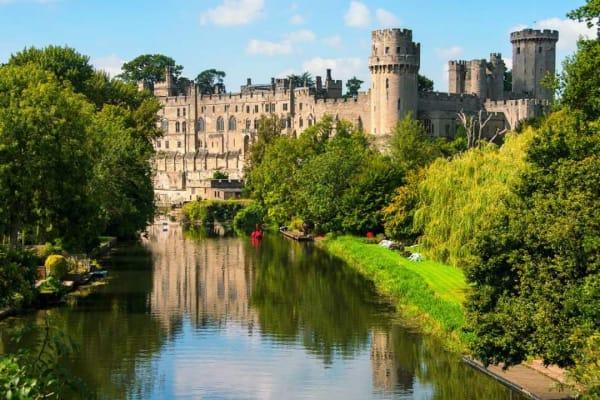
A mere 20-minute drive or short train journey from Stratford-upon-Avon lies Warwick Castle. This is not a ruin; it’s a fully realized medieval experience, meticulously maintained and brought to life with immersive exhibits and live shows.
Key Attractions at Warwick Castle
The Ramparts and Towers: Climb the steep steps to the top of the castle walls and towers for breathtaking views over the Warwickshire countryside. The climb up Guy’s Tower is particularly rewarding.
The Great Hall and State Rooms: Explore the interior of the castle, which is furnished to show how it would have looked in its Victorian heyday. See genuine suits of armor and an impressive collection of antique weapons.
The Castle Dungeon: A separate-ticket attraction (and not for young children), this live actor experience delves into the darker, more gruesome history of the castle with humor and horror.
Live Shows: Throughout the day, the castle grounds host jousting tournaments, falconry displays with massive birds of prey, and archery demonstrations. Check the daily schedule upon arrival.
The Grounds and Gardens: Designed by the famous Capability Brown, the grounds are beautiful for a stroll. Peacocks roam freely, and you can visit the Victorian Rose Garden and the Peacock Garden.
Food & Drink at Warwick Castle
The castle has several cafes and restaurants, but they can be pricey. For a more budget-friendly option, consider bringing a picnic to enjoy on the grounds, or pop into the town of Warwick itself, which is just a short walk away and has several charming pubs.
Transportation to Warwick Castle
The castle is easily accessible by car (with large paid parking lots) or by train to Warwick station, from which it’s a 10-15 minute walk.
Cultural Insights & Tips for Warwick Castle
Book your tickets online in advance for a significant discount compared to buying at the gate.
- This is a major commercial attraction owned by Merlin Entertainments (the same company as Legoland). Expect large crowds, especially during school holidays.
- Plan to spend a full day here to get your money’s worth and see all the shows and exhibits.
- Wear comfortable shoes as there is a lot of walking and climbing involved.
The Return Journey: Warwick/Stratford to London
After your day at Warwick Castle, you can easily return to London. There are direct train services from both Warwick and Stratford-upon-Avon to London Marylebone station, with a journey time of approximately 2 hours. This brings your quintessential English loop to a close.
Practical Itinerary and Final Travel Tips
Suggested 5-Day Itinerary
Day 1 & 2: Explore London’s major sights, museums, and neighborhoods.
Day 3: Morning train to Oxford. Spend the day exploring the colleges, libraries, and museums. Overnight in Oxford.
Day 4: Morning train to Stratford-upon-Avon. Visit Shakespeare’s Birthplace and Anne Hathaway’s Cottage. See a play at the RSC in the evening. Overnight in Stratford.
Day 5: Morning visit to Warwick Castle (by train or taxi). Spend the day there before taking an evening train directly back to London.
Accommodation
Base yourself in London for the entire trip for simplicity, or experience different atmospheres by staying overnight in Oxford and Stratford-upon-Avon. Book accommodation well ahead, especially in Stratford during theatre season.
Getting Around Between Destinations
The train network is efficient and connects all these destinations. For maximum flexibility, especially for visiting Warwick Castle, renting a car for the days outside London is an excellent option. However, driving in central London is not recommended due to congestion charges and difficult parking.
A journey through London, Oxford, Stratford-upon-Avon, and Warwick Castle offers a profound connection to England’s layered past—from royal power and medieval warfare to literary genius and academic excellence. It is a trip that will leave you with a deep appreciation for the history and culture that have shaped the modern nation.