A Journey Through Royal France: Paris, Vaux-le-Vicomte, and Fontainebleau
This travel guide outlines a classic itinerary from the heart of Paris to two of France’s most significant and breathtaking châteaux, each telling a unique story of power, art, and history. The journey from urban grandeur to pastoral opulence and finally to a royal hunting lodge turned palace offers a profound understanding of French heritage beyond the capital’s boundaries.
Part 1: Paris – The Grand Prelude
Your journey begins and ends in Paris, a city that needs no introduction. While the entire city is a museum, focusing on its royal and aristocratic history provides the perfect context for the châteaux you will visit.
Attractions & Cultural Insights
Before venturing out, immerse yourself in the Parisian landmarks that speak to the same era of absolute monarchy that produced Vaux-le-Vicomte and Fontainebleau.
The Louvre Palace & Museum: Start at the origin. Before it was a museum, the Louvre was a fortress and then a royal palace. Walking through the Cour Carrée, you can see the architectural evolution. The art collection itself, much of it assembled by French monarchs, is a direct prelude to the treasures you will find in Fontainebleau. The opulent apartments of Napoleon III also give a glimpse into 19th-century imperial life.
Place de la Concorde: This vast square is steeped in history. It was here that King Louis XVI and Marie Antoinette were guillotined. The Luxor Obelisk, a gift from Egypt, now stands as a centerpiece. The square represents the dramatic shift from monarchy to revolution, a fate that would befall the residents of the châteaux you will see.
Musée d’Orsay: Housed in a magnificent Beaux-Arts railway station, this museum bridges the gap between the classical art of the Louvre and modern art. Its collection of Impressionist and Post-Impressionist works offers a different, more intimate perspective on French culture and landscape in the latter 19th century.
Food & Drink
Paris is a culinary universe. To align with your historical theme, seek out classic bistros and patisseries.
Le Procope: Founded in 1686, this is arguably the oldest café in Paris. While touristy, its historical ambiance is palpable, having hosted figures like Voltaire and Benjamin Franklin. It’s a place to feel the intellectual currents of the Ancien Régime.
Pâtisserie Stohrer: Founded in 1730 by the pastry chef of King Louis XV, this is a living piece of culinary history. Indulge in a baba au rhum or a puit d’amour—recipes that have endured for centuries.
Classic Bistro Fare: For a more casual meal, find a traditional bistro and order staples like Steak Frites (steak and fries), Confit de Canard (duck confit), or Escargots (snails in garlic butter). These are the hearty, timeless dishes of the French people.
Transportation & Practical Tips
Getting Around: The Paris Métro is efficient and comprehensive. Purchase a “carnet” of 10 tickets for cost savings, or a Navigo Découverte pass for unlimited travel if staying longer. For a more scenic route, use the Batobus, a hop-on-hop-off boat service on the Seine.
Museum Pass: Consider the Paris Museum Pass for skip-the-line access to the Louvre, Orsay, and many other sites. It saves time and money.
Accommodation: Stay in central arrondissements like the 1st, 4th, 5th, 6th, or 7th for easy access to major sites and train stations.
Part 2: Vaux-le-Vicomte – The Dream That Cost a Life
A journey southeast of Paris, approximately 55 kilometers, leads you to Château de Vaux-le-Vicomte. This château is not just a beautiful building; it is a cautionary tale of ambition and the absolute power of a king.
Attractions & Cultural Insights
Vaux-le-Vicomte was the creation of Nicolas Fouquet, Superintendent of Finances for King Louis XIV. He assembled a dream team—architect Louis Le Vau, painter-decorator Charles Le Brun, and landscape gardener André Le Nôtre—to create a masterpiece of harmony and beauty. The château’s magnificence, however, enraged the young king, leading to Fouquet’s arrest for embezzlement just three weeks after a legendary fête held in the king’s honor.
The Exterior and Gardens: Your first view of the château is breathtaking. The perfectly symmetrical stone façade, crowned by a majestic dome, rises from a moat. But the true genius lies in the gardens designed by Le Nôtre. They are a lesson in perspective and control over nature. Walk the grand axis to discover grottos, fountains, and reflective pools that create an illusion of infinite space. The view from the Hercules statue back towards the château is one of the most photographed in France for a reason.
The Interior: The rooms are decorated with unparalleled artistry by Le Brun. The Grand Salon under the dome is awe-inspiring, with its painted ceiling and classical themes. Fouquet’s private apartments are surprisingly intimate compared to the state rooms. Pay close attention to the King’s Bedchamber—a room prepared for a monarch who never slept there.
Candlelit Evenings: From May to October, the château and gardens are illuminated by thousands of candles on Saturday evenings. This is a truly magical experience that transports visitors directly back to the 17th century. The atmosphere is serene and profoundly beautiful.
Food & Drink
Dining options at Vaux are charming and fit the setting perfectly.
L’Écureuil: The château’s main restaurant, named after Fouquet’s squirrel emblem (écureuil), offers sit-down meals in an elegant Orangerie setting. It’s perfect for a leisurely lunch.
La Dinée de Fouquet: For a more casual option, this self-service restaurant provides salads, quiches, and sandwiches, allowing for a quicker meal so you can return to exploring.
The Picnic: The ultimate local insight is to bring your own picnic (or buy supplies from a local bakery) and enjoy it on the grounds. Find a spot by the Grand Canal and dine like a guest at Fouquet’s infamous party.
Transportation & Practical Tips
By Train: Take a train from Gare de Lyon to Melun (approx. 25 minutes). From Melun station, a special “Châteaubus” shuttle operates on château opening days (check the schedule). Taxis are also available at the station.
By Car: Renting a car offers maximum flexibility for this trip. The drive takes about an hour from central Paris via the A4 or A6 motorways.
Timing Your Visit: Allocate at least 4-5 hours for Vaux-le-Vicomte. The gardens are vast and demand exploration. If you can, plan your visit for a Saturday to experience the candlelit evenings.
Local Insight: The story of Vaux is key to understanding Versailles. Louis XIV was so impressed (and envious) that he hired Fouquet’s trio of artists to build an even grander palace: Versailles. A visit to Vaux makes Versailles’ origins much clearer.
Part 3: Fontainebleau – The Home of Kings
From Vaux-le-Vicomte, continue south for about 30 kilometers to the Château de Fontainebleau. If Vaux is a perfect, frozen moment in time, Fontainebleau is a sprawling, living chronicle of eight centuries of French history.
Attractions & Cultural Insights
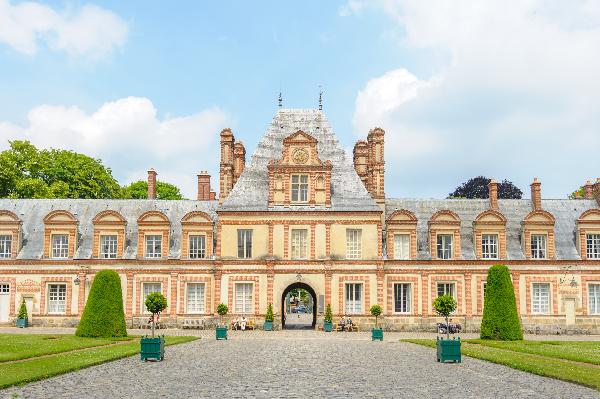
Fontainebleau was not built by one monarch but continuously expanded and decorated by them, from the Capetians through Napoleon III. It was a favorite residence for hunting, and its architecture reflects Renaissance, Classical, and Napoleonic styles.
The Horseshoe Staircase: The iconic entrance to the château, this horseshoe-shaped (fer-à-cheval) staircase was built for Louis XIII. It is a grand statement of welcome and power.
The Renaissance Rooms: King François I brought the Italian Renaissance to France, and his gallery at Fontainebleau is a masterpiece. The stucco work, frescoes, and intricate woodwork by Italian artists Rosso Fiorentino and Primaticcio created the “First School of Fontainebleau,” which profoundly influenced French art.
The Apartments of Napoleon Bonaparte: Fontainebleau was a key site for the Napoleonic era. You can walk through Napoleon’s throne room, his council chamber, and his private apartments. The small, personal items on display—his camp bed, his iconic hat—make history feel immediate. It was here that he abdicated in 1814, famously kissing the French flag before his exile to Elba.
The Gardens and Park: The grounds are immense and diverse. The formal Garden of Diana features a fountain and parterres, while the vast English-style park leads to the Grand Canal. Don’t miss the picturesque carp pond (Étang des Carpites). The forest of Fontainebleau surrounding the estate is a national park popular with hikers and rock climbers.
Food & Drink
The town of Fontainebleau offers more diverse dining options than Vaux.
L’Axel: For fine dining in a historic setting, this Michelin-starred restaurant is located within the château’s grounds (in the Hôtel de Londres). It offers modern French cuisine in an elegant atmosphere.
In Town: The town center has numerous cafés, brasseries, and crêperies. Rue Grande is the main street lined with options. This is a great place to try a classic Croque-Monsieur or a savory galette (buckwheat crêpe).
Fontainebleau Cheese: A local specialty you must try is Fromage de Fontainebleau. It’s a fresh, whipped cream cheese, often served with sugar and berries for dessert. It’s light, airy, and delicious.
Transportation & Practical Tips
By Train: From Paris, take a train from Gare de Lyon to Fontainebleau-Avon station (approx. 40 minutes). From there, take the local “Ligne 1” bus (direction “Lilas”) to the “Château” stop right outside the gates.
By Car from Vaux: This is the most logical connection if you are doing both châteaux in one or two days. The drive through the countryside is pleasant.
Timing Your Visit: Fontainebleau is enormous. Allocate at least 5-6 hours to see the main rooms of the château and stroll through the gardens. An audio guide is highly recommended to navigate the complex history.
Local Insight: Fontainebleau feels less crowded than Versailles but is equally rich in history. Focus on the elements that interest you most—the Renaissance for François I, the opulence for Marie Antoinette (who also had apartments here), or the legacy of Napoleon. The château’s scale can be overwhelming without a focus.
The Return to Paris
The journey back to Paris allows for reflection. You have witnessed the spark that ignited Versailles at Vaux-le-Vicomte and walked through eight centuries of continuous royal habitation at Fontainebleau. Returning to Paris, you will see the city with new eyes—the Louvre as a former palace, Place de la Concorde as a site of regicide—all part of the grand narrative of French monarchy that played out in these magnificent country estates.
A Sample Two-Day Itinerary
Day 1:
Morning: Take an early train from Paris Gare de Lyon to Melun. Visit Vaux-le-Vicomte.
Afternoon: Enjoy a picnic lunch in the gardens. Continue exploring the château interior and expansive grounds.
Evening: If on a Saturday, stay for the magical candlelit illumination. Otherwise, take a taxi or drive to Fontainebleau town for dinner and overnight stay.
Day 2:
Morning: Begin your exploration of Château de Fontainebleau, focusing on the Renaissance galleries and Napoleon’s apartments.
Afternoon: Have lunch in Fontainebleau town. Return to stroll through the château’s gardens and park.
Late Afternoon: Take the train from Fontainebleau-Avon back to Paris Gare de Lyon.
A journey through these landmarks is more than a sightseeing tour; it is an immersion into the art, politics, and personal dramas that shaped France. From Fouquet’s fatal ambition to Napoleon’s poignant farewell, these stones tell stories that continue to resonate centuries later.