A Grand Tour of the Heart of Europe: Paris, Benelux, and the Rhineland
This comprehensive travel guide details a circular itinerary through France, Belgium, the Netherlands, Germany, and Luxembourg, exploring world-class cities, historic battlefields, charming old towns, and scenic river valleys.
Introduction to the Journey
This itinerary connects some of Western Europe’s most significant cultural and political centers. It is a journey through time, from the Roman Empire to the European Union, encompassing breathtaking art, pivotal history, diverse cuisines, and stunning architecture. The route is designed to be efficient, primarily utilizing Europe’s excellent high-speed and regional rail networks, making it accessible for travelers without a car.
The total trip is ideal for a 14 to 21-day period, allowing for 2-3 nights in major cities and day trips to smaller locations.
Detailed Day-by-Day Itinerary
Days 1-3: Paris, France
Begin your journey in the City of Light. Explore its iconic landmarks, world-renowned museums, and charming neighborhoods.
Day 4: Day Trip to Waterloo, Belgium
A short train ride from Brussels (or as a stopover from Paris to Brussels) to the site of Napoleon’s final defeat.
Days 4-5: Brussels, Belgium
Immerse yourself in the capital of Belgium and the de facto capital of the European Union. Sample chocolate, waffles, and beer.
Day 6: Day Trip to The Hague, Netherlands
An easy train journey from Brussels or Amsterdam to the seat of the Dutch government and international law.
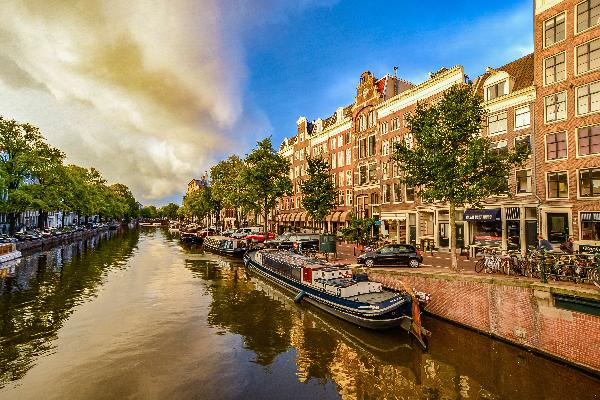
Days 6-8: Amsterdam, Netherlands
Discover the canals, museums, and unique atmosphere of this vibrant, historic city.
Day 9: Cologne, Germany
A high-speed train takes you directly to the Rhine metropolis, dominated by its spectacular cathedral.
Day 10: Bonn & Travel to Trier
A short trip to the former West German capital, Bonn, followed by a scenic train ride along the Moselle River to Trier.
Day 11: Trier, Germany
Explore Germany’s oldest city, filled with remarkably preserved Roman monuments.
Day 12: Luxembourg City, Luxembourg
A brief train ride to the Grand Duchy, a city of dramatic cliffs and fortifications.
Day 13: Reims, France & Return to Paris
Stop in the capital of the Champagne region to tour a prestigious champagne house before taking the final train leg back to Paris.
Day 14: Departure from Paris
End the tour with a final Parisian breakfast before heading to the airport.
Paris, France
Overview
Paris, the capital of France, is a global center for art, fashion, gastronomy, and culture. Its picturesque streets, Haussmannian boulevards, and the Seine River make it one of the world’s most beautiful cities.
Key Attractions
Eiffel Tower: The iconic iron tower offering panoramic views of the city. Advance booking is essential.
Louvre Museum: The world’s largest art museum, home to the Mona Lisa, Venus de Milo, and countless other masterpieces.
Notre-Dame Cathedral: While the interior is closed for restoration after the 2019 fire, the exterior remains a stunning example of French Gothic architecture.
Champs-Élysées & Arc de Triomphe: A famous avenue leading to the triumphal arch, which offers another excellent city viewpoint.
Montmartre & Sacré-Cœur: A historic artistic neighborhood on a hill, crowned by the dazzling white Basilica of the Sacred Heart.
Musée d’Orsay: Housed in a former railway station, it boasts an unparalleled collection of Impressionist and Post-Impressionist art.
Practical Information
Getting There: Served by two major international airports: Charles de Gaulle (CDG) and Orly (ORY).
Getting Around: The Paris Métro is extensive and efficient. Consider a carnet (book of 10 tickets) or a Navigo Découverte pass for longer stays.
Accommodation: Districts (arrondissements) 1-8 are central but expensive. The Marais (4th), Saint-Germain-des-Prés (6th), and Latin Quarter (5th) are popular and lively.
Food & Drink: From street-side crêpes to Michelin-starred restaurants. Try classic bistros for steak-frites, croque-monsieur, and onion soup.
Waterloo, Belgium
Overview
The Battle of Waterloo in 1815 marked the final defeat of Napoleon Bonaparte. The site, just south of Brussels, is preserved as a memorial with several key attractions.
Key Attractions
Lion’s Mound (Butte du Lion): An artificial hill topped with a cast-iron lion, built to commemorate the spot where the Prince of Orange was wounded. Climbing the 226 steps provides a strategic overview of the battlefield.
Wellington Museum: Located in the former headquarters of the Duke of Wellington in Waterloo town.
Hougoumont Farm: A key fortified farmhouse on the battlefield that saw intense fighting. It has been recently restored.
The Panorama: A large circular painting from 1912 that depicts a key moment in the battle, creating an immersive experience.
Practical Information
Getting There: Take a train from Brussels-Chapel station to Braine-l’Alleud (approx. 30 mins). From there, take bus W to the site (approx. 10 mins). A combined train+bus ticket is available from Brussels.
Getting Around:The site is walkable, but spread out. A shuttle bus often operates between the main attractions.
Tickets:A Pass 1815 provides access to all major sites (Lion’s Mound, Panorama, Hougoumont, etc.).