A Grand Tour of Central Europe: Paris to the Heart of the Continent
This comprehensive travel guide details a classic circuit through the cultural and historical heart of Europe. The itinerary connects the romantic allure of France with the powerhouse cities of Germany, the fairy-tale charm of the Czech Republic, the understated capital of Slovakia, the thermal baths and grandeur of Hungary, and the unparalleled musical and alpine heritage of Austria. This journey is designed to offer a deep dive into the diverse landscapes, architectures, cuisines, and histories that define this remarkable region.
Itinerary Overview
The proposed route is a circular journey starting and ending in Paris, minimizing backtracking and maximizing scenic travel. The sequence is:
Paris, France → Heidelberg, Germany → Stuttgart, Germany → Mariánské Lázně (Marienbad), Czech Republic → Prague, Czech Republic → Bratislava, Slovakia → Budapest, Hungary → Vienna, Austria → Salzburg, Austria → Munich, Germany → Neuschwanstein Castle, Germany → Stuttgart (transit) → Strasbourg, France → Paris, France.
Transportation: How to Navigate the Route
This multi-country tour is best accomplished using a combination of high-speed trains, regional trains, and buses.
Trains: The European rail network is efficient and comfortable. For long distances like Paris to Heidelberg or Vienna to Salzburg, high-speed trains (ICE, TGV, Railjet) are ideal. Consider a Eurail Global Pass for flexibility, but compare point-to-point ticket prices as advance purchases can be cheaper.
Buses: Companies like FlixBus offer an economical and extensive network connecting most cities on this itinerary, often at a lower cost than trains.
Internal City Transport: All major cities have excellent public transportation systems (metro, tram, bus). Purchase day passes or multi-day travel cards for unlimited travel within the city zones.
Rental Car: A car offers freedom for exploring the countryside, such as the Romantic Road in Germany or the Danube Bend in Hungary, but is a liability in city centers due to traffic, parking costs, and restricted zones.
Detailed Destination Guide
Paris, France
The City of Light needs no introduction. It is the grand starting point, a metropolis of art, fashion, gastronomy, and culture.
Attractions: The Eiffel Tower, Louvre Museum, Notre-Dame Cathedral (exterior viewing due to restoration), Arc de Triomphe, Montmartre and the Sacré-Cœur Basilica, Seine River cruises, and the Musée d’Orsay.
Food & Drink: Indulge in fresh croissants and coffee at a local boulangerie, classic bistros for Steak Frites, delicate macarons from Ladurée or Pierre Hermé, and a selection of fine French wines and cheeses.
Accommodation Tips: Stay in arrondissements like Le Marais (trendy), Saint-Germain-des-Prés (chic), or the Latin Quarter (bohemian and student-friendly) for easy access to major sites.
Cultural Insight: Take time to sit at a sidewalk café and simply watch the world go by. This “flânerie” is a quintessential Parisian pastime. Always greet shopkeepers with “Bonjour” upon entering.
Heidelberg, Germany
A picturesque university town nestled in the Neckar River valley, Heidelberg is the epitome of German Romanticism.
Attractions: Heidelberg Castle (ruins with a great view), the Philosophers’ Walk (Philosophenweg) across the river, the Old Bridge (Alte Brücke), and the charming Hauptstraße (main street) with its baroque architecture.
Food & Drink: Try hearty German fare like Schnitzel and Spätzle. Don’t miss a visit to a traditional student tavern, such as Zum Roten Ochsen, for local beer and atmosphere.
Accommodation Tips: Opt for a guesthouse or hotel in the Altstadt (Old Town) to be within walking distance of all major attractions.
Cultural Insight: Heidelberg is home to Germany’s oldest university. The student culture is palpable, giving the historic town a vibrant and youthful energy.
Stuttgart, Germany
A dynamic city known as the cradle of the automobile, surrounded by vineyards and offering world-class museums.
Attractions: The Mercedes-Benz Museum and Porsche Museum are must-sees for engineering enthusiasts. The stunning Library Stuttgart (Stadtbibliothek) is an architectural marvel. The Wilhelma Zoo and Botanical Garden is also highly recommended.
Food & Drink: Stuttgart is in the heart of Swabia. Sample Maultaschen (Swabian ravioli) and Linsen mit Spätzle (lentils with noodles). The region is also known for its Trollinger wine.
Accommodation Tips: Areas around the main train station (Hauptbahnhof) offer good connectivity. For a more local feel, look for accommodation in the southern districts.
Cultural Insight: Stuttgart is a city of innovation and hard work, but it also knows how to celebrate, hosting one of Europe’s largest beer festivals, the Cannstatter Volksfest.
Mariánské Lázně (Marienbad), Czech Republic
A beautiful spa town in West Bohemia, part of the “Czech Spa Triangle,” known for its elegant colonnades and healing springs.
Attractions: The magnificent Singing Fountain (which performs shows with music and lights), the Grand Colonnade, a walk through the lush parkland, and visiting various mineral springs for a tasting.
Food & Drink: Enjoy international spa cuisine or traditional Czech dishes in the town’s restaurants. Be sure to sample the curative waters from the ornate drinking fountains.
Accommodation Tips: The town is filled with grand spa hotels from the 19th century as well as more modest guesthouses. For a full experience, book a package that includes treatments.
Cultural Insight: This was a favorite retreat for European aristocracy and celebrities like Goethe and Chopin. The atmosphere is one of refined relaxation and slow-paced rejuvenation.
Prague, Czech Republic
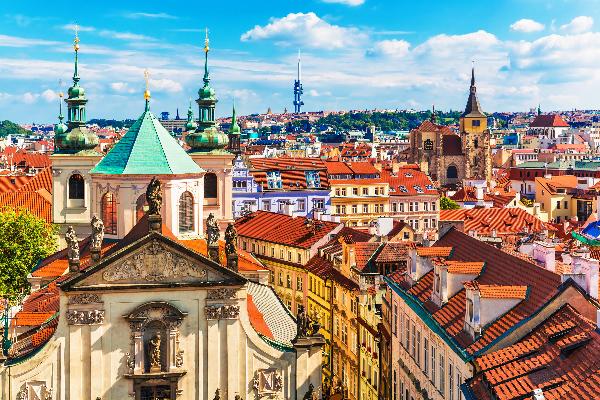
The “City of a Hundred Spires,” Prague is a stunningly preserved medieval gem with a vibrant modern heart.
Attractions: Prague Castle (the largest ancient castle in the world), Charles Bridge (best visited early morning or late evening), Old Town Square with its Astronomical Clock, and the Jewish Quarter (Josefov).
Food & Drink: Feast on roast pork with dumplings and sauerkraut (Vepřo-knedlo-zelo), drink world-famous Czech Pilsner beer, and try Trdelník (a sweet pastry) from a street vendor.
Accommodation Tips: Stay in districts like Malá Strana (Lesser Town) for a quiet, romantic feel or New Town (Nové Město) for better value and nightlife. The city is very walkable.
Cultural Insight: Prague has a rich history of defying authority, from the defenestrations that started wars to the Velvet Revolution. This resilient spirit lives on in its art and culture.
Bratislava, Slovakia
A compact and charming capital on the Danube, Bratislava offers a more intimate and relaxed experience than its bustling neighbors.
Attractions: Bratislava Castle, the UFO Tower offering panoramic views, the picturesque Old Town (Staré Mesto) with St. Martin’s Cathedral and the whimsical Čumil statue.
Food & Drink: Sample Slovak specialties like Bryndzové halušky (potato dumplings with sheep cheese), and drink Kofola (a local cola) or Slovak wine.
Accommodation Tips:The best area to stay is in or near the Old Town, allowing you to explore most sights on foot.
Cultural Insight: Bratislava’s history is deeply intertwined with the Hungarian Empire (it was the coronation city for Hungarian kings). It has reinvented itself as the modern capital of a young nation since 1993.
Budapest, Hungary
The “Pearl of the Danube,” Budapest is actually two cities in one: hilly Buda and flat Pest, connected by a series of stunning bridges.
Attractions: The Hungarian Parliament Building, Buda Castle and Fisherman’s Bastion on Castle Hill, the Great Market Hall, relax in the Széchenyi or Gellért thermal baths, and see the city from a Danube cruise.
Food & Drink: Eat Goulash soup, Chicken Paprikash, and Langos (fried dough). Don’t leave without trying Tokaji dessert wine or Unicum herbal liqueur.
Accommodation Tips: District V (Belváros-Lipótváros) in Pest puts you near Parliament and shopping, while District I in Buda offers historic charm and views.
Cultural Insight:The culture of thermal bathing is central to life in Budapest. It’s a social activity, not just for tourists. The city also has a vibrant “ruin bar” scene, set up in abandoned pre-war buildings in the Jewish Quarter.
Vienna, Austria
The imperial capital of the Habsburg Empire, Vienna exounds elegance with its magnificent palaces, world-class museums, and coffee house culture.
Attractions: Schönbrunn Palace, Hofburg Palace, Belvedere Palace (home to Klimt’s “The Kiss”), St. Stephen’s Cathedral, and the Vienna State Opera.
Food & Drink: Sacher-Torte (chocolate cake) at Café Sacher, Wiener Schnitzel at a traditional Heuriger (wine tavern), and Apfelstrudel. The experience of lingering in a classic Viennese coffee house is a must.
Accommodation Tips:The Innere Stadt (1st District) is central but expensive. Districts just outside the Ringstrasse like Mariahilf or Neubau offer good value and are well-connected by public transport.
Cultural Insight:The Viennese coffee house is a UNESCO intangible cultural heritage site. It’s a place to read the newspaper, meet friends, and spend hours over a single cup of coffee. Dress is generally smart-casual.
Salzburg, Austria
The birthplace of Mozart and the setting for “The Sound of Music,” Salzburg is a baroque city set against a dramatic alpine backdrop.
Attractions: Hohensalzburg Fortress (reachable by funicular), Mirabell Palace and Gardens, Getreidegasse (the famous shopping street), Mozart’s Birthplace, and a Sound of Music tour.
Food & Drink: Enjoy Salzburger Nockerl (a sweet soufflé), Bosna (a type of sausage), and Mozartkugeln (chocolate balls). Visit Augustiner Bräu, a massive monastic brewery hall.
Accommodation Tips:The Altstadt (Old Town) is atmospheric but pricey. The Neustadt (New Town) across the river offers more options and is still very convenient.
Cultural Insight:The Salzburg Festival is one of the world’s most prestigious music and drama festivals. The city’s identity is deeply connected to its most famous son, Wolfgang Amadeus Mozart.
Munich, Germany
The capital of Bavaria is a city of contrasts: home to high-tech industry and traditional beer halls, world-class art galleries and sprawling English Garden park.
Attractions: Marienplatz with the Glockenspiel show, Nymphenburg Palace, the Deutsches Museum (science and technology), Viktualienmarkt (food market), and of course, the Hofbräuhaus beer hall.
Food & Drink: Weisswurst (white sausage) with sweet mustard and a pretzel, Schweinshaxe (roasted pork knuckle), and plenty of Bavarian beer in a Biergarten (beer garden).
Accommodation Tips:The Altstadt is perfect for first-time visitors. For a quieter stay, consider neighborhoods like Schwabing or Maxvorstadt.
Cultrual Insight:: Munich’s “Lederhosen and Dirndl” culture is not just for tourists; it’s genuinely worn for festivals and special occasions. The concept of Gemütlichkeit—a state of warmth, friendliness, and good cheer—is central to the Bavarian way of life.< /ul>
<
>Neuschwanstein Castle<<>/H3>>
<
>The fairytale castle that inspired Disney’s Sleeping Beauty Castle<<>/P>>
<
- >
- ><>Attractions:<<>/STRONG>> The castle itself is the main attraction. Take a guided tour of the interior. Hike to Marienbrücke (Mary’s Bridge) for the iconic postcard photograph of the castle against the alpine scenery.<>/LI>>
<- ><>Food & Drink:<<>/STRONG>> The nearby village of Hohenschwangau has several restaurants catering to tourists. It’s advisable to have a meal in Füssen before or after your visit.<>/LI>>
<- ><>Accommodation Tips:<<>/STRONG>> Stay in the charming town of Füssen, which is well-connected by bus to the castles. This allows for an early start to beat the crowds.<>/LI>>
<- ><>Cultural Insight:<<>/STRONG>> King Ludwig II built this castle as a personal retreat and homage to Richard Wagner’s operas. Its romanticized medieval design reflects the 19th-century Romantic movement rather than any historical defensive purpose.<>/LI>>
<<>/UL>><
>Strasbourg<<>/H3>>
<>The capital of the Alsace region<<>/P>>
<- >
- ><>Attractions:<<>/STRONG>> The stunning Strasbourg Cathedral with its astronomical clock<<>/LI>>
<- ><>Food & Drink:<<>/STRONG>> Alsatian cuisine is a unique blend of French and German influences<<>/LI>>
<- ><>Accommodation Tips:<<>/STRONG>> Stay in or near the Grande Île<<>/LI>>
<- ><>Cultural Insight:<<>/STRONG>> Strasbourg is a symbol of European reconciliation<<>/LI>>
<<>/UL>>>General Travel Tips for Central Europe<
>
- >
- ><>Currency:<<>/STRONG>> The Euro (€) is used in France<<>/LI>>
<
<
< - ><>Food & Drink:<<>/STRONG>> Alsatian cuisine is a unique blend of French and German influences<<>/LI>>
< - ><>Food & Drink:<<>/STRONG>> The nearby village of Hohenschwangau has several restaurants catering to tourists. It’s advisable to have a meal in Füssen before or after your visit.<>/LI>>
<