A Grand Tour of Britain and Ireland: London, Scottish Highlands, and Belfast
This comprehensive travel guide outlines an epic journey through the heart of England, into the wild Scottish Highlands, across the sea to Northern Ireland and the Republic of Ireland, and back through England’s historic cities. This itinerary is designed for travelers seeking a blend of vibrant cities, breathtaking natural landscapes, and deep historical immersion.
Part 1: London and the English Heartland
London: The World in a City
London, the sprawling capital of England and the United Kingdom, is a dynamic metropolis where history and modernity collide. From ancient Roman walls to towering skyscrapers, the city offers an endless array of experiences.
Attractions: Must-see landmarks include the Houses of Parliament and Big Ben, the London Eye for panoramic views, Buckingham Palace for the Changing of the Guard, and the Tower of London with its Crown Jewels and Beefeaters. For art and culture, the British Museum, National Gallery, and Tate Modern are world-class. Explore diverse neighborhoods like Soho for entertainment, Covent Garden for street performers and shopping, and Camden Town for its alternative market.
Food & Drink: Beyond fish and chips, London’s food scene is incredibly diverse. Enjoy a classic Sunday roast at a traditional pub, sample street food at Borough Market, or experience high-end dining. Don’t forget to have a cream tea (scones with clotted cream and jam) and a pint of real ale.
Transportation: The London Underground (“the Tube”) is the most efficient way to get around. An Oyster card or contactless payment is essential. Black cabs are iconic but pricey; ride-sharing apps are widely available.
Accommodation: Options range from luxury hotels in Mayfair and Kensington to boutique hotels in Covent Garden and budget-friendly hostels in King’s Cross. Staying near a Tube station is highly recommended.
Cultural Insight: London is a truly global city. Its culture is a tapestry woven from its history as the capital of a vast empire and its current status as a hub for international finance, art, and media.
Windsor: A Royal Day Trip
A short journey west of London lies the historic town of Windsor, home to the world’s oldest and largest inhabited castle.
Attractions: Windsor Castle is the primary draw. Visitors can explore the State Apartments, St. George’s Chapel (the burial place of monarchs including Queen Elizabeth II), and see the Changing of the Guard. Afterwards, take a stroll through the charming town or along the River Thames.
Transportation: Regular train services run from London Paddington or Waterloo stations to Windsor & Eton Central or Riverside, taking approximately 30-60 minutes.
Oxford: The City of Dreaming Spires
Oxford is synonymous with academic excellence and architectural beauty. Its world-famous university is not a single campus but a collection of 39 historic colleges scattered throughout the city.
Attractions: Key colleges to visit include Christ Church (notable for its grand hall and cathedral), Magdalen College (with its deer park), and Bodleian Library, one of the oldest libraries in Europe. Climb the University Church of St. Mary the Virgin for a stunning view of the Radcliffe Camera. Fans of “His Dark Materials” and “Inspector Morse” will find many filming locations.
Food & Drink: Enjoy a pint in a historic pub like The Eagle and Child, once frequented by J.R.R. Tolkien and C.S. Lewis. There are also many cozy cafes and restaurants catering to the student population.
Transportation: Oxford is easily reached from London by train (from Paddington) or coach (e.g., National Express), taking about an hour.
The Lake District: Poetic Landscapes
A journey north leads to the Lake District National Park, a region of stunning natural beauty that inspired poets like William Wordsworth and Beatrix Potter.
Attractions: The area is defined by its glacial lakes and fells (mountains). Visit Lake Windermere, England’s largest lake, for boat trips. Hike up Catbells for relatively accessible views or tackle the more challenging Scafell Pike, England’s highest mountain. Explore the towns of Keswick, Ambleside, and Bowness-on-Windermere.
Food & Drink: Try traditional Cumberland sausage, Herdwick lamb, and sticky toffee pudding, a local dessert. The region also has several microbreweries.
Accommodation: Charming B&Bs, guesthouses, and self-catering cottages are abundant. For a unique experience, stay in a lakeside hotel or a remote farmhouse.
Cultural Insight: The Lake District embodies the Romantic ideal of the sublime in nature. It’s a place for walking, reflection, and appreciating the raw beauty of the British countryside.
Part 2: The Scottish Highlands & Islands
The Highlands & A82 Road: The Gateway to Wilderness
The A82 road is more than just a route; it’s one of the world’s most scenic drives, carving through the very heart of the Scottish Highlands.
Attractions: Driving north from Glasgow, the landscape dramatically transforms. The road passes along the banks of Loch Lomond, the UK’s largest lake by surface area. Further north, the vast expanse of Rannoch Moor opens up, a hauntingly beautiful wilderness.
Transportation: The most flexible way to experience the A82 is by car or campervan. Coach tours are also a popular option, providing narration and eliminating the stress of navigation.
Glencoe: The Weeping Glen
Glencoe is not only one of Scotland’s most spectacular glens but also a place steeped in a tragic history. Its towering, brooding mountains evoke a powerful sense of drama.
Attractions: The glen itself is the main attraction. Stop at the Glencoe Visitor Centre for context on the geology and the infamous 1692 Massacre of Glencoe. Take short walks to viewing points like the Three Sisters (three imposing ridges) or more challenging hikes for experienced walkers.
Cultural Insight: The massacre, where members of the MacDonald clan were murdered by government soldiers who had accepted their hospitality, is a seminal event in Scottish history and adds a layer of somber significance to the landscape.
The Great Glen: Loch Ness & Urquhart Castle
The journey continues along the Great Glen, a major geological fault line, home to the world-famous Loch Ness.
Attractions: Loch Ness is famous for its mythical monster, “Nessie.” Whether you believe or not, the loch itself is vast, dark, and deep. The ruins of Urquhart Castle, perched on its shores, offer one of the most photographed views in Scotland. A visitor centre details the castle’s turbulent history as a key medieval fortress.
Food & Drink: Sample classic Scottish fare like haggis, neeps, and tatties (haggis with mashed turnips and potatoes) or fresh salmon from Highland rivers.
Edinburgh: The Athens of the North
The capital of Scotland is a city of unparalleled dramatic beauty, divided between the medieval Old Town and the elegant Georgian New Town.
Attractions: Dominating the skyline is Edinburgh Castle, built on an extinct volcano. Walk down the Royal Mile, exploring closes (narrow alleyways) and St. Giles’ Cathedral. At the bottom lies the Palace of Holyroodhouse, the King’s official residence in Scotland. Hike up Arthur’s Seat for a phenomenal city view. If visiting in August, experience the world’s largest arts festival, the Edinburgh Festival Fringe.
Food & Drink: Edinburgh boasts a thriving culinary scene. Visit whisky bars to sample Scotland’s national drink, try Scottish beef, and don’t leave without trying a slice of cranachan (a dessert with raspberries, cream, oats, and whisky).
Accommodation: Stay in a historic hotel on the Royal Mile, a boutique guesthouse in the New Town, or a budget-friendly hostel near Haymarket station.
Cultural Insight: Edinburgh is the heart of Scottish culture and politics. It’s a city fiercely proud of its history and its distinct national identity within the United Kingdom.
Part 3: Crossing to Ireland: Belfast & Dublin
The Crossing: From Scotland to Northern Ireland
The journey from Scotland to Belfast typically involves a ferry crossing from Cairnryan or Troon in Scotland to the port of Belfast. This is a scenic voyage across the North Channel.
Belfast: A City Reborn
The capital of Northern Ireland has undergone a remarkable transformation from its troubled past to a vibrant, modern European city.
Attractions: The political history is fascinating; take a Black Cab Tour to see the political murals in the Falls Road (Nationalist) and Shankill Road (Unionist) areas. Explore the docklands where the Titanic Belfast museum stands—a stunning monument to the ill-fated ship that was built here. The Victorian-era St. George’s Market is alive with food and craft stalls.
Food & Drink: Belfast has an excellent food scene. Enjoy fresh seafood, an Ulster Fry (a hearty cooked breakfast), and visit traditional pubs for live Irish music and a pint of Guinness.
Accommodation: Options range from luxury hotels in the city center to charming B&Bs in the leafy Queen’s Quarter near the university.
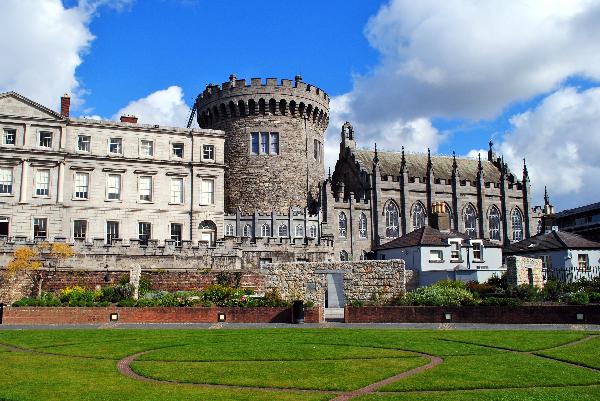
Dublin: The Fair City
A short train or bus ride south across the border brings you to Dublin, the vibrant capital of the Republic of Ireland.
Attractions: No visit is complete without a tour of the Guinness Storehouse, culminating in a pint in the Gravity Bar with 360-degree city views. Explore Trinity College to see the magnificent Book of Kells. Immerse yourself in literature at the Dublin Writers Museum or simply enjoy the atmosphere in Temple Bar (though it’s touristy) or more authentic pubs in other districts.
Food & Drink: Dublin is famous for its pub culture. Enjoy traditional Irish stew, soda bread, and a vast selection of beers and whiskeys. The city also has a growing number of innovative restaurants.
Cultural Insight: Dublin exudes a youthful, literary energy. It’s a city of storytellers, where conversation is an art form and traditional music sessions in pubs are a living cultural tradition.
The Causeway Coastal Route: Northern Ireland’s Crown Jewel
The Dark Hedges: An Atmospheric Tunnel
Made famous by HBO’s “Game of Thrones” as The King’s Road, this avenue of intertwined beech trees is hauntingly beautiful, especially at dawn or dusk.
Carrick-a-Rede Rope Bridge
This thrilling rope bridge links the mainland to the tiny island of Carrick-a-Rede. Crossing it, 30 meters above the churning Atlantic waves, is an exhilarating experience offering spectacular coastal views.
The Giant’s Causeway: A Geological Marvel
A UNESCO World Heritage site, the Giant’s Causeway is an area of about 40,000 interlocking basalt columns, the result of an ancient volcanic eruption. Local legend says it was built by the giant Finn McCool.
Attractions: Walk on the columns, explore the visitor centre for scientific and mythological explanations, and take in the dramatic coastal scenery along the clifftop paths.
Transportation: This route is best explored by car or on an organized tour from Belfast that covers all these sites in a day.
The Return Journey: England’s Historic Gems
A Ferry Back to Britain & The Journey to York
A ferry returns you from Belfast to either Cairnryan or Liverpool in England. From there, a drive or train ride leads to the historic city of York.
York: A Tapestry of History
A wonderfully preserved medieval city, York’s history spans Roman, Viking, and Norman eras.
Attractions: Walk along the magnificent medieval city walls. Get lost in The Shambles, a narrow, overhanging street often called Diagon Alley from Harry Potter. Explore the breathtaking York Minster, one of the world’s most magnificent cathedrals. Learn about Viking history at the Jorvik Viking Centre.
Food & Drink: York is famous for its chocolate heritage (visit York’s Chocolate Story) and traditional afternoon teas.
Warwick Castle: A Medieval Spectacle
A stop at Warwick Castle offers a highly immersive medieval experience. This well-preserved castle features live shows including jousting tournaments, falconry displays, and tours of the grand interiors and dungeons.
Cambridge: Punting on The Cam
The final stop before returning to London is Cambridge, Oxford’s great rival. It is equally beautiful but has a distinct, more compact feel.
Attractions: The highlight is exploring its historic colleges like King’s College with its iconic chapel, and Trinity College. The classic Cambridge experience is to go punting on the River Cam, gliding gently past “The Backs”—the beautiful gardens and rear views of the colleges.
Transportation: Cambridge is less than an hour by train from London King’s Cross or Liverpool Street stations.
The Journey’s End: Return to London
The grand tour concludes with a short train journey back to London, having traversed thousands of years of history and some of the most stunning landscapes Britain and Ireland have to offer.