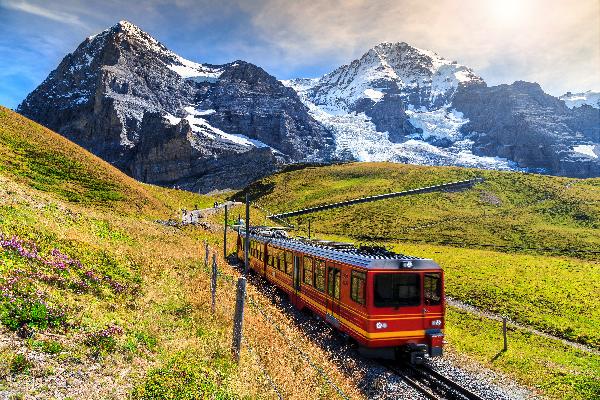
A Grand Alpine Tour: From Parisian Boulevards to Swiss Peaks
This journey is a masterclass in European diversity, seamlessly weaving the iconic urban artistry of Paris with the breathtaking natural splendor of the French and Swiss Alps. The route takes you from the heart of France, through charming alpine towns, up to the “Top of Europe,” and around the serene shores of Lake Geneva before looping back. It’s an itinerary designed for those who crave both cultural immersion and majestic landscapes.
Stage 1: Paris – The Grand Commencement
Your adventure begins in the City of Light, a metropolis that needs little introduction. Paris is a symphony of grand boulevards, world-class art, and an intangible romantic energy. It’s more than a starting point; it’s a foundational experience that contrasts beautifully with the alpine serenity to come.
Key Attractions & Experiences
The Eiffel Tower (Tour Eiffel): No first visit is complete without ascending this iron lattice icon. For a less crowded but equally stunning view, consider the rooftop terrace of the Galeries Lafayette department store or the Montparnasse Tower.
The Louvre (Musée du Louvre): Home to the Mona Lisa, Venus de Milo, and countless other masterpieces. Book a “skip-the-line” ticket online well in advance to avoid wasting precious hours in queue.
Notre-Dame Cathedral: While the interior remains closed following the fire, the exterior and the surrounding Île de la Cité are still a powerful sight. The archaeological crypt nearby offers fascinating historical context.
Montmartre & Sacré-Cœur: Wander the cobbled streets of this historic artists’ quarter. The basilica of Sacré-Cœur sits atop the city’s highest point, offering a panoramic view that is especially magical at sunset.
Seine River Cruise: A boat tour provides a unique, relaxing perspective of Paris’s major monuments and bridges, beautifully illuminated after dark.
Culinary Delights
Paris is a food lover’s paradise. Skip the tourist traps directly on main squares. Instead, venture into side streets for authentic bistros.
Must-tries: A perfectly cooked Steak Frites (steak with fries), a delicate Croque Monsieur (or Madame with an egg), buttery Escargots, and a selection of fine cheeses from a fromagerie. Start your day like a local with a café crème and a flaky croissant from a neighborhood bakery.
Transportation & Local Insight
Paris is best navigated using its extensive
Metro (RATP) system. Purchase a “carnet” of 10 tickets for cost savings or a Navigo Découverte pass for unlimited travel if staying several days. Walking is the best way to discover hidden courtyards and charming cafes. Be mindful of your belongings in crowded areas, especially on the Metro.
Travel Tip: Spend at least 2-3 full days in Paris to absorb its essence without feeling rushed.
Stage 2: Paris to Annecy – Entering the Alps
The journey south from Paris to Annecy marks a dramatic shift in scenery. A direct
TGV (high-speed train) from Paris’s Gare de Lyon takes approximately 3.5 to 4 hours, whisking you from the urban sprawl to the foothills of the Alps.
Annecy: The “Venice of the Alps”
Annecy is a picture-perfect town nestled on the shores of Lake Annecy, renowned for its crystal-clear waters. The old town (
Vieille Ville) is a maze of cobblestone streets, winding canals, and pastel-colored houses.
Palais de l’Isle: This 12th-century castle, shaped like a stone ship in the middle of the Thiou canal, is Annecy’s most iconic landmark.
Lake Annecy (Lac d’Annecy): Rent a bicycle and cycle the dedicated path along the shore, take a relaxing boat cruise, or simply relax on one of the many beaches. The water is famously clean and inviting for a swim.
Annecy Castle (Château d’Annecy): perched on a hill, this former home of the Counts of Geneva now houses a museum with exhibits on Alpine culture and art, plus superb views over the town and lake.
Food & Practicalities
Savour Savoyard specialties here, as you are now in the heart of the French Alps. Indulge in
Fondue Savoyarde (melted cheese with bread for dipping), Raclette (melted cheese served with potatoes, charcuterie, and pickles), and Tartiflette (a hearty potato, bacon, and reblochon cheese gratin). The town has a vibrant market on Sundays, Tuesdays, and Fridays.
Local Insight: Annecy is significantly quieter on weekdays outside of peak summer season, offering a more intimate experience.
Stage 3: Annecy to the Jungfraujoch – Ascent to the Top of Europe
This is a full travel day, but one of the most scenic. The journey involves a series of trains: from Annecy to Geneva, then a Swiss train to Bern or Interlaken, and finally into the heart of the Bernese Oberland. Your base for exploring the Jungfrau region should be
Interlaken or one of the smaller, more charming villages like Grindelwald or Wengen.
The Jungfraujoch Experience
The
Jungfraujoch is not merely a mountain; it’s a monumental engineering achievement and a pristine alpine world. The train journey from Interlaken Ost is an attraction in itself, culminating in the final leg on the Jungfraubahn, which tunnels directly through the Eiger and Mönch mountains to reach the highest railway station in Europe at 3,454 meters (11,332 ft).
The Sphinx Observatory: Step onto the panoramic viewing platform for arguably the most spectacular 360-degree view in the Alps, overlooking the Aletsch Glacier (a UNESCO World Heritage site).
The Ice Palace: Walk through a magical labyrinth of tunnels and chambers carved deep into the glacier, adorned with beautiful ice sculptures.
The Alpine Sensation: A moving walkway and exhibition that celebrates the history and human endeavor behind the construction of the Jungfrau Railway.
Food & Practicalities
Dining options at the top are limited and expensive. The self-service restaurant offers standard fare, but you can bring your own snacks. The thin air at this altitude can cause shortness of breath and fatigue; take it slow and stay hydrated.
Travel Tip: Book your Jungfraujoch tickets online in advance. Check the live webcam on the Jungfrau website before you go – if the summit is shrouded in cloud, it’s worth postponing for a clearer day. Also, wear warm layers, sunglasses, and sunscreen regardless of the weather in Interlaken.
Stage 4: Interlaken and the GoldenPass Line to Montreux
Interlaken, situated between Lake Thun and Lake Brienz, is a hub for adventure sports. While it can feel touristy, its location is ideal. Before departing, consider a cruise on one of the lakes or a hike in the surrounding hills.
The GoldenPass Scenic Journey: Interlaken → Zweisimmen → Montreux
This is not just a train ride; it’s a highlight of any Swiss itinerary. The
GoldenPass Line is a series of trains connecting Central Switzerland to Lake Geneva. The leg from Interlaken to Montreux via Zweisimmen is exceptionally diverse.
Interlaken to Zweisimmen: This segment takes you through the rolling green hills and traditional wooden chalets of the Bernese Oberland. It’s a pastoral, storybook landscape.
Zweisimmen to Montreux: After changing trains in Zweisimmen (a simple cross-platform transfer), the scenery transforms dramatically. You descend into the French-speaking canton of Vaud, passing vineyards and arriving at the palm-tree-lined shores of Lake Geneva (Lac Léman). The approach to Montreux, with the lake on one side and steep vineyards on the other, is stunning.
Montreux: The Swiss Riviera
Montreux enjoys a remarkably mild microclimate, fostering a Mediterranean feel. Its beautiful lakeside promenade is adorned with flowers, sculptures, and breathtaking views across the lake to the snow-capped French Alps.
Chillon Castle (Château de Chillon): A magnificent medieval water castle built on a rocky outcrop on the shore of Lake Geneva. Its dungeons and historic rooms are incredibly well-preserved.
The Freddie Mercury Statue: A tribute to the legendary Queen singer, who loved Montreux and recorded several albums here. The city hosts a famous jazz festival every July.
Lavaux Vineyard Terraces: A short train ride from Montreux, these UNESCO-listed vineyards cascade down the hillsides towards the lake. Walking trails wind through the vineyards, offering unparalleled views and wine-tasting opportunities.
Stage 5: Montreux to Geneva with Detours
The train ride from Montreux to Geneva along the lake is short (about one hour) and beautiful. However, this stage includes two essential detours that are easily managed as day trips.
Detour 1: Annecy (Revisited or as a Stopover)
If your itinerary allows, breaking your journey from Montreux back towards Paris with another night in Annecy can be pleasant. It allows for a more relaxed exploration or activities you might have missed, like paragliding over the lake or visiting the stunning Gorges du Fier.
Detour 2: Évian-les-Bains (The Evian Town)
From Lausanne or Geneva, a short boat ride across Lake Geneva brings you to the elegant French spa town of
Évian-les-Bains, famed for its mineral water.
The Source Cachat: Visit the very spring where Evian water emerges. Locals and tourists alike fill their bottles for free from this public fountain.
The Water Walk (Promenade de l’Eau): A beautiful path leading from the town up to the source, explaining the history and geology of the water.
The Evian Resort: Even if you’re not staying there, stroll through the immaculate grounds and admire the luxurious setting.
Local Insight: The atmosphere in Évian is one of quiet, refined elegance. It’s a perfect place for a leisurely lunch and a stroll along its lovely lakeside promenade.
Geneva: A Global City
Geneva is Switzerland’s most international city, home to the United Nations and the Red Cross. While often seen as a business hub, it has its own charms.
Jet d’Eau: The city’s symbol, a powerful water fountain shooting 140 meters into the air from the lake.
The Flower Clock (L’Horloge Fleurie): A precise timepiece in the English Garden, adorned with thousands of seasonal flowers.
The Old Town (Vieille Ville): Climb up to St. Peter’s Cathedral and explore the cobbled streets filled with antique shops and cafes.
The International District: Take a guided tour of the Palais des Nations, the European headquarters of the UN.
Stage 6: The Return to Paris
The journey concludes with a direct
TGV Lyria train from Geneva’s central station (Gare de Cornavin) directly to Paris’s Gare de Lyon. The ride takes just over three hours, offering a comfortable and efficient return to your starting point, allowing you to reflect on the incredible contrasts of city, lake, and mountain you have experienced.
A Note on Travel Passes
For this multi-country itinerary, planning your tickets is crucial.
Swiss Travel Pass: Offers unlimited travel on consecutive days across Switzerland’s rail, bus, and boat network. It also covers many mountain railways (often at a 50% discount, though the Jungfraujoch usually only gets a 25% discount). It is excellent value if you are doing extensive travel within Switzerland.
Point-to-Point Tickets: If your Swiss travel is limited to just this route, booking “Supersaver” tickets in advance online can be cheaper than a pass.
Eurail/Interrail Pass: A select pass covering both France and Switzerland could be cost-effective, but you must weigh the cost against point-to-point tickets, remembering to book mandatory seat reservations for TGV trains (an extra fee).
Final Travel Tip: Pack layers! The weather in the mountains can change instantly, from sunny and warm in Interlaken to cold and windy at the Jungfraujoch. Comfortable walking shoes are non-negotiable. Most importantly, bring a camera with plenty of memory space – you will need it.
This grand tour from Paris through the Alps is more than a vacation; it’s a curated experience through some of Europe’s most iconic and beautiful landscapes, leaving you with memories of unparalleled urban energy and timeless natural majesty.