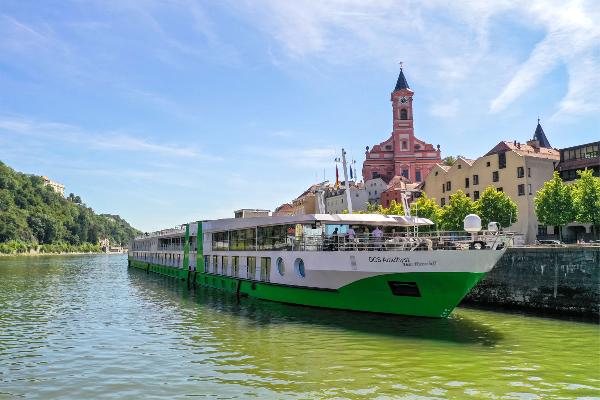
A Danube Journey: Passau, Vienna, Bratislava, Wachau, and Back
This travel guide details a captivating circular journey through the heart of Central Europe, connecting the cultural gems of Germany, Austria, and Slovakia. The route follows the majestic Danube River, taking you from a unique three-river city through imperial capitals, a dynamic post-communist hub, and a world-renowned wine valley, before returning to your starting point. It’s an itinerary rich in history, art, architecture, and culinary delights.
Part 1: Passau, Germany – The Three Rivers City
Nestled at the German-Austrian border, Passau is a charming baroque city often called the “Three Rivers City” due to the confluence of the Danube, Inn, and Ilz rivers. Each river has a distinct color—dark blue, light green, and deep black, respectively—creating a fascinating visual spectacle from the viewing points above the city.
Attractions & Activities
St. Stephen’s Cathedral (Dom St. Stephan): The magnificent baroque cathedral dominates the cityscape. Its interior is a masterpiece of Italian baroque art. The main attraction is the cathedral organ, the largest of its kind in the world, with 17,974 pipes and 233 stops. Attending an organ concert (usually at noon) is an unforgettable auditory experience.
Veste Oberhaus: This fortress, perched high on a hill, was founded in 1219 by the prince-bishops of Passau. It now houses a museum showcasing the city’s history. The climb or bus ride up is rewarded with the most spectacular panoramic views of the three rivers merging and the red-roofed old town below.
Old Town (Altstadt): Wander through the narrow, cobblestone streets of the old town. The Rathaus (Town Hall) with its grand halls and historic paintings, and the Residenzplatz square with its ornate fountain, are key highlights. Don’t miss a stroll along the Danube promenade.
Three Rivers Confluence (Dreiflüsseeck): The best place to see the meeting of the waters is from the tip of the old town peninsula, near the “Dreiflüsseeck” point. The color contrast is most visible after rainfall.
Food & Drink
Passau offers classic Bavarian cuisine with a local twist. Try
Passauer Knödel (large dumplings often served with meat), freshwater fish from the Danube like pike-perch (Zander), and of course, a stein of locally brewed beer. For a sweet treat, sample Passauer Torte, a rich chocolate and nut cake.
Transportation & Local Tips
Arrival: Passau is well-connected by train from major German cities like Munich and Nuremberg. It’s also a major stop for Danube river cruises.
Getting Around: The entire old town is easily explorable on foot. Wear comfortable shoes for the hilly terrain. A bus or a scenic walk across the bridge is needed to reach Veste Oberhaus.
Local Insight: If you’re short on time, focus on the organ concert at the cathedral and the view from Veste Oberhaus—these are Passau’s signature experiences.
Part 2: Vienna, Austria – The Imperial Capital
The journey continues east along the Danube to Vienna, a city that breathes imperial history and artistic grandeur. As the former seat of the Habsburg monarchy, Vienna is a treasure trove of palaces, museums, and coffee house culture.
Attractions & Activities
Schönbrunn Palace: The magnificent summer residence of the Habsburgs is a must-see. Take a tour of the opulent state rooms and lose yourself in the vast, beautifully manicured gardens, which include a maze, palm house, and the Gloriette structure offering superb city views.
Historic Center (Innere Stadt): A UNESCO World Heritage Site. Key sights include St. Stephen’s Cathedral (Stephansdom) with its colorful tiled roof, the Hofburg Palace complex (the winter residence), and the Spanish Riding School to see the Lipizzaner stallions.
Belvedere Palace: This stunning baroque complex consists of two palaces (Upper and Lower Belvedere) separated by a French-style garden. The Upper Belvedere houses an incredible collection of Austrian art, including Gustav Klimt’s masterpiece, “The Kiss.”
Kunsthistorisches Museum: One of the world’s foremost art museums, built to house the immense collections of the Habsburgs. Its holdings include works by Bruegel, Rembrandt, and Vermeer.
Vienna State Opera: Attend a world-class opera or ballet performance. If that’s not possible, take a guided tour to appreciate its stunning interior.
Food & Drink
Viennese cuisine is hearty and refined. Must-tries include
Wiener Schnitzel (a thin, breaded, and fried veal cutlet), Tafelspitz (boiled beef), and Sachertorte (a dense chocolate cake with apricot jam). The coffee house culture is integral to Viennese life. Spend an afternoon at a classic café like Café Central or Café Sacher, sipping a Melange (similar to a cappuccino) and reading the newspaper.
Transportation & Local Tips
Arrival: The train from Passau to Vienna (Wien Hauptbahnhof) takes about 2.5-3 hours and is very comfortable.
Getting Around: Vienna has an excellent and efficient public transport network (U-Bahn, trams, buses). Purchase a Vienna Card for unlimited travel and discounts at major attractions.
Local Insight: Book tickets for major attractions like Schönbrunn Palace and the Opera online in advance to avoid long queues. For a unique experience, visit a traditional Heuriger (wine tavern) in districts like Grinzing or Neustift am Walde to sample young wine and local food in a rustic setting.
Part 3: Bratislava, Slovakia – The Charming Capital
A short trip from Vienna brings you to Bratislava, the compact and lively capital of Slovakia. With its beautifully restored old town and hilltop castle overlooking the Danube, it offers a more relaxed and intimate atmosphere compared to its grand neighbor.
Attractions & Activities
Bratislava Castle (Bratislavský hrad): The city’s most prominent landmark, this rectangular castle sits on a hill overlooking the Danube. It has been meticulously reconstructed and houses historical exhibitions. The views of the city, Austria, and Hungary from the grounds are breathtaking.
Old Town (Staré Mesto): A delightful area for wandering. Key sights include the Main Square (Hlavné námestie) with its Old Town Hall and Roland’s Fountain, and the picturesque Primatial Palace with its Hall of Mirrors.
St. Martin’s Cathedral (Dóm svätého Martina): A Gothic cathedral that served as the coronation church for Hungarian kings and queens for nearly 300 years.
The Blue Church (Kostol svätej Alžbety): A stunning example of Hungarian Art Nouveau architecture. This small church is painted in pale blue and decorated with blue majolica, making it a unique and photogenic spot.
Statues & Quirky Sights: Keep an eye out for Bratislava’s whimsical bronze statues, like Čumil (the “Man at Work” peeking out of a manhole) and Schöne Náci, a charming gentleman tipping his hat.
Food & Drink
Slovak food is hearty and comforting. Try
Bryndzové halušky (potato dumplings with sheep cheese and bacon), Kapustnica (a sour cabbage soup with sausage), and Schnitzel. To drink, sample local beers like Zlatý Bažant or Šariš, or try Slivovica, a potent plum brandy.
Transportation & Local Tips
Arrival: The train from Vienna to Bratislava is incredibly convenient. The journey takes about one hour, with trains departing frequently from Wien Hauptbahnhof or Wien Mitte.
Getting Around: Bratislava’s old town is very compact and best explored on foot. Public transport is efficient if you need to travel further afield.
Local Insight: Bratislava is significantly more affordable than Vienna. This is a great place to enjoy a fine dinner or buy souvenirs without breaking the bank. For a different perspective, consider a short boat trip on the Danube.
The Wachau Valley – A Scenic Detour
The Wachau Valley is a 40-kilometer stretch of the Danube between Melk and Krems, designated as a UNESCO World Heritage Site for its breathtaking landscape, historic architecture, and viticulture. This part of the journey is about scenic beauty rather than city life.
Attractions & Activities
Melk Abbey (Stift Melk): A stunning Benedictine abbey that is one of the world’s most magnificent monastic complexes. Its baroque architecture, library, and marble hall are awe-inspiring. The view of the Danube from the abbey terrace is unparalleled.
Dürnstein: A picture-perfect town with blue-and-white baroque tower on its abbey church. It’s famous for the castle ruins where Richard the Lionheart was imprisoned. Climb up to the ruins for a stunning view of the Danube bend.
Tasting Local Wines: The Wachau is renowned for its white wines, particularly Riesling and Grüner Veltliner. Visit a local Heuriger or winery in towns like Weissenkirchen or Spitz for a tasting.
Krems an der Donau: A historic town at the eastern end of the Wachau, known for its well-preserved old town and its role as a center for art and culture.
Transportation & Local Tips
The Best Way to Experience It: The most scenic way to travel through the Wachau is by boat. Companies like DDSG Blue Danube offer regular services between Melk and Krems, allowing you to sit back and enjoy the views of vineyards, castles, and charming villages.
Alternative: You can also explore by train (the line runs along the valley) or by car/bike. The Wachau has a well-developed bike path along the river.
Trip Planning: You can visit the Wachau as a day trip from Vienna or as a stop on your way back to Passau. A popular plan is to take a train from Vienna to Melk, visit the abbey, take a boat to Dürnstein, explore there, and then take a train back to Vienna or onward to Passau from Krems.
The Return: From Wachau/Krems to Passau
The final leg of your journey takes you back west along the Danube to your starting point in Passau. This can be done by train from Krems or Melk, with a change often required in Linz or St. Valentin. The train journey itself follows the river for long stretches, offering one last look at the beautiful Austrian landscape before crossing back into Germany.
Practical Travel Tips for the Entire Journey
The Best Time to Go: Late spring (May-June) and early autumn (September-October) offer pleasant weather, fewer crowds, and beautiful scenery. Summer is peak season but can be hot and crowded. The Christmas markets in December are magical but very cold.
Currency: Germany uses the Euro (€). Austria uses the Euro (€). Slovakia uses the Euro (€). Having cash is useful for smaller establishments and markets.
Language: German is spoken in Germany and Austria. Slovak is spoken in Slovakia. English is widely spoken in tourist areas, hotels, and restaurants in all three countries.
A Danube River Cruise Alternative: This entire itinerary is perfectly suited for a river cruise. If you prefer unpacking only once, consider booking a cruise that covers this route; it handles all transportation and often includes guided tours.
Souvenirs: Consider bringing back Austrian Mozartkugeln chocolates, Slovak honey wine (Medovina) or pottery, Bavarian beer steins from Passau, or a bottle of fine wine from the Wachau Valley.
A journey through Passau, Vienna, Bratislava, and the Wachau Valley encapsulates the diverse soul of Central Europe—from Bavarian charm and imperial splendor to post-communist vitality and timeless natural beauty—all connected by the ever-present flow of the Danube River.