A Comprehensive Travel Guide to Interlaken, Switzerland
Nestled between the crystalline waters of Lake Thun and Lake Brienz, and overshadowed by the majestic trio of the Eiger, Mönch, and Jungfrau mountains, Interlaken is more than just a town—it is the gateway to the Jungfrau Region and one of Switzerland’s most iconic travel destinations. Its name, meaning “between the lakes,” perfectly describes its unique geographical setting. Originally a monastery in the 12th century, Interlaken has evolved into a vibrant hub for adventure seekers, nature lovers, and those in search of quintessential Alpine beauty. This guide provides a detailed overview of everything a traveler needs to know, from conquering mountain peaks to savoring local delicacies.
Introduction to Interlaken
Interlaken serves as a central base for exploring the surrounding Bernese Oberland. The town itself is compact and easily walkable, centered around the Höheweg, a promenade with stunning views of the mountains. It is divided into two main parts: Interlaken Ost (East) and Interlaken West, which are the two primary train stations. While it can be bustling with tourists, its charm lies in its accessibility to some of the world’s most breathtaking natural scenery and its wide array of activities catering to all paces of travel, from adrenaline-pumping sports to serene lake cruises.
Top Attractions and Activities
Jungfraujoch – Top of Europe
No visit to Interlaken is complete without a journey to the Jungfraujoch. This is the highest railway station in Europe, sitting at 3,454 meters (11,332 feet) above sea level. The journey itself is an engineering marvel, much of which is inside a tunnel through the Eiger and Mönch mountains. At the top, visitors are greeted with a breathtaking panorama of the Aletsch Glacier (a UNESCO World Heritage site), the eternal snows, and the surrounding peaks. Key attractions at the summit include the Sphinx Observatory terrace, the Ice Palace with its intricate ice sculptures, and the Alpine Sensation exhibition detailing the history of the railway.
Booking Tip: Purchase tickets in advance, especially during peak season. Consider the “Good Morning” or “Good Afternoon” tickets for discounted rates.
Weather: Conditions can change rapidly; check the forecast before ascending and dress in warm layers.
Harder Kulm
For a quicker and more accessible panoramic view, the Harder Kulm is Interlaken’s local mountain. A funicular railway climbs from Interlaken to the summit at 1,322 meters (4,337 feet) in just ten minutes. At the top, the “Two Lakes Bridge” viewing platform offers an unforgettable vista directly over Interlaken, with Lake Thun on one side and Lake Brienz on the other, framed by the snow-capped Jungfrau massif. It is particularly spectacular at sunset.
Lake Thun and Lake Brienz
The two lakes that cradle Interlaken are destinations in their own right. Regular and picturesque boat cruises depart from Interlaken West (for Lake Thun) and Interlaken Ost (for Lake Brienz).
Lake Brienz: Known for its stunning turquoise color and dramatic mountain backdrop. Key stops along the cruise include the Giessbach Falls, a powerful waterfall cascading down 500 meters, and the charming village of Brienz, famous for woodcarving.
Lake Thun: Offers a different charm with its castles and milder landscape. Don’t miss Thun Castle with its historical museum and the picturesque St. Beatus Caves.
Schynige Platte
For a nostalgic and scenic mountain experience, the historic cogwheel railway to Schynige Platte is a must. This open-air train journey offers increasingly spectacular views. At the top, visitors find a magnificent Alpine garden with over 500 species of plants and numerous hiking trails that offer classic, picture-postcard views of the Eiger, Mönch, and Jungfrau.
Adventure Sports
Interlaken is the adventure capital of Switzerland. The surrounding landscape provides the perfect playground for thrill-seekers.
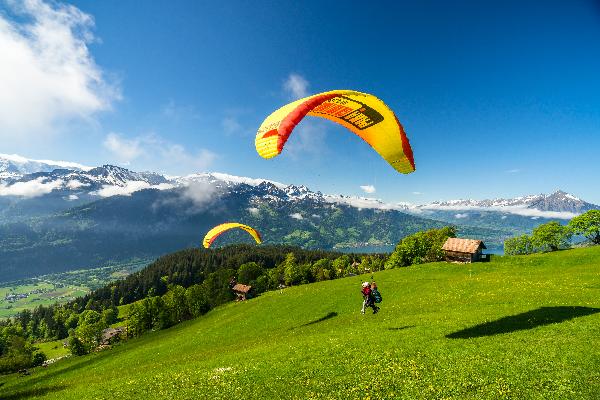
Skydiving & Paragliding: Experience an unparalleled bird’s-eye view of the lakes and mountains by jumping out of a plane or paragliding from Beatenberg or other nearby peaks.
Canyoning & River Rafting: Explore the gorges and waterfalls of the region’s alpine rivers with guided canyoning trips. For rafting, the Lütschine River offers exciting rapids.
Hiking & Biking: Countless trails cater to all fitness levels. A popular easy hike is along the Aare River between Interlaken and Lake Brienz. More challenging trails abound in the Lauterbrunnen Valley and Grindelwald.
Culinary Delights: Food and Drink
Swiss cuisine is a hearty reflection of its Alpine culture, and Interlaken offers a mix of traditional restaurants and international fare.
Traditional Swiss Dishes to Try
Fondue: A social dining experience where bread cubes are dipped into a pot of melted cheese. Moitié-moitié (half Gruyère, half Vacherin) is a classic choice.
Raclette: Another cheese specialty where a half-wheel of raclette cheese is melted and scraped onto boiled potatoes, pickles, and onions.
Rösti: A crispy pan-fried potato dish, often served as a side or topped with ingredients like a fried egg, cheese, or bacon.
Älplermagronen: A comforting Alpine macaroni dish made with pasta, potatoes, cheese, cream, and onions, often served with apple sauce.
Recommended Restaurants and Cafés
Restaurant Schuh: A historic establishment on the Höheweg famous for its vast selection of pastries and its traditional Swiss cuisine with a beautiful terrace.
Goldener Anker: Offers a cozy atmosphere and is known for its excellent fondue and raclette.
Höheweg 133: A more modern take on Swiss classics, with a great wine selection and stylish interior.
Balmer’s Herberge: Even if you’re not staying at this famous hostel, their restaurant serves hearty and affordable meals popular with backpackers.
Transportation: Getting There and Around
Getting to Interlaken
By Air: The closest international airports are Zurich (ZRH) and Geneva (GVA). From there, efficient Swiss Federal Railways (SBB) trains connect to Interlaken. The journey from Zurich Airport takes approximately 2 hours.
By Train: Interlaken is well-connected by rail. Direct trains run from major cities like Bern, Lucerne, and Basel. The scenic GoldenPass Line connects Interlaken to Montreux on Lake Geneva.
By Car: While driving offers flexibility, parking in Interlaken can be expensive and scarce. The Swiss motorway vignette (toll sticker) is required for using highways.
Getting Around Interlaken and the Region
The public transportation system in Switzerland is world-class, and Interlaken is its perfect example.
Train: The Bernese Oberland Railway (BOB) connects Interlaken Ost to Lauterbrunnen and Grindelwald, which are gateways to the Jungfrau region.
Bus: A comprehensive local bus network connects different parts of Interlaken and nearby villages.
Boat: As mentioned, boats on Lakes Thun and Brienz are both a practical transport option and a scenic tour.
The Swiss Travel Pass: For extensive travel, this pass is highly recommended. It offers unlimited travel on trains, buses, and boats across the country, plus free entry to many museums and up to 50% discount on most mountain railways.
On Foot/Bike: Interlaken’s town center is very walkable. Bikes can be rented for exploring the flat paths along the rivers and lakes.
Accommodation Tips
Interlaken offers a wide spectrum of accommodation, from luxury hotels to budget hostels and cozy guesthouses.
Luxury & Mid-Range
Victoria-Jungfrau Grand Hotel & Spa: A historic 5-star hotel on the Höheweg offering impeccable service, a world-class spa, and magnificent views.
Hotel Beau-Rivage: A charming 4-star hotel with a prime location on the Aare River, known for its personalized service and beautiful garden terrace.
Hotel Interlaken: One of the oldest hotels in Switzerland, blending historic charm with modern comfort.
Budget & Unique Stays
Balmer’s Herberge: Perhaps Switzerland’s most famous hostel, known for its social atmosphere, pub, and activities for backpackers.
Happy Inn Lodge: A clean, friendly, and well-located budget option offering both dormitory and private rooms.
Camping: Several campsites are located on the outskirts of town, such as Camping Jungfraublick, offering stunning views and a more natural setting.
Booking Advice: Accommodation fills up quickly during the summer (June-August) and winter ski season (December-March). It is advisable to book several months in advance to secure your preferred choice and rate.
Cultural Insights and Local Etiquette
Understanding local customs enhances any travel experience.
Language: The official language is Swiss German, but standard German is widely understood. In tourist areas, English is commonly spoken. Learning a few basic German phrases like “Grüezi” (hello) and “Danke” (thank you) is appreciated.
Punctuality: The Swiss are famously punctual. Trains, buses, and tours depart exactly on time, so it’s important to be early.
Quiet Hours: Respect is paramount. Quiet hours (typically from 10:00 PM to 7:00 AM) are strictly observed in residential areas and accommodations. Avoid making loud noise during these times.
Shopping: Most shops close relatively early (around 6:30 PM) and are closed on Sundays, except for those in major train stations. Plan your shopping accordingly.
Sustainability: Switzerland has a strong culture of recycling and environmental consciousness. Use public transportation, respect nature by not littering on trails, and follow the principle of “Leave No Trace.”
Practical Information
Best Time to Visit
Summer (June – August): Ideal for hiking, adventure sports, lake activities, and warm weather. This is the peak tourist season with longer days.
Winter (December – March): Perfect for skiing and snowboarding in nearby resorts like Grindelwald-Wengen. The landscape is magical under snow, and Christmas markets add to the charm.
Shoulder Seasons (April-May & September-October): These periods offer fewer crowds, milder weather, and often lower prices. Some mountain railways may have short maintenance closures in spring.
Money Matters
The currency is the Swiss Franc (CHF). Credit cards are widely accepted, but it’s always wise to carry some cash for smaller establishments or mountain huts. Switzerland is known for being expensive, so budget accordingly.
Souvenirs
Popular souvenirs include Swiss Army knives, watches, chocolate (from local confiseries like Schuh), and cowbells. For something more unique from the region, look for woodcarvings from Brienz.
A Sample 3-Day Itinerary
Day 1: Interlaken Orientation & Harder Kulm
- Morning: Arrive, check into accommodation, and stroll along the Höheweg.
- Afternoon: Visit the Tourist Information office to finalize bookings. Take the funicular to Harder Kulm for sunset views over the two lakes.
- Evening: Enjoy a traditional Swiss fondue dinner.
Day 2: Jungfraujoch or Schynige Platte
- Full Day Option A: Take an early train to Jungfraujoch – Top of Europe. Spend the day exploring the ice palace, observatory, and glacier.
- Full Day Option B (for good weather): Take the historic train to Schynige Platte. Hike the Panorama Trail and visit the Alpine garden.
- Evening: Relax with a cruise on Lake Brienz.
Day 3: Lauterbrunnen Valley & Adventure
- Morning: Take a train to Lauterbrunnen. Walk through the valley to see the iconic Staubbach Falls and Trümmelbach Falls (the latter is a series of glacial waterfalls inside a mountain).
- Afternoon: Choose your adventure—take a cable car up to Mürren for hiking, or return to Interlaken for paragliding or canyoning.
- Evening: Last-minute souvenir shopping and a farewell dinner.
Conclusion
Interlaken is more than just a picturesque postcard; it is a dynamic portal to some of Europe’s most awe-inspiring natural wonders. Whether you are standing atop Jungfraujoch surrounded by an alpine wonderland, paragliding over emerald lakes, or simply enjoying a quiet moment on a boat cruise, the region leaves an indelible mark on every visitor. With its efficient transport, diverse activities, and rich culture, Interlaken truly offers an unparalleled Swiss travel experience that caters to every dream and desire.