A Comprehensive Travel Guide: Spain & Portugal Explorer’s Journey
This guide details a classic Iberian Peninsula itinerary, traversing from the Atlantic coast of Portugal, through the heart of Andalusia in southern Spain, and culminating in the vibrant cities of central and northeastern Spain. The route covers Lisbon – Évora – Seville – Ronda – Mijas – Granada – Córdoba – Toledo – Madrid – Segovia – Madrid – Zaragoza – Barcelona, offering a rich tapestry of history, architecture, gastronomy, and culture.
Part 1: Portugal – Land of Discoveries
Lisbon: The City of Seven Hills
Lisbon, Portugal’s stunning capital, is built on a series of hills overlooking the Tagus River. It is a city of charming contrasts, where historic trams clatter past modern boutiques, and Fado music echoes from traditional tavernas.
Top Attractions:
Belém Tower: A 16th-century fortified tower, a symbol of the Age of Discoveries and a UNESCO World Heritage site.
Jerónimos Monastery: A magnificent example of Manueline architecture, also in Belém and UNESCO-listed.
Alfama District: The oldest quarter of Lisbon, a maze of narrow streets, small squares, and home to the São Jorge Castle.
Tram 28: The famous yellow tram that winds through the city’s most historic neighborhoods.
LX Factory: A revitalized industrial complex under the 25 de Abril Bridge, now a trendy hub for shops, restaurants, and art.
Food & Drink:
Pastéis de Belém: The original, secret-recipe custard tarts from the Antiga Confeitaria de Belém.
Bacalhau: Salt cod, prepared in hundreds of different ways.
Ginjinha: A sour cherry liqueur, often served in a chocolate cup.
Fresh Grilled Sardines: A summer staple, best enjoyed at a local festival.
Transportation: Lisbon’s Humberto Delgado Airport (LIS) is the main international gateway. The city has an efficient metro system, buses, and trams. The Lisboa Card offers unlimited public transport and free/discounted entry to many attractions.
Accommodation Tip: Stay in neighborhoods like Chiado for central luxury, Alfama for historic charm, or Príncipe Real for a trendy, local vibe.
Cultural Insight: Listen to Fado, the soulful Portuguese music genre, in an intimate Alfama taverna. It’s an expression of longing, loss, and destiny known as “saudade.”
Évora: A Museum City
A journey east from Lisbon leads to Évora, a UNESCO World Heritage city that is a living museum of Portuguese history, enclosed by well-preserved medieval walls.
Top Attractions:
Roman Temple: Often called the Temple of Diana, it’s one of the best-preserved Roman structures on the Iberian Peninsula.
Évora Cathedral: A massive Romanesque-Gothic cathedral offering stunning views from its roof.
Chapel of Bones (Capela dos Ossos): A sobering 16th-century chapel built with the bones and skulls of thousands of monks.
Food & Drink: The Alentejo region is known for its robust cuisine. Try porco preto (black pork), açorda (a bread-based soup), and the region’s full-bodied red wines.
Transportation: Évora is easily reached by bus or train from Lisbon (approx. 1.5 hours). The city center is compact and best explored on foot.
Accommodation Tip: Opt for a charming pousada (historic hotel) or a guesthouse within the city walls for an authentic experience.
Part 2: Andalusia – The Soul of Spain
Seville: The Heart of Flamenco
Crossing into Spain, Seville is the vibrant, passionate capital of Andalusia, filled with orange trees, Moorish heritage, and the sound of Flamenco.
Top Attractions:
Real Alcázar: A breathtaking royal palace complex with stunning Mudejar architecture and lush gardens.
Seville Cathedral & La Giralda: The world’s largest Gothic cathedral, built on the site of a mosque. Climb the Giralda bell tower for panoramic views.
Plaza de España: A grand, semi-circular brick building with tiled alcoves representing Spanish provinces, built for the 1929 Expo.
Barrio Santa Cruz: The city’s former Jewish quarter, a labyrinth of winding streets, whitewashed houses, and hidden plazas.
Food & Drink:
Tapas: Seville is the birthplace of the tapas culture. Hop between bars and try espinacas con garbanzos (spinach with chickpeas) and solomillo al whisky (pork in whisky sauce).
Cruzcampo Beer: The local lager, best enjoyed at a sunny terrace.
Montaditos: Small sandwiches, a Seville specialty.
Transportation: Seville Airport (SVQ) has good connections. The city center is very walkable, but buses and trams are available. A high-speed train (AVE) connects Seville to Madrid.
Accommodation Tip: Stay in Santa Cruz for romantic charm, El Arenal for proximity to major sights, or Triana across the river for a more local feel.
Cultural Insight: Experience a live Flamenco show in a traditional tablao. It’s a powerful art form of song (cante), dance (baile), and guitar (toque).
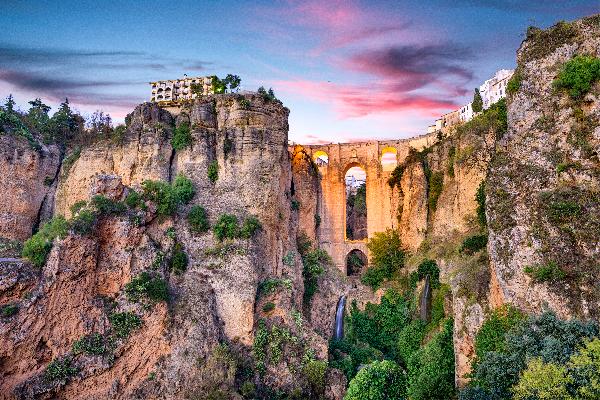
Ronda: The Dramatic Cliffside City
Perched atop a deep gorge, Ronda is one of Spain’s most spectacular and oldest towns, famously known for its Puente Nuevo bridge spanning the El Tajo canyon.
Top Attractions:
Puente Nuevo: The “New Bridge” from the 18th century, offering breathtaking views into the gorge below.
Plaza de Toros: One of Spain’s oldest bullrings, considered the birthplace of modern bullfighting.
The Old Town (La Ciudad): Explore its Moorish origins, including the Arab Baths and the Mondragón Palace.
Food & Drink: Ronda is part of the Serranía de Ronda wine region. Try local game dishes and robust red wines.
Transportation: Ronda is best reached by bus or car from Seville or Málaga. The town itself is walkable, but be prepared for hills.
Accommodation Tip: Choose a hotel with a view of the gorge or the bridge for an unforgettable stay.
Mijas: The White Village
A short drive from the coast, Mijas Pueblo is a picture-perfect white village (
pueblo blanco) clinging to the mountainside, offering stunning views of the Mediterranean.
Top Attractions:
The Whitewashed Streets: Getting lost in the immaculate, flower-adorned streets is the main attraction.
Burro-Taxis: A quirky tradition of taking a ride on a donkey-drawn cart.
Plaza de Toros: A unique oval-shaped bullring.
The Viewpoints (Miradores): Offering spectacular panoramic views of the coast.
Food & Drink: Enjoy traditional Andalusian fare like gazpacho and fried fish at a terrace restaurant with a view.
Transportation: Mijas is easily accessible by bus from Fuengirola, which is connected by train to Málaga. Driving is also straightforward.
Accommodation Tip: For a more local experience than the coastal resorts, stay in a boutique hotel within the village itself.
Granada: The Last Moorish Kingdom
Crowned by the magnificent Alhambra palace, Granada is a city where Moorish and Spanish Christian cultures are deeply intertwined.
Top Attractions:
The Alhambra and Generalife Gardens: A sprawling palace and fortress complex representing the pinnacle of Nasrid architecture. **Booking tickets months in advance is essential.**
The Albayzín: The old Moorish quarter, a UNESCO site with narrow, winding streets and stunning views of the Alhambra from the San Nicolás viewpoint.
Sacromonte: The traditional Gypsy (gitano) neighborhood, known for its cave dwellings and passionate Flamenco shows ( Food & Drink: Free Tapas: Granada is famous for its tradition of receiving a free tapa with every drink ordered at a bar.
Tortilla del Sacromonte: A hearty omelette made with lamb brains and other offal.
North African Tea Houses (Teterías): In the Albayzín, enjoy mint tea and pastries in a Moorish-style setting.
Transportation: Granada Airport (GRX) has limited international flights; many travelers fly into Málaga (AGP) and take a bus or train. The city has a good bus network.
Accommodation Tip: Stay in the Albayzín for historic atmosphere and incredible views, or in the city center (Centro) for convenience.
Cultural Insight: The Alhambra represents the “paradise on earth” of Al-Andalus. Its intricate stucco work, serene courtyards, and poetic inscriptions reflect a highly sophisticated civilization.
Córdoba’s golden age was during the Islamic Caliphate when it was one of the most advanced cities in the world, symbolized by its iconic Mezquita. Top Attractions: The Mezquita-Catedral:A stunning architectural marvel that began as a vast mosque and now houses a Renaissance cathedral at its center. The forest of red-and-white striped arches is unforgettable.
The Jewish Quarter (Judería):A maze of narrow streets centered around the Synagogue and the Zoco (craft market).
The Roman Bridge:A 16-arch bridge spanning the Guadalquivir River, offering great views of the city and the Mezquita.
The Patios:Córdoba’s famous flower-filled courtyards are at their peak during the Festival de los Patios in May, but many are open year-round.
Food & Drink: Salmorejo:A thicker, creamier cousin to gazpacho, typically topped with ham and hard-boiled egg.
Rabo de Toro:A rich and flavorful oxtail stew.
Flamenquín:
A roll of ham and pork, breaded and deep-fried.
Córdoba: The City of Patios