A Comprehensive Travel Guide: Reykjavik to Langjökull Glacier and Back
This journey from Iceland’s vibrant capital to the immense, ancient ice of Langjökull Glacier is a quintessential Icelandic experience. It encapsulates the stark contrast and profound connection between modern human life and the raw, untamable forces of nature that define this island. This guide will walk you through planning and executing this unforgettable day trip or short excursion.
Part 1: Reykjavik – The World’s Northernmost Capital
Your adventure begins in Reykjavik, a city that feels more like a large, artistic town. With its colorful rooftops, avant-garde architecture, and cozy cafe culture, it serves as the perfect launchpad for your glacial expedition.
Attractions & Cultural Insights in Reykjavik
Hallgrímskirkja Church: This iconic expressionist church, towering over the city skyline, is inspired by Iceland’s basalt lava flows. Take the elevator up the bell tower for a panoramic view of the city’s colorful corrugated iron houses, the surrounding mountains, and the sea. The statue of Norse explorer Leif Eriksson (a gift from the United States) stands proudly in front, a nod to Iceland’s Viking heritage.
Harpa Concert Hall: A masterpiece of contemporary architecture, Harpa’s geometric glass facade reflects the sky, sea, and city lights. Inside, the interplay of light and shadow is mesmerizing. Even if you don’t attend a concert, wandering through its public spaces is a must. It symbolizes Iceland’s economic recovery and cultural renaissance post-2008.
The Sun Voyager (Sólfar): Often mistaken for a Viking ship, this striking steel sculpture by Jón Gunnar Árnason is a “dream boat” and an “ode to the sun.” Located by the seaside, it offers a beautiful photo opportunity with Mount Esja as a backdrop.
Perlan (The Pearl): Situated on Öskjuhlíð hill, this domed structure houses a nature exhibition and a stunning indoor ice cave that you can explore year-round. The outdoor viewing platform provides another 360-degree view of Reykjavik.
The Old Harbour: This is a hub of activity. Here, you’ll find whale-watching and Northern Lights tour operators, charming fish-and-chip stalls, and the excellent Grandi Mathöll food hall. The harbour represents Reykjavik’s transition from a fishing town to a modern city.
Food & Drink in Reykjavik
Icelandic cuisine has evolved dramatically, focusing on fresh, local ingredients. Don’t leave without trying:
Hot Dogs (Pylsur): The infamous Bæjarins Beztu Pylsur hot dog stand is a cultural institution. Order one “eina með öllu” (one with everything)—including crispy and raw onions, remoulade, ketchup, and sweet brown mustard.
Lamb: Icelandic lamb is free-range and exceptionally flavorful. Try it in a hearty kjötsúpa (lamb soup).
Seafood: Given Iceland’s location, the seafood is incredibly fresh. Sample plokkfiskur (a comforting fish stew), grilled Arctic char, or simply some of the best salmon you’ll ever taste.
Skyr: This thick, protein-rich dairy product is a staple for breakfast or a snack.
Rye Bread Ice Cream: A unique Icelandic creation. The ice cream is flavored with rye bread that has been baked using geothermal heat, often served with rhubarb compote. Find it at Café Loki or Ísbúðin Vesturbæjar.
Local Insight: For a more local experience, skip the expensive main street restaurants and head to the Grandi Mathöll or Hlemmur Mathöll food halls, where you can find a variety of high-quality, innovative food stalls.
Transportation in and around Reykjavik
Getting Around the City: Reykjavik city center is very walkable. For longer distances, the Strætó bus system is reliable. Purchase tickets via their app for convenience.
Renting a Car: For the ultimate flexibility to explore Langjökull at your own pace, renting a car is highly recommended. Rent from a reputable company like Blue Car Rental or Hertz at Keflavik Airport (KEF) or in Reykjavik. A 4×4 vehicle is not mandatory for the main routes to the glacier bases (like Husafell), but it provides extra security and is essential for any F-roads (mountain roads) you might be tempted to explore.
Parking: Pay attention to parking signs in Reykjavik. The city center uses a parking app (Parka) which is easy to use.
Part 2: The Journey from Reykjavik to Langjökull Glacier
The drive from Reykjavik to the base camps for Langjökull excursions is approximately 1.5 to 2 hours and is an attraction in itself.
The Route & Scenic Stops
You will take Route 1 (the Ring Road) north out of the city before turning inland onto Route 50, then 518 towards the Husafell area. The landscape transforms dramatically from coastal views to vast lava fields covered in soft green moss, rolling hills, and eventually, glimpses of glaciers in the distance.
Hvalfjörður Tunnel: To save significant time, you will drive through the 5.77km long Hvalfjörður Tunnel under the Hvalfjörður fjord. Alternatively, you can take the scenic route around the fjord, which adds about an hour but offers stunning views.
Deildartunguhver Hot Spring: Europe’s most powerful hot spring. You can stop to see the roaring plumes of steam and feel the heat radiating from the earth. It’s a quick but impressive stop that showcases Iceland’s immense geothermal energy.
Hraunfossar & Barnafoss Waterfalls: A short detour from the main road brings you to these spectacular waterfalls. Hraunfossar (Lava Falls) is a series of elegant, cascading waterfalls that emerge seemingly from nowhere out of a vast lava field. Right beside it is Barnafoss (Children’s Falls), a powerful and dramatic rapid with a tragic folk tale attached to it.
The Base Camp: Husafell
This green oasis in the middle of a lava field is the primary gateway for Langjökull tours. It’s more than just a meeting point; it’s a destination with its own charm.
Accommodation: The Husafell Hotel is a beautiful, modern hotel with excellent amenities. There are also cabins and a campground available.
Activities: Besides glacier tours, Husafell offers hiking trails, a unique outdoor art project by artist Páll Guðmundsson, and a geothermal swimming pool.
Part 3: Langjökull Glacier – The Long Glacier
Langjökull is Iceland’s second-largest ice cap, covering an area of about 953 km². It’s not just a beautiful expanse of white; it’s a dynamic and fragile ecosystem and a key part of Iceland’s geography.
Glacier Tours & Experiences
Important: It is extremely dangerous to walk on a glacier without a certified guide. Crevasses can be hidden by thin snow bridges, and weather conditions can change in an instant. Always book a tour with a licensed operator.
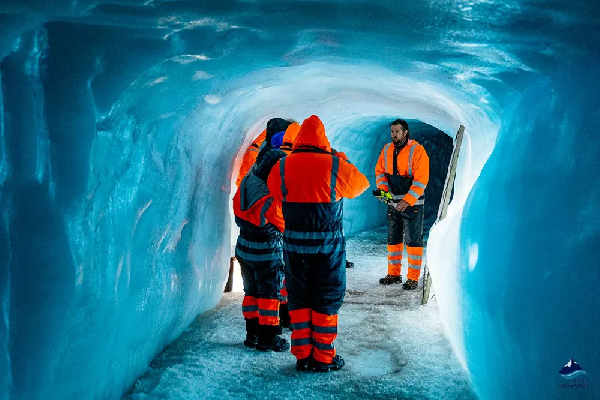
Into the Glacier (Inside the Glacier): This is the world’s largest man-made ice tunnel. A massive monster truck or snowcat transports you high onto the glacier, where you descend into a breathtaking world of blue ice. The tunnel, which is maintained annually, allows you to walk deep inside the glacier, see ice formations hundreds of years old, and even visit a chapel carved into the ice. It’s an educational and awe-inspiring experience that highlights the effects of climate change, as markers show how much the glacier has receded over the years.
Snowmobiling: For an adrenaline-fueled adventure, snowmobiling on Langjökull is unparalleled. Tours typically take you from the base at Klaki or directly from the “Into the Glacier” base camp onto the vast snow plains. The feeling of speeding across the endless white landscape with panoramic views of other ice caps and volcanoes is unforgettable.
Combination Tours: Many operators offer combination tours, such as a Golden Circle tour that includes a snowmobile ride on Langjökull or an “Into the Glacier” expedition.
What to Wear and Bring for the Glacier
Layers are key: A moisture-wicking base layer, an insulating mid-layer (like fleece), and a waterproof and windproof outer layer (Gore-Tex or similar) are essential.
Sturdy Footwear: Waterproof hiking boots with good ankle support are mandatory. The surface can be uneven and slippery.
Accessories: Warm hat, gloves or mittens, and a scarf or buff. Sunglasses and sunscreen are crucial as the sun reflects intensely off the snow, even on overcast days.
Camera: You’ll want to capture this. Consider bringing extra batteries as they drain quickly in the cold.
Practical Tip: Most tour operators provide necessary safety gear like helmets for snowmobiling or crampons for ice walking. They also provide oversized waterproof overalls that can be worn over your own clothes, which are incredibly effective at keeping you warm and dry.
Part 4: The Return Journey to Reykjavik
The drive back to Reykjavik allows you to process the profound experience of standing on an ancient river of ice. You can return via the same route or, if time permits, take a slight detour.
Evening Options Back in Reykjavik
Geothermal Pools: After a day in the cold, there’s no better way to unwind than in one of Reykjavik’s geothermal pools. The Sky Lagoon, with its stunning ocean-edge infinity pool and seven-step ritual, offers a luxurious experience. For a more local feel, visit the Sundhöllin pool in the city center or the massive Laugardalslaug, which has outdoor pools, water slides, and several hot pots.
A Relaxing Dinner: Treat yourself to a well-earned dinner. The city comes alive in the evening, and this is the perfect time to sample more sophisticated Icelandic cuisine or simply enjoy a casual meal and reflect on the day’s adventures.
Practical Travel Tips & Final Insights
Best Time to Visit: Glacier tours operate year-round. Summer (June-August) offers milder weather, midnight sun, and easier road conditions. Winter (October-March) provides a more dramatic, starkly beautiful landscape and the chance to see the Northern Lights afterward, but road conditions can be challenging and daylight is limited.
Booking Tours: Book your glacier tours well in advance, especially during peak season (June-August). They have limited capacity and sell out quickly.
Weather is King: Icelandic weather is notoriously fickle. “If you don’t like the weather, just wait five minutes” is a common saying. Check vedur.is for weather and road.is for road conditions multiple times a day. Be prepared for your tour to be postponed or cancelled due to weather—flexibility is part of the Icelandic travel experience.
Sustainable Travel: The glaciers are receding at an alarming rate due to climate change. Be a responsible traveler: stick to marked paths when not on a guided tour, do not litter, and choose operators who prioritize environmental sustainability.
The “Right to Roam”: In Iceland, you have the right to walk almost anywhere, thanks to Almannarétturinn (the right of public access). However, this comes with the responsibility to not damage nature—do not drive off-road, do not trample on fragile moss, and always close gates behind you.
A journey from Reykjavik to Langjökull Glacier is more than just a sightseeing trip; it’s a physical and philosophical exploration of fire and ice, of human resilience and planetary power. It will leave you with a deep appreciation for Iceland’s unique beauty and a sobering understanding of our planet’s fragility.