A Comprehensive Travel Guide: Munich, Bavaria, and Austria’s Lake District
This itinerary crafts a classic journey through the very heart of European charm, weaving together the vibrant culture of Southern Germany with the breathtaking alpine landscapes and imperial history of Austria. Travelers will experience world-class cities, storybook castles, serene lakes, and picturesque villages, all connected by efficient and scenic transportation networks. The route is a loop, starting and ending in Munich, making it logistically straightforward and immensely rewarding.
Introduction to the Route: Munich to Vienna and Back
This journey spans two countries with a shared history and distinct cultural flavors. It begins in Munich, the capital of Bavaria, then delves into the alpine wonders of the German and Austrian Alps, including King’s Lake and the Salzkammergut Lake District. The route continues to the imperial elegance of Vienna before looping back through the Danube Valley to the starting point. The entire trip can be comfortably completed in 10 to 14 days, depending on the depth of exploration desired.
Chapter 1: Munich (München) – The Bavarian Capital
Munich is the ideal starting point for this adventure. As the capital of the Free State of Bavaria, it perfectly blends traditional German culture with modern urban sophistication.
Attractions & Experiences
Marienplatz: The central square and heart of the city, dominated by the magnificent Neues Rathaus (New Town Hall). Visitors should time their visit to see the Glockenspiel performance, which reenacts historical stories with dancing figurines.
English Garden (Englischer Garten): One of the world’s largest urban parks. It’s a place for cycling, strolling, and even surfing on the standing wave in the Eisbach river.
Hofbräuhaus: The world’s most famous beer hall offers an authentic, raucous Bavarian experience. Even for non-drinkers, the atmosphere, traditional music (Oompah band), and hearty food are unforgettable.
Nymphenburg Palace: A stunning Baroque palace that was the summer residence of the Bavarian monarchs. The palace park is vast and beautiful for a leisurely walk.
Deutsches Museum: One of the world’s oldest and largest science and technology museums, offering interactive exhibits that captivate all ages.
Food & Drink
Weißwurst: A traditional veal sausage, typically eaten before noon, served with sweet mustard, a pretzel, and a wheat beer (Weißbier).
Schweinshaxe: A crispy roasted pork knuckle, a hearty Bavarian specialty.
Obatzda: A flavorful cheese spread made from camembert, butter, and paprika, perfect with a pretzel.
Beer: Munich is the birthplace of Oktoberfest. Sample Helles (light lager), Dunkles (dark lager), and the potent Doppelbock.
Transportation & Accommodation
Munich has an excellent public transportation system (MVV) comprising U-Bahn (subway), S-Bahn (suburban train), trams, and buses. The city center is very walkable. For accommodation, staying near the Hauptbahnhof (main train station) offers excellent transport links, while areas like Schwabing or near the Isar River provide a more local neighborhood feel.
Chapter 2: Oberammergau & Neuschwanstein Castle – Fairytale Escapes
A short train or bus ride south from Munich leads into the Ammergau Alps and a world of folklore and fantasy.
Attractions & Experiences
Oberammergau: This charming village is world-famous for its Passion Play, held every ten years. Even outside of play years, it’s known for its Lüftlmalerei (frescoes) painted on house façades depicting fairy tales or religious scenes.
Neuschwanstein Castle: The iconic castle that inspired Disney’s Sleeping Beauty Castle. Perched on a rugged hill, its interior is a tribute to Wagnerian operas. The view from Marienbrücke (Mary’s Bridge) is essential. Tip: Book tickets online well in advance.
Hohenschwangau Castle: Located opposite Neuschwanstein, this was the childhood residence of King Ludwig II and is less fantastical but more historically authentic.
Transportation
Take a train from Munich Hauptbahnhof to Füssen. From Füssen, take bus RVA/OVG 73 or 78 to “Hohenschwangau Neuschwanstein Castles.” Oberammergau can be reached by train via Murnau.
Chapter 3: Königssee & Berchtesgaden – Alpine Serenity
Venturing further east into Germany’s Berchtesgaden National Park, the landscape becomes dramatically alpine.
Attractions & Experiences
Königssee (King’s Lake): Often described as Germany’s most beautiful lake, its emerald-green waters are surrounded by steep mountain walls. An electric boat (the only motorized boats allowed) takes visitors to the pilgrimage chapel of St. Bartholomä and to Salet, from where one can hike to the smaller Obersee lake.
Eagle’s Nest (Kehlsteinhaus): Built as a 50th-birthday present for Adolf Hitler, this mountaintop teahouse is now a restaurant with breathtaking panoramic views of the Alps. Access is via a special bus and a brass elevator carved through the mountain.
Berchtesgaden Salt Mine: A fun and educational tour that involves sliding down miner’s slides, crossing an underground salt lake on a raft, and learning about the “white gold” that shaped the region.
Transportation & Accommodation
The base town is Berchtesgaden, reachable by train from Munich or Salzburg. From Berchtesgaden, local RVO buses connect to Königssee and the Eagle’s Nest bus departure point. Staying in Berchtesgaden offers convenience, while guesthouses around Königssee provide a more immersive nature experience.
Chapter 4: Salzburg – The Sound of Music
A short bus or train ride from Berchtesgaden crosses the border into Austria, arriving in Salzburg, the birthplace of Mozart and the setting for
The Sound of Music.
Attractions & Experiences
Hohensalzburg Fortress: One of Europe’s largest and best-preserved medieval castles, looming over the city. The funicular ride up and the views are spectacular.
Mirabell Palace and Gardens: The beautiful gardens are famous from the “Do-Re-Mi” scene in The Sound of Music. The Marble Hall inside the palace is a popular wedding venue.
Getreidegasse: The city’s most famous shopping street, known for its ornate wrought-iron shop signs.
Mozart’s Birthplace (Geburtshaus): A museum dedicated to the composer’s early life and family, located on Getreidegasse.
Salzburg Cathedral (Dom): A magnificent Baroque cathedral in the heart of the old city.
Food & Drink
Mozartkugel: The famous chocolate ball with marzipan and nougat. The original is from Café Fürst.
Salzburger Nockerl: A sweet soufflé dessert meant to resemble the surrounding mountains.
Austrian Coffee Culture: Spend an afternoon at a traditional coffeehouse like Café Tomaselli, enjoying a Melange (similar to a cappuccino) and a slice of cake.
Bier: Salzburg has its own brewing tradition; try Stiegl beer.
Chapter 5: The Salzkammergut Lake District & Hallstatt
East of Salzburg lies the Salzkammergut, a stunning region of interconnected lakes and mountains. This is a place for slowing down and embracing nature.
Attractions & Experiences
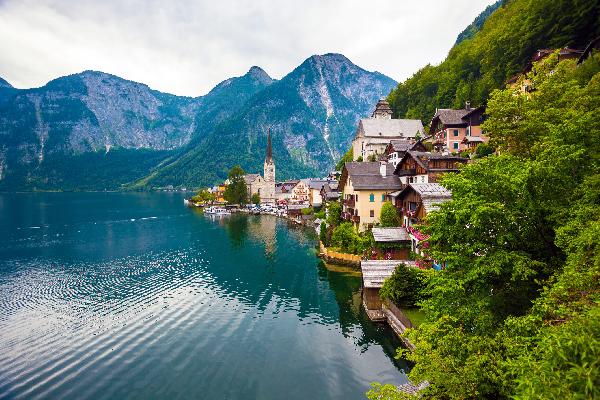
Hallstatt: A UNESCO World Heritage site, this village is famously picturesque, nestled between the Hallstätter See and towering mountains. Visit the Beinhaus (Bone House) at St. Michael’s Chapel, take the funicular to the Salt Mine for panoramic views, or simply wander the lakeside promenade.
Bad Ischl (巴德伊舍): A historic spa town that was the summer retreat of Emperor Franz Joseph I. Visit the Kaiservilla (Imperial Villa) to understand Habsburg history. It’s also known for its Konditoreien (patisseries), especially Zauner.
The Lakes: Explore beyond Hallstätter See. Wolfgangsee offers charming towns like St. Gilgen and St. Wolfgang, while Mondsee is home to the church where the wedding scene in The Sound of Music was filmed.
Transportation & Accommodation
The region is best navigated by a combination of train and bus. The “Salzkammergut Ticket” offers unlimited travel on regional trains and buses. For a unique experience, stay in a guesthouse in Hallstatt (book far in advance) or in one of the less crowded villages like St. Gilgen or Gmunden for a more relaxed stay.
Chapter 6: Melk Abbey & The Danube Valley
The journey continues from the lakes towards the Danube River, entering the Wachau Valley, a UNESCO-listed cultural landscape known for its vineyards, apricot orchards, and medieval towns.
Attractions & Experiences
Melk Abbey (Stift Melk): A magnificent Benedictine abbey that towers over the town of Melk and the Danube River. Its Baroque architecture, library, and marble hall are breathtaking. It is one of Austria’s most significant monastic sites.
The Wachau Valley: The stretch of the Danube between Melk and Krems is spectacular. Consider taking a scenic river cruise or cycling the Danube Bike Path (Donauradweg) which passes through charming towns like Dürnstein, where Richard the Lionheart was imprisoned.
Transportation
The main train line from Salzburg/Salzkammergut to Vienna runs directly through Melk, making it an easy stopover. Trains are frequent and efficient.
Chapter 7: Vienna (Wien) – The Imperial City
The grand finale of this leg of the journey is Vienna, a city synonymous with music, art, and imperial grandeur.
Attractions & Experiences
Schönbrunn Palace: The former summer residence of the Habsburgs, this vast Rococo palace rivals Versailles. A tour of the state rooms and a walk through its sprawling gardens are essential.
The Hofburg: The former imperial palace in the city center. This complex houses the Imperial Apartments, the Sisi Museum (dedicated to Empress Elisabeth), and the Spanish Riding School with its famous Lipizzaner stallions.
St. Stephen’s Cathedral (Stephansdom): The Gothic centerpiece of Vienna, with its iconic colorful tiled roof.
The Vienna State Opera (Wiener Staatsoper): Attend a world-class opera or ballet performance, or take a guided tour.
The Museumsquartier: A vast complex housing world-renowned museums like the Kunsthistorisches Museum (Art History Museum) and the Leopold Museum, which focuses on Austrian modern art (e.g., Egon Schiele).
The Belvedere Palace: Home to Gustav Klimt’s masterpiece, “The Kiss,” as well as other important Austrian art collections. The palace gardens are beautiful.
Food & Drink
Wiener Schnitzel:A thin, breaded, and fried veal cutlet. It is Austria’s national dish.
Sachertorte:The famous dense chocolate cake with apricot jam from the Hotel Sacher.
Austrian Wine:The Heuriger are traditional wine taverns on the outskirts of Vienna (e.g., in Grinzing or Nussdorf) where local vintners serve their new wine with cold buffets.
Coffeehouse Culture:A vital part of Viennese life. Spend hours reading the newspaper over a Einspänner (coffee with whipped cream) at institutions like Café Central or Café Sacher.
Transportation & Accommodation
Vienna has an outstanding public transport network (U-Bahn, trams, buses). Accommodation in districts like Innere Stadt (District 1) puts you in the heart of the historic center, while districts like Mariahilf or Neubau offer a trendier vibe with excellent transport links.
The Return Journey: Linz to Munich
The return to Munich can be direct via a high-speed Railjet train from Vienna (approx. 4 hours). However, breaking up the journey in Linz offers an interesting stopover.
A Stop in Linz
A major city on the Danube, Linz is a blend of industrial heritage and contemporary culture.
Hauptplatz:The main square is one of Austria’s largest enclosed squares.
Lentos Kunstmuseum & Ars Electronica Center:A modern art museum and a futuristic museum of technology and media art, respectively.
The Pöstlingbergbahn:A historic mountain tramway that climbs to the Pöstlingberg hill for great views over Linz and the Danube.
Crucial Practical Information
Cuisine Summary: Germany vs. Austria
Austrian cuisine tends to be slightly more refined and influenced by its imperial past (Hungarian, Bohemian), featuring dishes like Tafelspitz (boiled beef). Bavarian cuisine is heartier and more rustic, centered around pork, dumplings, and cabbage. Both have exceptional pastries and coffee culture.
Cultural Insights & Etiquette
Punctuality:Taken very seriously in both Germany and Austria for appointments and public transport.
“Guten Tag” & “Bitte”:A polite greeting (“Good day”) and saying “Please” (“Bitte”) when ordering or requesting something goes a long way.
Cash vs. Card:Austria is generally more card-friendly than Germany (especially Bavaria), where many smaller establishments, beer halls, and guesthouses still prefer cash (Euro). Always carry some cash.
Sundays:Most shops are closed on Sundays in both countries. Plan accordingly for groceries and shopping.
Souvenir Ideas
Austria:Swarovski crystals (from Wattens), Mozartkugeln from Café Fürst, pumpkin seed oil (from Styria), traditional Dirndl or Lederhosen (high-quality ones are expensive).
Germany (Bavaria):A beer stein (Maßkrug), cuckoo clock from the Black Forest (available in Munich), traditional Bavarian clothing (Tracht), or Lebkuchen (gingerbread) from Nuremberg.
Trip Planning Timeline & Budgeting Tips
A 14-day trip allows for a comfortable pace. Book intercity trains in advance (e.g., Österreichische Bundesbahnen – ÖBB in Austria; Deutsche Bahn – DB in Germany) for cheaper “Sparpreis” fares. Accommodation in popular spots like Hallstatt and Vienna should be booked months ahead. Consider regional passes like the Bayern-Ticket (for Bavaria) or the Austrian KlimaTicket for extensive travel within Austria if it fits your itinerary.
The journey from Munich through Bavaria and Austria offers an unparalleled tapestry of experiences—from clinking beer steins in a bustling hall to standing in silent awe before an alpine lake at dawn. It is a trip that captures both Gemütlichkeit (coziness) and Kaiserlich (imperial) grandeur in one unforgettable loop.