A Comprehensive Travel Guide: Marrakech to Casablanca via the Sahara
This guide details a classic Moroccan circuit, taking travelers from the vibrant imperial city of Marrakech, across the majestic Atlas Mountains, into the golden dunes of the Sahara, through the ancient cultural capital of Fes, to the blue-washed streets of Chefchaouen, and finally to the coastal capitals of Rabat and Casablanca. This journey offers a profound immersion into Morocco’s diverse landscapes, rich history, and captivating culture.
Marrakech: The Red City
Marrakech is a sensory explosion, a city where ancient traditions pulse with modern energy. Founded in 1062, its red sandstone walls give it the nickname “The Red City.” It serves as the perfect starting point for any Moroccan adventure.
Key Attractions
Jemaa el-Fnaa: The world’s most vibrant square. By day, it’s a market of orange juice stalls and snake charmers. By night, it transforms into a massive open-air food court and entertainment venue with storytellers, musicians, and performers.
Medina of Marrakech: A UNESCO World Heritage site, this labyrinthine old city is a network of narrow alleys filled with souks (markets) selling spices, leather, lamps, and textiles. Getting lost is part of the experience.
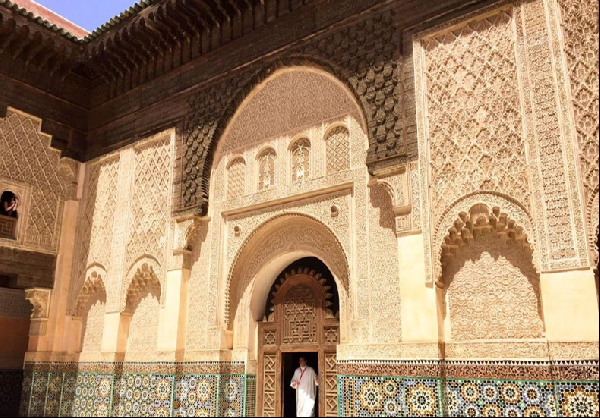
Bahia Palace: A stunning example of Moroccan architecture and design from the late 19th century, with intricate tilework, carved cedar ceilings, and peaceful courtyards.
Majorelle Garden: A beautifully manicured botanical garden designed by French painter Jacques Majorelle and later owned by Yves Saint Laurent. Its vibrant blue accents are iconic.
Koutoubia Mosque: The largest mosque in Marrakech, with a 77-meter minaret that is a city landmark and navigational aid.
Food & Drink
Do not miss the street food in Jemaa el-Fnaa—try snail soup, grilled meats, and msemen (flaky flatbread). For a more upscale experience, dine at a riad restaurant. Tagine (a slow-cooked stew) and couscous are staples. Drink fresh orange juice and mint tea.
Transportation & Accommodation
Most international flights arrive at Marrakech Menara Airport (RAK). The city is very walkable, but petit taxis are plentiful for longer distances. The best accommodation experience is in a
riad—a traditional Moroccan house with an interior garden or courtyard, often located within the Medina.
Cultural Insight
Haggling is expected in the souks. Start at about half the asking price and negotiate with a smile. Dress modestly, especially when visiting religious sites.
Ait Benhaddou & Ouarzazate: The Gate to the Desert
The journey from Marrakech to the desert involves crossing the High Atlas Mountains via the Tizi n’Tichka pass, offering breathtaking views. The main stops are two UNESCO World Heritage sites that have served as backdrops for countless films.
Key Attractions
Ait Benhaddou: A spectacular fortified village (ksar) made of earthen clay. This UNESCO site is one of the most iconic and well-preserved kasbahs in Morocco, featured in films like Gladiator and Game of Thrones. A guided tour through its narrow passages is highly recommended.
Ouarzazate: Known as “The Door of the Desert,” this town is home to Atlas Film Studios, where many Hollywood blockbusters have been shot. The nearby Taourirt Kasbah is also worth a visit.
Transportation & Accommodation
This leg is almost always done by road, either on a organized tour or by private car/driver. The drive from Marrakech to Ouarzazate takes approximately 4 hours. Ouarzazate has a range of hotels, from standard to luxurious kasbah-style accommodations.
Merzouga & The Erg Chebbi Dunes
Moving southeast from Ouarzazate, the landscape becomes increasingly arid, leading to the edge of the Sahara Desert at Merzouga, home to the magnificent Erg Chebbi dunes.
Key Attractions
Camel Trek & Desert Camp: The quintessential Sahara experience. A sunset or sunrise camel trek into the golden-orange dunes is unforgettable. Most travelers spend a night in a Berber desert camp, enjoying traditional music under a canopy of stars.
Erg Chebbi: These are some of the tallest sand dunes in Morocco, reaching up to 150 meters. Climbing them for sunrise is a challenging but rewarding experience.
Visiting a Berber Family: Some tours offer visits to nomadic Berber families for tea, providing a glimpse into their ancient way of life.
Accommodation
Accommodation ranges from basic auberges (guesthouses) at the edge of the dunes to luxury desert camps with private bathrooms and comfortable beds. Booking a desert tour from Merzouga is the standard practice.
Cultural Insight
The Berbers are the indigenous people of North Africa. Respect their hospitality and traditions. The desert is extreme; pack accordingly with warm clothes for cold nights and light clothes for hot days.
Fes: The Cultural & Spiritual Capital
The journey from Merzouga to Fes is long but scenic. Fes is often considered Morocco’s most complete imperial city, renowned for its preserved medieval architecture and vibrant intellectual and spiritual life.
Key Attractions
Fes el-Bali: This ancient medina is another UNESCO site and one of the world’s largest contiguous car-free urban areas. It is a maze of over 9,000 alleys. A local guide is essential to navigate and appreciate its history.
Chouara Tannery: The largest and oldest tannery in the city. View it from the surrounding leather shops for a spectacular (and aromatic) vista of dye-filled stone vats.
Al-Attarine Madrasa & Bou Inania Madrasa: Exquisitely decorated Islamic schools showcasing zeniths of Marinid architecture.
Dar Batha Museum & Royal Palace: The museum offers a fine collection of traditional arts, while the palace’s grand golden doors are a popular photo spot.
Food & Drink
Fes is known for its sophisticated cuisine. Try the savory pastilla (a pigeon or chicken pie with almonds and cinnamon) and mechoui (slow-roasted lamb). The medina is filled with food stalls and traditional restaurants.
Transportation & Accommodation
Fes has an international airport (FEZ). Staying in a riad within the medina provides an authentic experience. The city can be explored on foot within the medina, but petit taxis are needed for travel to the new city (Ville Nouvelle).
Chefchaouen: The Blue Pearl
Nestled in the Rif Mountains, Chefchaouen is famous for its striking blue-washed buildings. It offers a tranquil and photogenic respite from the bustle of larger cities.
Key Attractions
The Blue Medina: The main attraction is simply wandering the serene, blue-hued streets of the medina, discovering hidden plazas, and taking photographs.
Outa el-Hammam Square: The main square, lined with cafes and restaurants, perfect for people-watching with the Grand Mosque and kasbah as a backdrop.
Kasbah Museum: A restored 18th-century kasbah with lovely gardens and an ethnographic museum.
Ras El Maa: A small waterfall at the edge of the medina where locals gather to wash clothes and socialize.
Food & Drink
The town offers a mix of Moroccan and international cuisine. Given its mountain location, it’s a great place to try locally sourced goat cheese and fresh trout.
Transportation & Accommodation
Chefchaouen is best reached by bus or private car from Fes (approx. 4 hours) or Tangier. Accommodation consists of charming guesthouses and riads within the blue medina. Book well in advance during peak season.
Cultural Insight
Theories about the blue color range from repelling mosquitoes to representing the sky and heaven, or a Jewish tradition brought by refugees in the 1930s. It is considered a deeply spiritual color here.
Rabat: The Modern Capital
As the political and administrative capital of Morocco, Rabat offers a more relaxed and orderly atmosphere compared to Fes or Marrakech. It is a modern city with a rich historical core, also designated a UNESCO World Heritage site.
Key Attractions
Hassan Tower & Mausoleum of Mohammed V: An iconic site featuring the minaret of an incomplete 12th-century mosque and the magnificent modern mausoleum of the former king and his sons.
Kasbah of the Udayas: A beautiful fortified citadel at the mouth of the Bou Regreg river. Its blue-and-white streets are reminiscent of Chefchaouen and offer stunning ocean views.
Chellah Necropolis: A serene garden complex containing Roman and Islamic ruins, known for its stork nests and tranquil atmosphere.
Modern City Center: Explore the wide boulevards and colonial-era architecture of the Ville Nouvelle.
Transportation
Rabat is well-connected by train to Casablanca, Fes, and other major cities. The Rabat-Sale tram system is efficient for getting around the city.
Casablanca: The Economic Hub
Casablanca is Morocco’s bustling economic center and its largest city. It is more modern and business-oriented than other stops on this itinerary, but it holds one of the country’s most significant architectural gems.
Key Attractions
Hassan II Mosque: The city’s undisputed highlight. This architectural masterpiece is one of the largest mosques in the world and features the world’s tallest minaret (210 meters). Its location, perched over the Atlantic Ocean, is stunning. Non-Muslim visitors can take a guided tour.
The Corniche:A lively seafront promenade in the Ain Diab district, lined with swimming pools, restaurants, and cafes.
The Medina of Casablanca: Smaller and less touristy than those in Fes or Marrakech, it offers a more local experience.
The Habous Quarter:A “new medina” built by the French in the 1930s, blending Moroccan style with European planning. It’s a great place to shop for leather goods and books.
Food & Drink
As a port city, Casablanca is famous for its seafood. Visit the Marché Central (Central Market) to see the day’s catch and enjoy it grilled at nearby restaurants.
Transportation
Mohammed V International Airport (CMN) is Morocco’s primary international air gateway. The city has a good train network connecting it to Rabat, Marrakech, and other cities. The Casa-Port train station is conveniently located for cruise ship passengers.
A Note on Itinerary Planning
The classic route outlined here typically requires a minimum of 10-14 days to enjoy without being rushed. Key considerations include:
Tours vs. Independent Travel:The desert leg (Marrakech to Merzouga to Fes) is most easily managed by booking a multi-day private or small-group tour, which includes transport, driver, and accommodation.
Internal Transport:The train system (ONCF) is excellent for connecting cities like Casablanca, Rabat, and Fes. For other routes (e.g., Fes to Chefchaouen), CTM or other private bus companies are reliable and comfortable.
Best Time to Visit:The ideal seasons are spring (March-May) and autumn (September-November), when temperatures are mild across the country.
A journey through this circuit provides an unparalleled opportunity to witness the incredible diversity of Morocco—from bustling souks and ancient medinas to epic mountain passes and silent desert dunes—all within a relatively compact geographical area.