A Comprehensive Travel Guide: Madrid, Toledo & Segovia
This itinerary explores the vibrant heart of Spain, combining the bustling capital of Madrid with two of its most breathtaking and historically significant UNESCO World Heritage cities, Toledo and Segovia. This journey offers a perfect blend of royal grandeur, imperial history, artistic masterpieces, and culinary delights.
Trip Overview
This classic loop is typically undertaken over 4 to 7 days, allowing for a deep dive into each location. The route is logistically straightforward, with excellent high-speed train and bus connections between cities. The guide suggests starting and ending in Madrid, using it as a central hub for day trips or for a multi-day stay.
Recommended Duration: 5-7 days
Style: City Break, Culture, History, Food
Pace: Moderate
Key Themes: Habsburg & Bourbon History, Art (El Greco, Velázquez, Goya), Medieval Architecture, Culinary Traditions
Part 1: Madrid – The Capital of Passion
Madrid, Spain’s vibrant and elegant capital, sits at the very center of the Iberian Peninsula. It is a city of grand boulevards, sprawling parks, world-class art museums, and a nightlife that pulses until dawn.
Must-See Attractions in Madrid
Museo del Prado: Home to one of the finest collections of European art, with masterpieces by Velázquez (Las Meninas), Goya (The Third of May 1808), and El Greco.
Royal Palace (Palacio Real): The official residence of the Spanish Royal Family, this is the largest functioning royal palace in Europe. Its opulent rooms, throne room, and royal armory are breathtaking.
Plaza Mayor: A grand, arcaded square in the heart of Hapsburg Madrid, once the scene of markets, bullfights, and executions. Today, it’s a lively hub surrounded by cafes and restaurants.
Retiro Park (Parque del Buen Retiro): A 350-acre green oasis perfect for boating on the lake, visiting the stunning Palacio de Cristal, or simply strolling among the gardens and street performers.
Puerta del Sol: The symbolic center of Spain and the city’s busiest square. It’s home to the famous clock whose bells mark the eating of the Twelve Grapes on New Year’s Eve and the “Kilometer Zero” plaque.
Reina Sofía Museum: Spain’s national museum of 20th-century art, showcasing greats like Dalí and Miró. Its crown jewel is Picasso’s monumental anti-war painting, Guernica.
Madrid’s Culinary Scene
Madrid is a food lover’s paradise, from traditional taverns to avant-garde markets.
Cocido Madrileño: A hearty chickpea-based stew, perfect for a cold day.
Bocadillo de Calamares: A simple but iconic sandwich of fried squid rings in a crusty baguette, best enjoyed in Plaza Mayor.
Churros con Chocolate: The classic breakfast or late-night snack. Dip fried dough sticks into a thick, rich cup of hot chocolate. Chocolatería San Ginés is the most famous spot.
Tapa Hopping: Head to the neighborhoods of La Latina or Las Letras (Barrio de las Letras) for a “tapeo,” moving from bar to bar, enjoying a small plate and a drink at each.
Getting Around Madrid
Madrid has an excellent and affordable public transport system.
Metro: Extensive and efficient, it’s the best way to cover long distances quickly.
Bus: Offers scenic routes through the city.
Walking: The city center is very walkable, with many key attractions clustered together.
Taxi/Ride-Sharing: Readily available and reasonably priced for shorter journeys or late-night travel.
Accommodation Tips for Madrid
For first-time visitors, central neighborhoods are ideal.
Centro (Sol / Huertas): In the heart of the action, close to major sights, but can be noisy.
Salamanca: An upscale district known for luxury shopping, fine dining, and elegant hotels.
Chueca & Malasaña: Trendy, vibrant neighborhoods full of boutique shops, hip cafes, and a lively nightlife scene.
La Latina: A historic area with a medieval feel, famous for its Sunday flea market (El Rastro) and tapas bars.
Part 2: Toledo – The City of Three Cultures
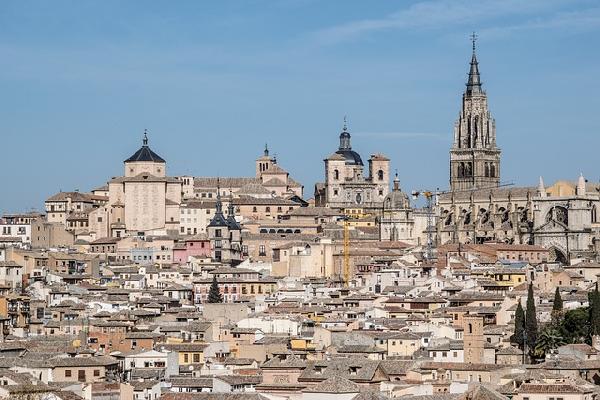
A short journey from Madrid, Toledo is a monumental city perched on a hill above the Tagus River. Known as the “Imperial City” and the “City of Three Cultures” for its historical coexistence of Christian, Muslim, and Jewish communities, its entire old center is a UNESCO World Heritage Site.
Must-See Attractions in Toledo
Toledo Cathedral: A masterpiece of High Gothic architecture. Its interior is staggering, featuring a magnificent altarpiece, the transparente (a Baroque skylight), El Greco’s paintings in the sacristy, and a treasury filled with priceless artifacts.
Alcázar of Toledo: A formidable fortress dominating the city’s skyline. It now houses the Army Museum, detailing Spain’s military history.
Monastery of San Juan de los Reyes: A stunning Isabelline Gothic monastery built by the Catholic Monarchs to commemorate their victory. Its cloister is exceptionally beautiful.
Santo Tomé Church: Home to El Greco’s most famous painting, The Burial of the Count of Orgaz, a masterpiece of Mannerist art.
The Jewish Quarter (Judería): Wander through narrow streets to find the Synagogue of Santa María la Blanca and the Tránsito Synagogue (Sephardic Museum), which testify to Toledo’s rich Jewish heritage.
Mirador del Valle: For the most iconic panoramic view of Toledo across the river. Accessible by car, bus, or a pleasant walk.
Toledo’s Culinary Specialties
Partridge Stew (Perdiz Estofado): A classic Toledo dish, often cooked with wine and herbs.
Carcamusas: A local stew made with pork, peas, tomatoes, and white wine, typically served in a small casserole dish.
Mazapán: Toledo is famous for its marzipan (almond and sugar paste), a sweet treat with Moorish origins. Santo Tomé is the most renowned producer.
Manchego Cheese: Sample this famous sheep’s milk cheese from the surrounding La Mancha region.
Getting to and Around Toledo
From Madrid: The high-speed AVE train from Madrid’s Atocha station takes approximately 30 minutes. Buses from Plaza Elíptica take about 1-1.5 hours and are more economical.
Within Toledo: The city is best explored on foot. Be prepared for steep, cobbled streets. There are also local buses and tourist trains that can help navigate the hills.
Accommodation Tips for Toledo
Staying overnight allows you to experience the city’s magical atmosphere after the day-trippers have left.
Parador de Toledo: For a splurge, this state-run hotel offers stunning views from its hilltop location outside the city walls.
Historic Center: Numerous charming hotels and guesthouses are housed in renovated historic buildings within the old city walls.
Part 3: Segovia – The City of the Fairy-Tale Aqueduct
Segovia transports visitors back to a storybook version of medieval Spain. Its stunning Roman aqueduct, magnificent cathedral, and fairy-tale alcázar create an unforgettable skyline. Like Toledo, its old town is a UNESCO World Heritage Site.
Must-See Attractions in Segovia
The Roman Aqueduct: An awe-inspiring feat of engineering, this nearly 2,000-year-old structure was built without mortar. It is the symbol of the city and one of the best-preserved Roman aqueducts in the world.
The Alcázar of Segovia: With its distinctive bow-shaped structure and tall towers, this castle is said to have inspired Walt Disney’s Cinderella Castle. Explore its lavish rooms and climb the Torre de Juan II for breathtaking views.
Segovia Cathedral: The last major Gothic cathedral built in Spain. Known as “The Lady of Cathedrals,” it is notable for its elegance, unity of style, and beautiful cloister.
The Jewish Quarter: Explore the area around the Main Square (Plaza Mayor) to find remnants of Segovia’s Jewish past.
Casa de los Picos: A unique 15th-century building whose facade is covered in granite peaks, a fine example of Segovian civil architecture.
Segovia’s Culinary Delights
Segovia is a destination for foodies, renowned for one dish in particular.
Cochinillo Asado: Roast suckling pig is the undisputed king of Segovian cuisine. It’s roasted until the skin is crispy and the meat is incredibly tender, often ceremoniously cut with the edge of a plate. José María and Cándido (located next to the aqueduct) are legendary restaurants for this dish.
Sopa Castellana:A hearty garlic soup with bread, paprika, and egg.
Judiones de La Granja:A rich stew made with large white beans from the nearby town of La Granja, typically cooked with pork.
Ponche Segoviano:A layered sponge cake filled with custard and topped with marzipan and powdered sugar.
Getting to and Around Segovia
From Madrid:The high-speed AVANT train from Madrid’s Chamartín station takes about 30 minutes to Segovia-Guiomar station, which is then a 15-minute bus ride from the city center. Buses from Madrid’s Moncloa station take around 1.5 hours and arrive closer to the aqueduct.
Within Segovia:The historic center is very compact and easily walkable. The main attractions are all within a 15-20 minute walk of each other.
A Note on La Granja de San Ildefonso
A short bus ride from Segovia is the Royal Palace of La Granja de San Ildefonso. This 18th-century palace was the summer residence of Spanish kings and is often called the “Spanish Versailles.” Its magnificent gardens with sculptural fountains are a major highlight.
Crafting Your Itinerary: Practical Logistics
The Route: Madrid -> Toledo -> Segovia -> Madrid
The most logical flow is to visit Toledo and Segovia as day trips from Madrid or as stops on a loop. It is not efficient to travel directly from Toledo to Segovia; returning to Madrid as a transit hub is faster.
Scheduling Your Time
Option 1: Day Trips from Madrid (4-5 Days Total)
Day 1-2/3: Explore Madrid thoroughly.
Day 3/4: Day trip to Toledo (take an early train/bus).
Day 4/5: Day trip to Segovia (take an early train/bus).
Option 2: Multi-City Trip (5-7 Days Total)
Day 1-3: Madrid.
Day 4: Travel to Toledo (30 min), explore and stay overnight.
Day 5: Morning in Toledo, return to Madrid (drop bags at hotel), then travel to Segovia (30 min train from Chamartín), stay overnight in Segovia.
Day 6: Explore Segovia and La Granja, return to Madrid in the evening.
Day 7: Final moments in Madrid before departure.
Shopping and Souvenirs
Toledo: Look for damascene metalwork (black steel inlaid with gold/silver), marzipan, and replica swords.
Segovia: Pottery and glassware from La Granja are popular souvenirs.
Madrid:A wide range from high-end fashion on Gran Vía to quirky items in Malasaña or traditional Spanish fans and shawls.
A Note on Spanish Culture & Etiquette
A few cultural insights will greatly enhance your travel experience.
Timetable: Spain operates on its own clock. Lunch is typically from 2-4 PM, and dinner is rarely before 9 PM. Many smaller shops may close for a siesta from 2-5 PM.
The “Sobremesa”:The cherished time spent chatting at the table after a meal is finished. Don’t feel rushed to leave a restaurant immediately after paying.
Tipping:Tipping is not as obligatory as in some countries. For good service in restaurants, leaving small change or rounding up the bill by 5-10% is customary. In bars, it’s common to just leave small change.
“Hola” & “Gracias”:A simple “Hola” (Hello) when entering a shop or bar and “Gracias” (Thank you) when leaving is considered polite and appreciated.