A Comprehensive Travel Guide: London to the South West Coast & Back
This guide details a classic and breathtaking road trip or train journey through Southern England, looping from the capital through vibrant coastal towns, past iconic white cliffs, ancient monuments, and culminating in the rugged beauty of Cornwall before returning to London. It is a journey through history, geology, and some of the UK’s most stunning landscapes.
London: The Capital Beginning
London, a global metropolis steeped in history, is the natural starting point for any journey through England. Visitors can spend days exploring its royal palaces, world-class museums, and diverse neighborhoods.
Attractions: The British Museum, Tower of London, Buckingham Palace, Westminster Abbey, the Houses of Parliament and Big Ben, the London Eye, and the Tate Modern. A stroll through Hyde Park or along the South Bank offers a more relaxed perspective of the city.
Food & Drink: Beyond classic fish and chips and a full English breakfast, London’s food scene is incredibly diverse. Sample dishes from Borough Market, enjoy afternoon tea at a prestigious hotel, or explore the culinary delights of neighborhoods like Soho, Shoreditch, and Brixton.
Transportation: London is served by several major international airports (Heathrow, Gatwick, Stansted, Luton). The city’s extensive Underground (“the Tube”), bus, and rail network makes getting around straightforward. For this trip, trains to Brighton depart frequently from London Victoria or London Bridge stations.
Accommodation: Options range from luxury hotels in Mayfair and Kensington to boutique hotels in Covent Garden and budget-friendly hostels in King’s Cross. Booking in advance is highly recommended.
Brighton: The Bohemian Seaside Escape
Just an hour by train from London, Brighton is a vibrant, quirky, and welcoming city known for its pebble beach, iconic pier, and liberal atmosphere.
Attractions: The Royal Pavilion, an exotic palace with Indian and Chinese-inspired architecture, is a must-see. Stroll along Brighton Palace Pier for classic arcade games and fairground rides, and explore The Lanes, a maze of narrow alleyways filled with independent boutiques, jewellers, and cafes.
Food & Drink: Enjoy fresh seafood from a stall on the seafront, particularly shellfish. Brighton is also famous for its vegetarian and vegan food scene. Don’t miss trying a “Brighton Rock,” a hard stick of boiled sugar.
Transportation: Trains from London are the most efficient way to reach Brighton. Once there, the city is very walkable.
Cultural Insight: Brighton has a proud LGBTQ+ history and is often considered the UK’s “gay capital.” The annual Brighton Pride is one of the country’s largest and most colorful festivals.
The White Cliffs: Seven Sisters & Beachy Head
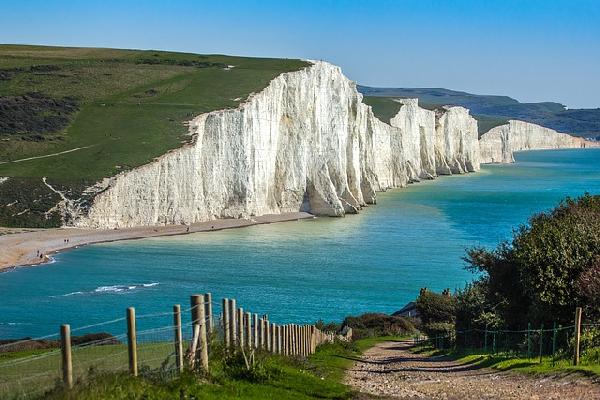
Moving east from Brighton along the coast leads to the South Downs National Park and the iconic white chalk cliffs. This area offers some of the most dramatic coastal scenery in Britain.
Seven Sisters Cliffs: These are a series of seven undulating chalk cliffs between Seaford and Eastbourne. The view from the top, looking back towards the lighthouse at Cuckmere Haven, is iconic. The walk along the clifftops is strenuous but immensely rewarding.
Beachy Head & Birling Gap: Further east, Beachy Head is the highest chalk sea cliff in Britain, offering breathtaking views. The nearby Birling Gap provides access to the beach and is a great spot to look up at the towering cliffs. The red-and-white striped Beachy Head Lighthouse stands at the foot of the cliffs.
Transportation: Public transport to this area can be infrequent. The best way to explore is by car or by joining a guided tour from Brighton or Eastbourne. Buses run from Brighton to Eastbourne, from where you can get a bus to Birling Gap.
Birling Gap to Belle Tout Lighthouse
The stretch of coast between Birling Gap and the Belle Tout Lighthouse is part of the South Downs Way. The original Belle Tout lighthouse, now a unique bed and breakfast, stands precariously on the cliff edge, having been moved back from the eroding cliff face in 1999. This area is perfect for hiking and offers unparalleled views of the geological processes shaping the coastline.
Stonehenge: An Ancient Enigma
Driving west from the South Coast into Wiltshire brings you to one of the world’s most famous prehistoric monuments.
Attraction: Stonehenge is a ring of standing stones set within earthworks. Its purpose remains a mystery, with theories ranging from an astronomical observatory to a religious site. The visitor centre provides excellent context and displays archaeological finds.
Transportation: Stonehenge is best accessed by car or via organized tours from Salisbury or London. There is a shuttle bus from the visitor centre to the stones themselves.
Cultural Insight: The monument is aligned with the movements of the sun, and thousands gather here for the summer and winter solstices. It is a powerful reminder of Britain’s ancient and sophisticated past.
Bath: A Georgian Jewel
A UNESCO World Heritage Site, Bath is renowned for its magnificent honey-colored Georgian architecture and its ancient Roman history.
Attractions: The Roman Baths complex is incredibly well-preserved, allowing visitors to walk where Romans bathed 2,000 years ago. The magnificent Bath Abbey and the Royal Crescent are architectural masterpieces. The Jane Austen Centre offers a glimpse into the life of the author who lived here.
Food & Drink: Try a traditional “Bath Bun,” a sweet bun. For a unique experience, book a session at the modern Thermae Bath Spa, where you can bathe in the natural thermal waters like the Romans did.
Accommodation: Stay in a historic Georgian townhouse for an authentic experience. There are also many charming guesthouses and B&Bs on the outskirts of the city centre.
St Ives: The Artists’ Haven in Cornwall
Venturing deep into Cornwall, St Ives is a picturesque fishing town with a reputation as a centre for artists, drawn by the exceptional quality of light.
Attractions: The Tate St Ives and the Barbara Hepworth Museum and Sculpture Garden are world-class art destinations. Wander through the cobbled streets, relax on Porthmeor Beach (great for surfing), and watch the boats in the harbour.
Food & Drink: Cornwall is famous for its pasties—a savoury pastry filled with meat and vegetables. St Ives also offers fantastic fresh seafood. Enjoy a classic Cornish cream tea (scones with jam and clotted cream) with a sea view.
Transportation: St Ives is reachable by train on a scenic branch line from St Erth, which is on the main line from London Paddington. Driving in St Ives can be challenging due to narrow streets; it’s best to use a park-and-ride service.
Land’s End: Where England Meets the Atlantic
Land’s End is the most westerly point of mainland England. It is a dramatic headland where the land drops away into the roaring Atlantic Ocean.
Attraction: The main draw is the iconic signpost showing distances to various locations around the globe. The coastal walks here are spectacular, with views of jagged rocks and lighthouses. The site itself has various family-friendly attractions and exhibitions.
Cultural Insight: Land’s End has long captured the imagination as a place of endings and beginnings, symbolizing both isolation and adventure.
Porthcurno & The Minack Theatre
A short drive from Land’s End is the stunning Porthcurno beach, with its turquoise water and white sand that feels almost tropical. Carved into the granite cliff above is the Minack Theatre, an open-air auditorium built in the 1930s. Watching a play here as the sun sets over the Atlantic is an unforgettable experience.
The Jurassic Coast: Durdle Door & Bournemouth Pier
The journey back towards London follows parts of the Jurassic Coast, England’s only natural UNESCO World Heritage Site, known for its geological treasures and fossils.
Durdle Door: Perhaps Dorset’s most iconic landmark, Durdle Door is a natural limestone arch stretching out into the sea. It involves a steep walk down from the clifftop car park, but the view is worth the effort. Neighboring Man O’War Bay is equally beautiful.
Bournemouth Pier: A classic Victorian seaside pier located in the bustling resort town of Bournemouth. It features amusement arcades, rock shops, and opportunities for fishing or simply enjoying the panoramic views of Poole Bay. The town itself has seven miles of sandy beaches.
Transportation: This section of the coast is best explored by car. The A35 road runs parallel to much of the coastline, providing access to various points of interest.
Food & Drink: In Dorset, look for local specialties like Dorset Apple Cake or Blue Vinny cheese.
The Return to London
The final leg of the journey involves traveling from Dorset back to London. This can be done efficiently by train from Bournemouth station, with direct services to London Waterloo taking approximately two hours. This journey provides time to reflect on the incredible diversity experienced—from metropolitan capital to ancient stones, artistic havens, and some of Europe’s most dramatic coastline.
Trip Logistics & Final Tips
Best Time to Visit: Late spring (May-June) and early autumn (September) offer milder weather and fewer crowds than the peak summer months of July and August.
Driving vs. Public Transport: Renting a car offers maximum flexibility for exploring remote coastal paths and villages. However, an extensive rail network connects all major towns on this itinerary (with the exception of some cliff areas), often with scenic routes.
Accommodation Strategy: Book accommodation well in advance, especially for popular destinations like St Ives, Bath, and Bournemouth during school holidays.
What to Pack: Weather in Britain is famously changeable. Pack layers, a waterproof jacket, and sturdy walking shoes for coastal paths. Don’t forget sunscreen, as it can be surprisingly sunny and bright, especially near the sea.