A Comprehensive Travel Guide: London, Oxford, and Cambridge
This guide details a classic English itinerary, looping from the vibrant capital of London to the two most famous university cities in the world, Oxford and Cambridge. Each city offers a distinct flavor: London is a sprawling, dynamic metropolis steeped in history and modernity; Oxford is known as the “City of Dreaming Spires” with its grand, ancient college buildings; and Cambridge, the “City of Perspiring Dreams,” presents a more tranquil, river-focused charm. This journey is a deep dive into academic prestige, royal history, and enduring English culture.
Part 1: London – The Royal Metropolis
London is a vast and thrilling city, a global hub where centuries of history collide with cutting-edge culture. A lifetime isn’t enough to see it all, but a focused visit can capture its essence.
Key Attractions in London
The British Museum: Home to a vast collection of world art and artifacts, it’s a must-visit. The Rosetta Stone and the Parthenon Marbles are highlights. Insider Tip: Entry is free, but donations are appreciated. Book a free guided tour or focus on one or two galleries to avoid overwhelm.
Westminster & The South Bank: Start at Westminster Abbey, the site of coronations and royal burials. Cross Parliament Square to see the Houses of Parliament and Big Ben. Walk across Westminster Bridge to the London Eye for panoramic views, then stroll along the South Bank, a vibrant cultural walkway with street performers and food markets.
The Tower of London & Tower Bridge: Explore this historic castle, see the Crown Jewels, and hear tales from the Beefeaters. Afterwards, walk across the iconic Tower Bridge (not London Bridge). Practical Tip: Book Tower tickets online in advance to skip the longest queues.
Buckingham Palace & The Royal Parks: Witness the Changing of the Guard ceremony (check the official schedule for dates). Afterwards, stroll through St. James’s Park towards Trafalgar Square and the National Gallery.
Museums in South Kensington: Choose between the Natural History Museum (dinosaurs and volcanoes), the Science Museum (interactive exhibits), and the Victoria and Albert Museum (art and design). All are free and world-class.
Neighborhood Exploration: Don’t just stick to the center. Explore Covent Garden for street performers and boutique shops, Camden Town for its alternative market and music scene, or Notting Hill for colorful houses and the Portobello Road Market.
Food & Drink in London
London’s food scene is incredibly diverse. Beyond the stereotypes, you’ll find excellent cuisine from all over the world.
Classic Pubs: Visit a traditional pub for a pint of ale and a Sunday Roast (on Sundays) or a pie and mash. The Churchill Arms in Kensington is famous for its floral displays, while The Lamb & Flag in Covent Garden is rich in history.
Afternoon Tea: An indulgent British tradition. For a luxury experience, book at The Ritz or Fortnum & Mason. For a more quirky option, try the science-themed tea at The Ampersand Hotel in South Kensington.
International Flavors: Head to Brick Lane for legendary Bangladeshi curries, Chinatown for dim sum, or Borough Market (a must-visit foodie paradise) for gourmet produce and ready-to-eat dishes from around the globe.
Street Food: Markets like Borough, Maltby Street, and Camden Market offer fantastic street food options, from gourmet burgers to Ethiopian stews.
Transportation in London
The Tube (London Underground): The fastest way to get around. Get an Oyster card or use your contactless bank card for the cheapest fares. Tip: Always stand on the right on escalators.
Buses: A great way to see the city while you travel. Route 11 passes many major sights like St. Paul’s and Trafalgar Square.
Walking: Many central attractions are within walking distance of each other. It’s the best way to stumble upon hidden gems.
Black Cabs & Uber: Taxis are convenient but expensive. Uber is widely available.
Part 2: Oxford – The City of Dreaming Spires
A short journey from London, Oxford feels like stepping into a living history book. The university is not one central campus but a collection of 39 independent, historic colleges scattered throughout the city center, creating a breathtaking skyline of Gothic and Baroque towers.
Key Attractions in Oxford
Bodleian Library: One of the oldest libraries in Europe. Take a guided tour to see the magnificent Divinity School and Duke Humfrey’s Library, which featured in the Harry Potter films.
Christ Church College: Arguably Oxford’s most famous college. Don’t miss the grand dining hall (another Harry Potter inspiration) and Christ Church Cathedral. Practical Tip: Check the college’s visiting hours online as they can close for events.
Radcliffe Camera & University Church of St Mary the Virgin: The Rad Cam is one of Oxford’s most photographed buildings. Climb the tower of St Mary’s for the best view of it and the city’s spires.
Ashmolean Museum: Britain’s first public museum and now one of the world’s finest, with collections from Egyptian mummies to modern art. Entry is free.
Punting on the River Cherwell: Hire a flat-bottomed boat (a punt) and glide along the river, seeing Oxford from a different, peaceful perspective. You can punt yourself or hire a chauffeur.
Covered Market: A historic market hall filled with independent butchers, bakers, cheesemongers, and unique gift shops. A great place for lunch.
Food & Drink in Oxford
The Eagle and Child: A historic pub where J.R.R. Tolkien and C.S. Lewis, members of the “Inklings” literary group, used to meet.
Covered Market: Offers fantastic lunch options, from classic sausage sandwiches at Sarson’s to delicious pastries at Ben’s Cookies.
The Vaults & Garden Café: Located in a medieval vaulted room next to the Radcliffe Camera, this café serves wholesome, locally-sourced food and has a lovely garden terrace.
G&D’s (George & Danver): A beloved local ice cream parlour that also serves pizza and snacks. Perfect for a student-style bite.
Transportation: London to Oxford & Getting Around
By Train: Direct trains run from London Paddington (fastest, ~1 hour) and London Marylebone (~1.5 hours). Booking in advance can save money.
By Coach: The Oxford Tube and National Express coaches are cheaper than trains and run frequently from Victoria Coach Station.
Getting Around Oxford: The city center is very compact and best explored on foot. Buses connect the train station to the city center.
Part 3: Cambridge – The City on the Cam
Cambridge offers a slightly more intimate and tranquil atmosphere than Oxford. The university colleges are clustered closer together, and the River Cam, flowing through the heart of the city, is its central artery, with punting being an essential activity.
Key Attractions in Cambridge
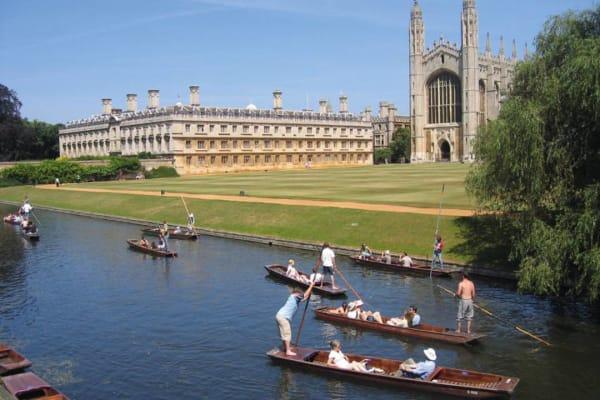
King’s College Chapel: The single most iconic sight in Cambridge. Its breathtaking fan-vaulted ceiling and magnificent stained-glass windows are unmissable. Attend a service or simply visit for a tour.
Punting on the River Cam: The classic Cambridge experience. Glide past “The Backs” – the beautiful gardens and rear views of several famous colleges like King’s, Clare, and Trinity. Insider Tip: For a more informative trip, take a chauffeured punt from Scudamore’s. If you’re punting yourself, be prepared for a potential comedy of errors!
The Fitzwilliam Museum: A stunning museum often described as one of the finest small museums in Europe. Its collections range from ancient Egyptian coffins to Impressionist paintings. Entry is free.
The Wren Library at Trinity College: Houses priceless treasures including a first-folio of Shakespeare and an 8th-century copy of the Epistles of St. Paul. It’s a working library with an awe-inspiring atmosphere.
The Mathematical Bridge: Located at Queens’ College, this wooden footbridge is an engineering marvel, designed without nails (though it was later rebuilt with bolts for stability).
The Round Church: One of only four medieval round churches in England, built by the Knights Templar in 1130.
Food & Drink in Cambridge
The Eagle Pub: Steeped in history; it’s where Francis Crick and James Watson announced their discovery of DNA. The RAF bar upstairs has WWII-era graffiti on the ceiling by airmen.
The Anchor: A cozy pub right on the river with fantastic views of punts gliding by and the Corpus Christi clock.
Aromi: An authentic Sicilian café famous for its incredible cannoli and pizza slices. There’s often a queue, but it’s worth it.
The Cambridge Market: A daily outdoor market in the city center offering a wide array of international street food, fresh produce, and crafts.
Transportation: Oxford to Cambridge & Getting Around
The X5 Bus: A direct bus service runs between Oxford and Cambridge (~3.5 hours). It’s scenic but slow.
By Train (via London): There is no direct train line. You must travel from Oxford to a London station (Paddington/Marylebone), take the Tube across London, and then catch a train from either King’s Cross or Liverpool Street to Cambridge (~2-2.5 hours total). It sounds complex but is often faster than the bus.
Getting Around Cambridge: Like Oxford, the core of Cambridge is very walkable. Bicycles are extremely popular here – you’ll see them everywhere.
The Return: Cambridge to London
The journey back to London from Cambridge is straightforward. Direct trains run frequently from Cambridge station to London King’s Cross, taking just under an hour. This makes it easy to connect to your flight home or continue your London adventures.
Crucial Cultural Aspects & Practical Travel Tips
Cultural Nuances
The College System: Remember that Oxford and Cambridge universities are federations of independent colleges. You are visiting individual colleges, each with its own history, traditions, and rules (and separate entry fees). Respect that these are working academic institutions; students live and study here.
Queuing: The British take queuing (standing in line) very seriously. Always wait your turn patiently.
Tipping: In restaurants, a service charge of 12.5% is often added to the bill. If not, tipping 10-15% is customary for good service. In pubs, you do not tip when ordering at the bar. For taxis, rounding up the fare is appreciated.
“Mind the Gap”: Heed this famous warning on the London Underground platform.
A Packing Checklist & Final Advice
Comfortable Shoes: This is a walking-intensive itinerary. This cannot be overstated.
Layered Clothing & A Raincoat: British weather is famously changeable. Be prepared for “four seasons in one day.”
A Travel Adapter: The UK uses a 3-pin plug (Type G).
A Reusable Water Bottle & Umbrella: Stay hydrated and dry.
A Contactless Bank Card / Oyster Card: Essential for seamless travel in London.
The Best Advice: Don’t try to do too much. It’s better to fully experience a few key sights than to rush through a long checklist. Leave time for simply sitting in a park, enjoying a pint in a pub, or getting lost down a charming side street – these are often the most memorable parts of any trip to Britain.
A journey through London, Oxford, and Cambridge offers an unparalleled immersion into English history, academia, and culture. From the roar of London’s streets to the quiet contemplation of ancient libraries, this route provides a rich and varied tapestry of experiences that will leave a lasting impression.