A Comprehensive Travel Guide: Croatia, Slovenia & Budapest
This guide details a classic Central European itinerary, weaving through the vibrant capital of Hungary, the alpine wonders of Slovenia, and the stunning Adriatic coastline of Croatia. This journey offers an incredible diversity of landscapes, cultures, and history, from bustling cities to serene lakes and ancient walled towns.
Route Overview
The suggested route is:
Budapest (Hungary) → Lake Balaton (Hungary) → Ljubljana (Slovenia) → Lake Bled (Slovenia) → Postojna (Slovenia) → Zagreb (Croatia) → Plitvice Lakes National Park (Croatia) → Zadar (Croatia) → Split (Croatia) → Dubrovnik (Croatia). This creates a logical, flowing journey southwards.
Part 1: Budapest & Lake Balaton, Hungary
Budapest: The Pearl of the Danube
Budapest, split by the Danube River into historic Buda and vibrant Pest, is a city of grand architecture, thermal baths, and a dynamic cultural scene.
Buda Castle & Castle Hill: A UNESCO World Heritage site, accessible by a funicular. Explore the Royal Palace, Matthias Church, and the Fisherman’s Bastion for panoramic city views.
Hungarian Parliament Building: An iconic Gothic Revival masterpiece. Booking a guided tour inside is highly recommended.
Thermal Baths: Experience the city’s bathhouse culture. The grandiose Széchenyi Baths (with outdoor pools) and the artistic Gellért Baths are the most famous.
Chain Bridge: The first permanent bridge connecting Buda and Pest, a symbol of the city.
Jewish Quarter: Home to the magnificent Dohány Street Synagogue and the trendy “ruin bars” set up in abandoned buildings.
Food & Drink in Budapest
Goulash (Gulyás): A hearty meat and vegetable stew, often served in a kettle.
Lángos: Deep-fried dough topped with sour cream and cheese, a popular street food.
Chimney Cake (Kürtőskalács): A sweet, spiral-shaped pastry baked over coals.
Tokaji Wine: A world-renowned sweet dessert wine from Hungary.
Transportation & Tips
Budapest has an excellent and affordable public transport system (metro, trams, buses). Purchase a travel card for unlimited rides. The city is very walkable, but comfortable shoes are essential. For a unique perspective, take a evening cruise on the Danube.
Lake Balaton: The Hungarian Sea
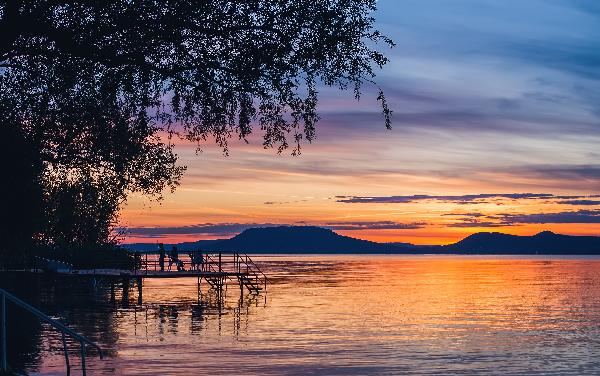
A short trip from Budapest, Lake Balaton is Central Europe’s largest freshwater lake, a popular holiday destination for Hungarians.
Tihany Peninsula: Visit the Benedictine Abbey for stunning views over the lake. The peninsula is known for its lavender fields.
Hévíz: Home to the world’s second-largest thermal lake, perfect for a relaxing soak.
Badacsony: A volcanic hill region renowned for its wine production. Enjoy a glass of local Olaszrizling or Kékfrankos while overlooking the vineyards and lake.
Travel Tip: The best way to reach Lake Balaton from Budapest is by train, with direct services to towns like Siófok and Keszthely.
Part 2: Slovenia’s Alpine Charm
Ljubljana: The Green Capital
Slovenia’s capital is a compact, charming city centered around the emerald-green Ljubljanica River. It feels like a living fairytale, largely designed by architect Jože Plečnik.
Ljubljana Castle: Overlooking the old town, accessible by a funicular or a scenic walk. The view from the tower is magnificent.
Prešeren Square & Triple Bridge (Tromostovje): The heart of the city, dedicated to Slovenia’s greatest poet.
Dragon Bridge: An iconic Art Nouveau bridge guarded by four dragon statues, the symbol of Ljubljana.
Central Market: Designed by Plečnik, it’s a great place to sample local produce and interact with locals.
Lake Bled: A Picture-Perfect Paradise
A postcard come to life, Lake Bled is Slovenia’s most famous attraction.
Bled Island: Take a traditional pletna boat to the island and ring the wishing bell in the church.
Bled Castle: Perched on a cliff, the castle offers the classic overhead view of the island and lake.
Vintgar Gorge: A short distance from Bled, a wooden walkway winds through this stunning 1.6-km long gorge alongside the Radovna River.
Bled Cream Cake (Kremna Rezina): You cannot leave without trying this local specialty of puff pastry, custard, and whipped cream.
Postojna Cave & Predjama Castle
A day trip from Ljubljana or Bled reveals incredible subterranean and medieval wonders.
Postojna Cave: One of the world’s largest karst cave systems. A unique train takes you deep inside to see spectacular stalactites, stalagmites, and the mysterious olm, a blind amphibian.
Predjama Castle: Located just 9km from the cave, this Renaissance castle is dramatically built into the mouth of a cave, creating a formidable and unforgettable sight.
Transportation in Slovenia
Ljubljana is well-connected by train and bus. To explore Lake Bled, Postojna, and other regions, buses are frequent and reliable. Renting a car offers the most flexibility for exploring the Slovenian countryside.
Part 3: Croatia’s Inland & Adriatic Coast
Zagreb: The Historic Capital
Croatia’s capital is often overlooked for the coast, but it offers a delightful mix of Austro-Hungarian architecture and vibrant urban energy.
Upper Town (Gornji Grad): The historic core, home to St. Mark’s Church with its colorful tiled roof, the Croatian Parliament, and the iconic Lotrščak Tower.
Dolac Market: The city’s bustling open-air market, perfect for experiencing local life and buying fresh produce.
Museum of Broken Relationships:A unique and moving museum dedicated to failed love stories and their symbolic artifacts.
Tkalciceva Street: A lively pedestrian street filled with cafes and restaurants, ideal for people-watching.
Plitvice Lakes National Park: A Natural Wonder
A UNESCO World Heritage site and Croatia’s most famous national park. It’s a breathtaking system of 16 terraced lakes, joined by a series of waterfalls and cascades, set deep within a forested landscape.
The Trails: Well-marked trails and wooden walkways guide you over and around the crystal-clear turquoise and emerald waters. The routes are categorized by duration (2-8 hours).
Upper & Lower Lakes: The Upper Lakes are set in dolomite valleys, while the Lower Lakes are steeper and more dramatic, centered around the largest waterfall, Veliki Slap.
Electric Boats & Buses: Your ticket includes transport across Kozjak Lake by silent electric boat and a shuttle bus that connects the upper and lower entrances, making circular routes easy.
Travel Tip: Visit as early as possible to avoid the largest crowds. Wear sturdy, waterproof walking shoes and bring water and snacks. Stay overnight in one of the park’s hotels or nearby guesthouses to enjoy the park in the quieter early morning and late afternoon hours.
Zadar: The City of Sunset
A historic city with a modern artistic soul, Zadar’s old town is situated on a small peninsula packed with Roman and medieval ruins.
The Sea Organ (Morske Orgulje): An architectural sound art object that plays music using the wind and sea waves. It’s a truly magical experience.
The Greeting to the Sun (Pozdrav Suncu): Located next to the Sea Organ, this solar-powered light installation creates a spectacular light show after sunset.
Roman Forum: The remains of the ancient forum, built by Emperor Augustus, are open for exploration.
St. Donatus’ Church: A monumental 9th-century circular church, the symbol of Zadar, located in the Forum.
Split: The Palace City
The heart of Split is Diocletian’s Palace, a living monument where Roman history blends seamlessly with a bustling modern city. People live, work, and socialize within its ancient walls.
Diocletian’s Palace: Explore the labyrinthine streets of the palace basement, the Peristyle square, and Jupiter’s Temple. Climb the bell tower of Cathedral of St. Domnius for a fantastic view.
The Riva: The city’s vibrant waterfront promenade, perfect for a coffee or an evening stroll.
Marjan Hill:A forested peninsula park offering hiking trails, secluded beaches, and stunning viewpoints over the city and islands.
Day Trips: Split is the main ferry hub for the central Dalmatian islands. Take a day trip to Brač (famous for Zlatni Rat beach), Hvar (glamorous town and nightlife), or Vis (more remote and authentic).
Culinary Delights of Dalmatia
Fresh Seafood: Grilled fish, black risotto (made with cuttlefish ink), and buzara (shellfish in a wine and garlic sauce) are staples.
Pršut & Paški Sir: Dalmatian smoked ham (similar to prosciutto) and cheese from the island of Pag.
Peka:A traditional method of cooking meat (often lamb or veal) and vegetables under a metal bell covered with embers. Requires advance ordering but is a must-try experience.
Local Wines: Sample Pošip (white) and Plavac Mali (red) from the Dalmatian coast and islands.
The Crown Jewel: Dubrovnik
The “Pearl of the Adriatic,” a magnificent walled city that seems to rise from the sea. Its stunning beauty is matched by its rich history.
The City Walls:The number one activity. Walk the complete 2km circuit for unparalleled views of the old town’s red-roofed buildings and the Adriatic Sea. Go early or late to avoid crowds and heat.
Stradun:The main limestone-paved thoroughfare of the old town, always buzzing with life.
Fort Lovrijenac:The fortress perched on a cliff outside the western wall, offering iconic views back towards the city walls. Your city walls ticket includes entry.
Cable Car:Takes you up to Mount Srđ for a breathtaking panoramic view of Dubrovnik and the Elaphiti Islands.
Lokrum Island:A nature reserve just a short ferry ride from the old town. Perfect for swimming in secluded coves and exploring botanical gardens and peacocks.
Croatian Coastal Transport
The best way to travel between coastal cities like Zadar, Split, and Dubrovnik is by bus. The journey along the Adriatic Highway (D8) is spectacularly scenic. Ferries are essential for visiting the islands. While there is a coastal railway from Zagreb to Split, there is no train line to Dubrovnik. Renting a car provides maximum freedom but can be challenging with parking in old towns during peak season.
General Travel Tips for the Region
Currency: Hungary uses the Hungarian Forint (HUF). Slovenia uses the Euro (EUR). Croatia uses the Euro (EUR). Have some local currency (Hungarian Forint) on hand for smaller establishments in Hungary.
Best Time to Visit: Late spring (May-June) and early autumn (September) offer ideal weather with fewer crowds. July and August are hot, busy, and expensive, especially on the coast.
Crowds:Croatian coastal cities like Dubrovnik and Split can be extremely crowded from cruise ships. Try to explore early in the morning or later in the afternoon after ships have departed.
Accommodation:Apartments and guesthouses (sobe) are very popular and often offer better value and a more local experience than hotels.
Shopping & Dining:Away from main tourist squares for better prices and more authentic experiences. Look for where the locals are eating.
This itinerary through Budapest, Slovenia, and Croatia encapsulates the very best of Central Europe—imperial history, alpine beauty, and a coastline of unparalleled charm. It is a journey that will leave you with memories of stunning landscapes, rich cultures, and warm hospitality for years to come.