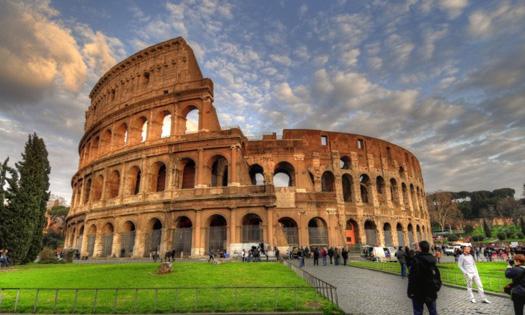
The Ultimate Travel Guide to Rome, Italy
The Eternal City, a sprawling, layered metropolis where history, art, and la dolce vita converge. Rome is not merely a city to be visited; it is an experience to be lived. From the awe-inspiring ruins of the Roman Empire to the spiritual heart of the Catholic Church, and from Baroque masterpieces to the vibrant energy of its piazzas, Rome offers an unparalleled journey through time.
Introduction to Rome
Rome, the capital of Italy and the Lazio region, boasts a history spanning over 28 centuries. Founded, according to legend, by Romulus in 753 BC, it was the epicenter of the Roman Republic and later the Roman Empire, ruling over a vast domain. In the Middle Ages, it became the seat of the Papacy and a center of the Renaissance. Today, it is a global city and a UNESCO World Heritage site, blending its ancient past with a dynamic, modern European capital. The city is divided by the Tiber River (Tevere) and is famously built on seven hills.
Top Attractions & Landmarks
The Colosseum (Colosseo)
The iconic symbol of Rome, the Flavian Amphitheatre, is the largest ever built in the Roman Empire. Completed in 80 AD, it could hold between 50,000 and 80,000 spectators who gathered to watch gladiatorial contests, mock sea battles, animal hunts, and executions.
Practical Info: Purchase tickets online in advance to skip the notoriously long queues. A standard ticket also grants access to the Roman Forum and Palatine Hill (valid for 24 hours). Consider a guided tour for access to the underground hypogeum and the upper third tier, which are not accessible with a standard ticket.
Location: Piazza del Colosseo, 1.
Opening Hours: Typically 8:30 AM until one hour before sunset. Closed January 1st and December 25th.
The Roman Forum (Foro Romano)
Once the center of public life in ancient Rome, this sprawling ruin complex was the site of triumphal processions, elections, public speeches, and commercial affairs. Walking through it is like traversing the heart of the ancient world.
Highlights: The Via Sacra (main street), the Temple of Saturn, the Arch of Titus, the House of the Vestal Virgins, and the remains of the Basilica of Maxentius.
Tip: Enter from the entrance on Via dei Fori Imperiali for a less crowded experience and a stunning panoramic view from above.
Palatine Hill (Palatino)
According to Roman mythology, this is where Romulus founded the city. It later became the most desirable neighborhood in ancient Rome, home to emperors and aristocrats. The ruins of imperial palaces, including Domus Flavia and Domus Augustana, offer a glimpse into ancient opulence.
Highlights: The Farnese Gardens, the Hippodrome of Domitian, and breathtaking views over the Roman Forum and Circus Maximus.
Vatican City (Città del Vaticano)
The world’s smallest independent state and the spiritual center of the Catholic Church. This walled enclave within Rome is a treasure trove of artistic and religious significance.
St. Peter’s Basilica (Basilica di San Pietro)
The largest church in the world, a masterpiece of Renaissance architecture designed by Bramante, Michelangelo, and Bernini. Its immense dome dominates the Roman skyline.
Highlights: Michelangelo’s “Pietà,” Bernini’s Baldacchino (bronze canopy) over the papal altar, and the ascent to the top of the dome for a spectacular view.
Practical Info: Free entry. Security check lines are long; arrive early (before 8:30 AM) or late in the afternoon. Modest dress is required (covered shoulders and knees).
Vatican Museums (Musei Vaticani)
One of the greatest art collections in the world, accumulated by the Popes over centuries. The museums house an immense collection of classical statues, Renaissance paintings, and historical artifacts.
The Sistine Chapel (Cappella Sistina): The culmination of the museum visit. Marvel at Michelangelo’s unparalleled ceiling frescoes depicting scenes from Genesis and his powerful “Last Judgment” on the altar wall.
Practical Info: Booking tickets online well in advance is absolutely essential to avoid waiting for hours or being denied entry. Closed on Sundays, except the last Sunday of the month (free entry, but extremely crowded).
The Pantheon
A remarkably preserved temple, originally built in 27 BC and rebuilt by Emperor Hadrian around 126 AD. It was converted into a church in the 7th century, which ensured its survival. Its massive dome, with its central oculus (open hole), is an architectural marvel.
Practical Info: Free entry. It can get very crowded; visit early in the morning. Note: As of 2023, a small reservation fee may be required during peak season; check official sources.
Location: Piazza della Rotonda.
Trevi Fountain (Fontana di Trevi)
The largest and most famous Baroque fountain in Rome. Designed by Nicola Salvi and completed in 1762, it depicts Oceanus riding a chariot pulled by sea horses. The tradition is to throw a coin with your right hand over your left shoulder into the fountain to ensure your return to Rome.
Tip: Visit late at night or very early in the morning to avoid the massive crowds. The fountain is beautifully lit after dark.
Spanish Steps (Scalinata di Trinità dei Monti)
A magnificent staircase of 135 steps climbing a steep slope between the Piazza di Spagna at the base and the Trinità dei Monti church at the top. It is a popular spot for people-watching and resting.
Practical Info: As of recent regulations, it is forbidden to sit on the steps due to preservation efforts. You can walk up and down them, but lingering while seated can result in a fine.
Piazza Navona
Built on the site of the Stadium of Domitian, this elegant Baroque square is known for its stunning fountains, including Bernini’s central “Fountain of the Four Rivers” (Fontana dei Quattro Fiumi), representing the Nile, Ganges, Danube, and Río de la Plata.
Atmosphere: Lively with artists, street performers, and cafes. A perfect place for an evening stroll.
Borghese Gallery (Galleria Borghese)
Housed in a beautiful villa in the vast Borghese Gardens, this gallery contains a sublime collection of sculptures by Bernini (including “Apollo and Daphne” and “The Rape of Proserpina”) and paintings by Caravaggio, Raphael, and Titian.
Practical Info: Pre-booking is mandatory due to strict timed entry slots with a two-hour visit limit. Book weeks or even months in advance.
Suggested Itineraries
Rome in 3 Days
Day 1: Ancient Rome & Central Piazzas
Morning: Colosseum, Roman Forum, Palatine Hill.
Afternoon: Capitoline Hill (Capitoline Museums optional), lunch in Monti district.
Evening: Trevi Fountain, Spanish Steps, Piazza del Popolo.
Day 2: Vatican City & Tiber River
Morning: Vatican Museums & Sistine Chapel.
Afternoon: St. Peter’s Basilica (and dome climb).
Evening: Walk across Ponte Sant’Angelo to Castel Sant’Angelo, dinner in Trastevere.
Day 3: Baroque Rome & Relaxation
Morning: Pantheon, Piazza Navona, Campo de’ Fiori market.
Afternoon: Explore the Jewish Ghetto or Villa Borghese (Gallery requires pre-booking).
Evening: Enjoy a final gelato in Trastevere or Piazza Navona.
Food & Drink
Roman cuisine is robust, flavorful, and deeply rooted in tradition (“cucina povera” – poor cooking).
Must-Try Dishes
Pasta alla Carbonara: Eggs, Pecorino Romano cheese, guanciale (cured pork cheek), and black pepper.
Pasta all’Amatriciana: Tomato sauce, guanciale, and Pecorino Romano.
Pasta Cacio e Pepe: A simple but delicious dish of pasta, Pecorino Romano cheese, and black pepper.
Saltimbocca alla Romana: Veal topped with prosciutto and sage, cooked in white wine.
Carciofi alla Romana/Judía: Artichokes cooked Roman-style (with mint and garlic) or Jewish-style (deep-fried).
Supplì: Fried rice balls stuffed with mozzarella.
Pizza & Gelato
Pizza al Taglio: Pizza by the slice, sold by weight. A perfect quick lunch.
Pizza Tonda Romana: Thin, crispy crusted pizza served in a restaurant for dinner.
Gelato: Look for artisanal gelaterie where the gelato is not piled high and brightly colored. Natural colors are a good sign.
Getting Around Rome
Public Transport
The city’s public transport network includes buses, trams, metro lines, and suburban trains. It is run by ATAC.
Tickets: A single BIT ticket (€1.50) is valid for 100 minutes on all buses/trams and one metro ride. A 24-hour ticket (€7), 48-hour ticket (€12.50), or weekly ticket (€24) are also available. Validate your ticket on buses/trams by tapping it on the electronic validator.
Metro: Useful for covering long distances quickly (e.g., from Termini to Colosseo or Ottaviano for the Vatican). Only has three lines (A, B, C), so it doesn’t cover the entire historic center.
Buses/Trams: More comprehensive network but subject to traffic delays.