The Ultimate Iceland Ring Road Travel Guide: Reykjavik to Snæfellsnes
This comprehensive travel guide outlines a classic Icelandic Ring Road (Route 1) itinerary, a journey that encapsulates the raw, untamed beauty of the Land of Fire and Ice. Travelers will traverse otherworldly landscapes, from cosmopolitan Reykjavik and the geothermal wonders of the Golden Circle to the glacial lagoons of the south, the dramatic fjords of the east, the volcanic realms of the north, and the mystical Snæfellsnes Peninsula. This route is designed for a 10-14 day self-drive adventure, offering a deep immersion into Iceland’s natural and cultural heritage.
Part 1: Starting Point – Reykjavik
Reykjavik, the world’s northernmost capital, is a vibrant and creative city that serves as the perfect gateway to Iceland. Its colorful rooftops, innovative culinary scene, and rich cultural life provide a stark and welcoming contrast to the wild landscapes beyond.
Attractions: Hallgrímskirkja Church (ascend the tower for panoramic views), Harpa Concert Hall (marvel at its geometric glass facade), Sun Voyager sculpture, and the Perlan museum for an excellent overview of Iceland’s natural wonders. The old harbor area is bustling with activity, offering whale watching and ferry tours.
Food & Drink: Experience the New Nordic cuisine at restaurants like Dill or Grillmarkaðurinn (The Grill Market). For a more casual experience, visit the Bæjarins Beztu Pylsur hot dog stand, an Icelandic institution. Don’t miss trying skyr (a cultured dairy product) and sampling Icelandic craft beer in the city’s many pubs.
Accommodation: Options range from luxury hotels like Canopy by Hilton to boutique guesthouses and design-focused hotels such as Alda Hotel. Budget travelers can find excellent hostels like Kex Hostel.
Cultural Insight: Reykjavik is a city of artists and storytellers. The sense of community is strong, and there’s a deep respect for nature and sustainability. The city effortlessly blends its Viking heritage with a modern, forward-thinking attitude.
Part 2: The Golden Circle & The Blue Lagoon
This world-famous route is easily accessible from Reykjavik and showcases some of Iceland’s most iconic geological sites.
Blue Lagoon: Located in a lava field on the Reykjanes Peninsula, this geothermal spa is famous for its milky-blue, mineral-rich waters. It’s advisable to book tickets far in advance. Many visitors choose to visit upon arrival or before departure due to its proximity to Keflavik International Airport.
Golden Circle Attractions:
Þingvellir National Park: A site of historical and geological significance. It’s where the North American and Eurasian tectonic plates are pulling apart, creating a rift valley. It was also the original site of Iceland’s parliament, the Alþingi, established in 930 AD.
Geysir Geothermal Area: Home to the Great Geysir, from which all others get their name. The currently active geyser, Strokkur, erupts every 5-10 minutes, shooting a column of boiling water up to 40 meters into the air.
Gullfoss Waterfall: The “Golden Falls,” a massive two-tiered waterfall cascading 32 meters into a rugged canyon. The power and spray are awe-inspiring.
Kerið Crater: A striking volcanic crater lake, approximately 3,000 years old. Its steep red and black slopes are contrasted by an aqua-blue lake at the bottom. A path allows visitors to walk around the rim and down to the water’s edge.
Transportation: The Golden Circle can be done as a day trip from Reykjavik by rental car, camper van, or guided bus tour.
Part 3: The South Coast to Vík
Iceland’s South Coast is a breathtaking stretch of road dominated by volcanoes, glaciers, black sand beaches, and powerful waterfalls.
Seljalandsfoss Waterfall: A unique 60-meter waterfall where visitors can walk on a path behind the cascading water curtain. Wear waterproof clothing as you will get wet.
Skógafoss Waterfall: A majestic, broad waterfall that plunges 60 meters. A staircase leads to a viewing platform at the top, offering spectacular views of the coastline.
The Sólheimasandur Plane Wreck: The eerie shell of a US Navy DC-3 that crash-landed in 1973. It sits isolated on a black sand beach. Access involves a flat 7km round-trip walk from Route 1.
Reynisfjara (Black Sand Beach) & Vík: Near the village of Vík, this is one of the world’s most famous black sand beaches. It features towering basalt sea stacks (Reynisdrangar), a dramatic cave (Hálsanefshellir), and incredibly powerful “sneaker waves” that make it vital to never turn your back on the ocean.
Accommodation & Food: Vík offers hotels, guesthouses, and a well-stocked supermarket. Try the local restaurant Suður-Vík for a cozy meal. Consider staying in the countryside for a more remote experience.
Part 4: Vatnajökull National Park & Jökulsárlón
This region is dominated by Vatnajökull, Europe’s largest glacier, and its spectacular outlet glaciers and lagoons.
Jökulsárlón Glacier Lagoon: A stunning lagoon filled with icebergs calved from the Breiðamerkurjökull glacier. Boat tours (amphibious and zodiac) offer a closer look at the floating ice sculptures.
Diamond Beach: Just across the road from Jökulsárlón, where icebergs wash ashore on the black sand beach, glistening like diamonds against the dark backdrop. It’s a photographer’s paradise, especially at sunrise or sunset.
Activities: Guided glacier hikes on Svínafellsjökull or Falljökull are highly recommended for a safe and educational experience. Ice cave tours are available in winter (typically November to March).
Accommodation: Options are sparse but available in Höfn (a lobster-fishing town) or in guesthouses and farms scattered throughout the area. Book well in advance.
Part 5: The Eastfjords
The Eastfjords offer a dramatic change of scenery with serene, steep-sided fjords, tiny fishing villages, and abundant wildlife.
Scenery & Villages: The drive involves navigating numerous fjords with stunning views. Quaint villages like Seyðisfjörður (known for its colorful wooden houses and the ferry connection to Europe), Djúpivogur, and Fáskrúðsfjörður are worth exploring.
Wildlife: This is a prime area for spotting reindeer and puffins (in summer). Seals are also commonly seen along the coast.
Egilsstaðir: The main service town for the east, not particularly scenic itself but a practical stop for supplies, fuel, and accommodation.
Cultural Insight: The Eastfjords have a tangible history tied to fishing and foreign traders, particularly from France and Norway. The pace of life is slower here, deeply connected to the sea and the mountains.
Part 6: The Power of the North – Dettifoss & Mývatn
The Northeast is a raw, geologically active region featuring Europe’s most powerful waterfall and a lake surrounded by pseudo-craters and lava formations.
Dettifoss Waterfall: Located in Vatnajökull National Park’s northern area, Dettifoss is the most powerful waterfall in Europe by volume. It can be accessed from both the east (Route 864) and west (Route 862) sides; the west side offers better views and walking paths.
Lake Mývatn Area: A geothermal wonderland.
Attractions: The otherworldly lava formations at Dimmuborgir, the bubbling mud pools at Námaskarð Pass, the geothermal nature baths at Mývatn (a more rustic alternative to the Blue Lagoon), and the pseudo-craters at Skútustaðir.
Food: Mývatn is known for its midges (non-biting flies) in summer, but also for its traditional “hot spring bread” (hverabrauð), which is baked underground using geothermal heat.
Accommodation: A range of options exists around Lake Mývatn, from hotels and guesthouses to campgrounds.
Part 7: Akureyri & Goðafoss
The “Capital of the North” is a charming city with a vibrant cultural scene, serving as a perfect base for exploring the region.
Goðafoss (Waterfall of the Gods): A stunning curved waterfall on the Skjálfandafljót river. Its name derives from the year 1000 when lawmaker Þorgeir Ljósvetningagoði symbolically cast his statues of Norse gods into the waterfall after deciding Iceland would become a Christian nation.
Akureyri:
Attractions: The iconic Akureyrarkirkja church designed by Guðjón Samúelsson (who also designed Hallgrímskirkja), the beautiful Botanical Garden, and the Christmas House for year-round holiday cheer.
Food & Drink: A burgeoning food scene with excellent restaurants like Strikið and Bautinn. Don’t miss Brynja for legendary ice cream.
Cultural Insight: Akureyri has a surprisingly cosmopolitan feel for its size (around 19,000 people). It boasts excellent swimming pools, a university, and a strong sense of community pride.
Part 8: History & Sagas in Reykholt
The journey continues west into an area steeped in Icelandic history and literary heritage.
Reykholt: One of Iceland’s most important historical sites, it was the home of Snorri Sturluson, a 13th-century chieftain, poet, and historian who wrote the Prose Edda and Heimskringla. Visitors can see Snorri’s pool (Snorralaug), a medieval geothermal bath.
Deildartunguhver: Europe’s most powerful hot spring, located near Reykholt. It emits vast quantities of boiling water per second, which is used for heating homes in towns as far as 64km away.
Accommodation: Several charming guesthouses and farm stays are available in this region, offering a peaceful and historical stopover.
Part 9: The Dramatic Snæfellsnes Peninsula
Often called “Iceland in Miniature,” this peninsula packs glaciers, volcanoes, lava fields, black sand beaches, and charming fishing villages into one concentrated area.
Key Attractions:
Snæfellsjökull National Park: Dominated by the glacier-capped stratovolcano Snæfellsjökull, famous as the entrance to the earth in Jules Verne’s “Journey to the Center of the Earth.”
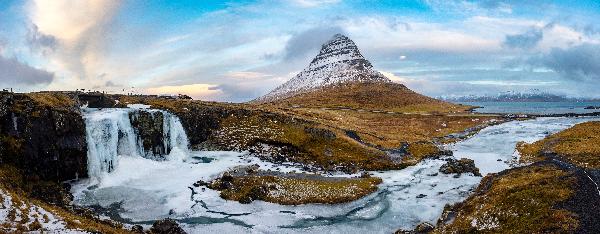
Kirkjufell Mountain: Iceland’s most photographed mountain, often captured with the nearby Kirkjufellsfoss waterfalls in the foreground.
Arnarstapi & Hellnar: Picturesque coastal villages connected by a beautiful cliffside hiking path with fascinating rock formations like Gatklettur (“Arch Rock”).
Djúpalónssandur & Lóndrangar: A dramatic black pebble beach with the wreckage of a British trawler and two towering volcanic plugs rising from the sea.
Settlement Center in Borgarnes:A fantastic museum detailing Iceland’s settlement era and the Egil’s Saga.
A Practical Traveler’s Appendix
Transportation: How to Get Around
The most flexible way to complete this itinerary is by self-driving. A standard 2WD car is sufficient for summer on main roads like Route 1, but a 4×4 is recommended for accessing more remote areas like F-roads (mountain roads), which are typically only open from late June to early September. Always check road.is for current conditions and vedur.is for weather. For those not driving, organized multi-day bus tours are available but offer less flexibility. Domestic flights can connect Reykjavik to Akureyri or Egilsstaðir to save time.
Accommodation Strategy
Booking accommodation well in advance is crucial, especially during the peak summer season (June-August). Options range from hotels and guesthouses in towns to rural farm stays and mountain huts. Camping is a popular and cost-effective option; designated campsites are plentiful and well-equipped with facilities. Wild camping is generally prohibited outside designated areas.
Cuisine: What and Where to Eat
Icelandic cuisine has evolved dramatically. Beyond hot dogs and skyr, travelers should try:
Lamb: Free-range Icelandic lamb is exceptionally tender and flavorful.
Fresh Seafood: Look for langoustine (in Höfn), cod, arctic char, and salmon.
Traditional Fare: For the adventurous, there’s hákarl (fermented shark), svið (singed sheep’s head), and harðfiskur (dried fish jerky).
Due to high restaurant costs, many travelers self-cater using groceries from Bonus or Krónan supermarkets.
The Best Time to Visit
Summer (June-August): Offers midnight sun, lush green landscapes, accessible roads, and bustling wildlife (especially puffins). This is the peak tourist season.
Shoulder Seasons (May & September): Fewer crowds, lower prices, and a mix of weather conditions. The Northern Lights become visible from late August onwards.
Winter (October-March):A chance to see the Aurora Borealis, explore ice caves, and experience snow-covered landscapes. Daylight is limited (4-7 hours), and road conditions can be challenging, requiring a 4×4 vehicle and expert driving skills.
Sustainable & Respectful Travel
“Leave No Trace” is paramount in Iceland’s fragile environment. Always stay on marked paths as off-road driving or walking damages vegetation that can take decades to recover. Respect private property, do not climb on historical ruins or delicate rock formations at Reynisfjara, and always be aware of dangerous ocean waves and unpredictable weather. Support local businesses by shopping at local stores and eating at regional restaurants.
A Final Note on Safety
The weather in Iceland can change in an instant. It is essential to dress in layers with waterproof and windproof outer shells. When visiting waterfalls, geysers, beaches, and glaciers, always heed warning signs and stay within safe viewing areas. Inform someone of your travel plans when venturing into remote areas. For any emergency, dial 112.
This Ring Road journey offers an unparalleled adventure through one of the planet’s most dynamic landscapes. It is a trip that demands preparation and respect but rewards travelers with memories of raw nature’s power and beauty that will last a lifetime.