The Golden Circle & Hveragerði: A Comprehensive Travel Guide
This guide details a classic and enriching Icelandic day trip or a short multi-day itinerary, taking you from the capital city of Reykjavík, through the geothermal wonderland of Hveragerði, along the famed Golden Circle route, and back. This journey encapsulates the raw power and stunning beauty of Iceland, showcasing geysers, waterfalls, historical sites, and volcanic landscapes.
Route Overview
The itinerary follows a logical circular route from Reykjavík:
Reykjavík → Hveragerði → Kerið Crater → Gullfoss (Golden Falls) → Geysir Geothermal Area → Þingvellir (Thingvellir) National Park → Reykjavík. This can be comfortably driven in a single long day (8-10 hours), but splitting it over two days allows for a more relaxed and in-depth experience.
1. Starting Point: Reykjavík
Reykjavík, the world’s northernmost capital, is a vibrant and colorful city that serves as the perfect base for exploring southwestern Iceland. It combines a small-town feel with cosmopolitan culture.
Attraction Introductions
Hallgrímskirkja Church: This iconic expressionist church is the city’s most recognizable landmark. Visitors can take an elevator to the top of the bell tower for a panoramic 360-degree view of the city’s colorful rooftops and the surrounding mountains and sea.
Harpa Concert Hall: A architectural masterpiece on the waterfront, Harpa’s facade is made of geometric glass panels that reflect the sky and light, creating a stunning effect, especially at night. It’s home to the Icelandic Symphony Orchestra.
Sun Voyager (Sólfar): A beautiful steel sculpture of a Viking ship-dream boat, located by the sea. It symbolizes hope, discovery, and the promise of new territory.
Perlan Museum: Situated on top of Öskjuhlíð hill, this museum features a man-made ice cave, northern lights shows, and a panoramic observation deck offering spectacular views.
Food Recommendations
Icelandic Street Food: For a quick, affordable, and authentic taste of Iceland, this restaurant offers all-you-can-eat lamb soup or fish stew in a bread bowl.
Bæjarins Beztu Pylsur: A legendary hot dog stand, famously visited by Bill Clinton. Order “eina með öllu” (one with everything)—a hot dog with crispy onions, raw onions, ketchup, sweet mustard, and remoulade.
Fine Dining: For a special occasion, try Dill or Grillmarkaðurinn (The Grill Market), which focus on New Nordic cuisine using high-quality local ingredients like lamb, arctic char, and skyr.
Brauð & Co: A must-visit bakery known for its delicious cinnamon rolls and sourdough bread. The smell alone will draw you in from the street.
Transportation Information
Reykjavík city center is very walkable. For longer distances, the Strætó bus system is reliable. However, for the Golden Circle trip, you will need a vehicle.
Car Rental: The most flexible option. Keflavík International Airport (KEF) and Reykjavík have numerous rental agencies. A 2WD car is sufficient for this itinerary in summer, but a 4WD is recommended for winter or for exploring F-roads (mountain roads).
Guided Tours: Numerous companies offer day tours of the Golden Circle from Reykjavík, which include transportation and a guide. This is a stress-free alternative to driving.
Campervan: A popular choice for those wanting to combine transport and accommodation, offering ultimate flexibility.
Accommodation Tips
Luxury: Canopy by Hilton Reykjavík City Centre, Tower Suites Reykjavík.
Mid-Range: Alda Hotel Reykjavík, Hotel Frón.
Budget/Hostel: Kex Hostel, Loft Hið Hostel.
Apartment Rentals: Airbnb and Booking.com offer a wide range of apartments, ideal for families or groups.
2. Hveragerði: The Hot Spring Town
Just a 45-minute drive east from Reykjavík on Route 1, Hveragerði is often the first stop for travelers. Nestled in a highly active geothermal area, the town is famous for its greenhouses, heated by hot springs, which produce a significant portion of Iceland’s vegetables and even tropical fruits like bananas.
Attraction Introductions
The Greenhouse Village (Garðyrkjubærinn): Explore the various greenhouses. Many allow visitors to see the cultivation process, and some have small shops selling fresh produce.
Hveragerði Geothermal Park: A small park in the town center where you can see bubbling mud pots and steaming fumaroles up close, a free and fascinating introduction to the area’s geology.
Reykjadalur Hot Spring River Hike: This is the main attraction. It’s a moderate 3-4 hour round-trip hike (approximately 7 km total) into the valley above the town. The trail leads to a warm river where you can bathe surrounded by stunning scenery. The path is well-marked but involves some elevation gain and crossing streams. Proper hiking boots and a swimsuit are essential.
Food Recommendations
Ölverk Pizza & Brugghús: An excellent pizzeria and brewery that uses geothermal heat to bake its pizzas. A perfect stop for lunch or dinner with craft beer.
Hver Restaurant: Located in the Hotel Örk, this restaurant offers a fine dining experience with a focus on local ingredients, including those from the greenhouses.
Kjöt og Kúnst: A unique combination of a butcher shop and an art gallery, offering high-quality local meats and light meals.
3. Kerið Volcanic Crater
A short drive north from Hveragerði lies Kerið (pronounced Ker-ith), a stunning 3,000-year-old volcanic crater. Unlike many of the surrounding volcanic formations, Kerið’s caldera is largely intact. Its most striking features are its steep red and black slopes and its vibrant, aqua-blue lake at the bottom.
Attraction Introductions
The Crater: Kerið is approximately 55 meters deep, 170 meters wide, and 270 meters across. The crater is composed primarily of red volcanic rock.
The Lake:The water level of the lake is the same as the water table in the area; it is not fed by rainfall but by groundwater. Its stunning color comes from minerals leaching from the rock.
Accessibility: A path leads down to the water’s edge, and another path circles the rim. Walking around the rim offers fantastic panoramic views of the crater and the surrounding lava fields. There is a small entrance fee (around 400 ISK), which goes towards its preservation.
4. Gullfoss: The Golden Waterfall
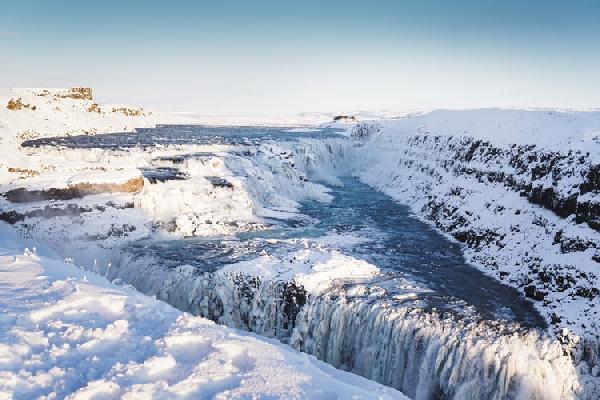
Continuing north, you will arrive at one of Iceland’s most iconic and powerful waterfalls. Gullfoss, or “Golden Falls,” is a massive two-tiered cascade that plummets 32 meters into a rugged canyon. On sunny days, the mist from the falls creates beautiful rainbows, giving the waterfall its name.
Attraction Introductions
The Power of Nature:The waterfall is part of the Hvítá river, which is fed by Iceland’s second-largest glacier, Langjökull. The average water flow is 140 cubic meters per second in the summer.
Viewing Platforms: Well-maintained paths lead to several viewing platforms that offer different perspectives of the falls. You can get very close to the edge, feeling the spray on your face. Be cautious as paths can be icy in winter.
Historical Significance: In the early 20th century, foreign investors wanted to harness Gullfoss for hydroelectric power. The story goes that the landowner’s daughter, Sigríður Tómasdóttir, threatened to throw herself into the waterfall to prevent this. Her efforts are credited with saving Gullfoss, and a memorial stone stands at the top in her honor.
Practical Information
Facilities: There is a large visitor center with a gift shop, café, and restaurant. Restrooms are available here.
Weather: The weather at Gullfoss can be extreme and change rapidly. It is often very windy. Dress in warm, waterproof layers regardless of the season.
5. Geysir Geothermal Area
A mere 10-minute drive from Gullfoss is the Geysir geothermal field, the namesake for all geysers in the world. This area is a bubbling, steaming, and sulfur-scented showcase of Earth’s geothermal power.
Attraction Introductions
Strokkur: While the Great Geysir itself is mostly dormant, its neighbor Strokkur is highly active and erupts every 5-10 minutes, shooting a column of boiling water 15-40 meters into the air. It is incredibly reliable and a spectacular sight.
The Great Geysir: This was the first geyser described in print and the first known to modern Europeans. It can still erupt occasionally after seismic activity, but such events are rare.
Other Features:The area is dotted with fumaroles (steam vents), hot springs, and colorful mineral deposits. A walking path winds through the most active spots. Be sure to stay on marked paths as the ground can be thin and dangerously hot.
Food Recommendations
The onsite restaurant at the Geysir Center offers a buffet-style lunch with traditional Icelandic options like lamb soup, as well as more international dishes. There is also a café for lighter snacks and coffee.
6. Þingvellir (Thingvellir) National Park
A UNESCO World Heritage Site, Þingvellir is arguably Iceland’s most important historical location and a place of profound geological significance. It is the final major stop on the Golden Circle before returning to Reykjavík.
Attraction Introductions
Tectonic Plates: Þingvellir lies in a rift valley that marks the crest of the Mid-Atlantic Ridge. It is one of the few places on Earth where you can see the North American and Eurasian tectonic plates pulling apart at a rate of about 2 cm per year. You can literally walk between two continents in the Almannagjá gorge.
The Silfra Fissure: Located within Þingvellir Lake, Silfra is a crack between the continents filled with unbelievably clear glacial meltwater. It is a world-renowned site for snorkeling and diving, offering visibility of over 100 meters.
Historical Parliament Site (Alþingi): Founded in 930 AD, the Alþingi is one of the world’s oldest extant parliamentary institutions. It was an open-air assembly where laws were made and disputes settled. The Lögberg (Law Rock) was the focal point where the Lawspeaker would recite the laws.
Öxarárfoss Waterfall:A beautiful man-made waterfall located within the park, easily accessible via a path from the main visitor center area.
Cultural Insights
Þingvellir is the symbolic heart of Iceland. It was here that the Icelandic commonwealth was formed, and it remained the center of Icelandic culture and society for centuries. In 1000 AD, it was also the site of the momentous decision to adopt Christianity as Iceland’s official religion. The park’s dramatic landscape deeply reflects Iceland’s national identity—forged from fire and ice, resilience, and independence.
Practical Information
Visitor Centers:The main visitor center (Þingvallabær) has excellent exhibitions on the park’s nature and history. There is also a smaller information center at Silfra.
Parking Fee:A parking fee is required for vehicles within the national park. Payment is made at automated machines or online.
The Return to Reykjavík
The drive from Þingvellir back to Reykjavík takes approximately 45 minutes to an hour. After a day filled with natural wonders, returning to the comforts of the city provides a perfect balance. Consider ending your day with a relaxing soak in the geothermal waters of the Sky Lagoon or Blue Lagoon (though advance booking for these is essential).
General Travel Tips for Iceland
Weather & Clothing:“If you don’t like the weather in Iceland, just wait five minutes.” This saying holds true. Dress in layers—a waterproof and windproof outer shell is crucial. Even in summer, temperatures can be cool. Sturdy, waterproof hiking boots are highly recommended.
Shopping & Dining:Iceland is expensive. To save money on food, consider buying groceries from Bonus or Krónan supermarkets. Tipping is not customary in Iceland.
Sustainability:“Leave no trace” is vital. Stay on marked paths to protect fragile vegetation. Do not litter. Respect wildlife and farm animals by keeping a safe distance.
The Midnight Sun & Northern Lights:In summer, Iceland experiences nearly 24 hours of daylight—great for long sightseeing days but bring an eye mask for sleeping. In winter (September to April), you have a chance to see the Aurora Borealis on clear, dark nights.
Road Safety:Always check road conditions at road.is before setting out, especially outside of summer. Be aware of sheep on the roads in rural areas.