Central European Grand Tour: Frankfurt to Rome and Back
This comprehensive travel guide outlines a remarkable journey through the heart of Europe, connecting the economic powerhouses of Germany, the pristine landscapes of Switzerland, and the unparalleled artistic heritage of Italy. This itinerary is a marathon, not a sprint, designed for travelers who wish to experience a vast spectrum of European culture, history, and natural beauty in one unforgettable trip.
Route Overview and Logistics
The proposed route is a large loop, starting and ending in Frankfurt, Germany. It efficiently strings together major cities, charming towns, and breathtaking natural wonders. The primary mode of transportation for a journey of this scale is a combination of train travel and a rental car. The famous European rail network is efficient and comfortable for city-to-city travel, especially in Switzerland and Italy. A rental car offers flexibility for exploring regions like the Black Forest, the Romantic Road, and Tuscany at your own pace.
Best Time to Travel: Late spring (May-June) or early autumn (September-October) for pleasant weather and fewer crowds.
Travel Duration: A minimum of 3 weeks is recommended to fully appreciate this itinerary without feeling rushed.
Essential Passes: Consider a Eurail Global Pass or country-specific passes (like the Swiss Travel Pass) for flexibility and cost savings on trains.
Stage 1: Germany’s Urban Heart and the Swiss Gateway
Frankfurt
Often dubbed “Mainhattan” due to its impressive skyline along the Main River, Frankfurt is a city of contrasts. It serves as Germany’s financial capital but also boasts a charming, reconstructed old town.
Attractions: Explore the Römerberg, the historic square with its picturesque half-timbered houses. Visit the Städel Museum for a world-class art collection and walk across the Eiserner Steg (Iron Footbridge) for iconic skyline views.
Food & Drink: Indulge in traditional Apfelwein (apple wine) in the Sachsenhausen district. Try Grüne Soße (Green Sauce), a herb-based condiment served with boiled eggs and potatoes.
Transport: Frankfurt Airport (FRA) is a major international hub. The city has an excellent U-Bahn and S-Bahn system.
Stuttgart
A short train ride south, Stuttgart is the cradle of the automobile, home to both Mercedes-Benz and Porsche.
Attractions: Car enthusiasts must visit the Mercedes-Benz Museum and the Porsche Museum. For a change of pace, stroll through the beautiful Wilhelma Zoo and Botanical Garden.
Food & Drink: Sample local Swabian specialties like Maultaschen (filled pasta pockets) and Spätzle (egg noodles). The region is also known for its quality wines.
Cultural Tip: Stuttgart is surrounded by hills covered in vineyards, offering easy escapes into nature.
Zurich, Switzerland
Crossing into Switzerland, you arrive in Zurich, a global city seamlessly integrated with nature. It’s clean, efficient, and stunningly located on Lake Zurich.
Attractions: Walk along the upscale Bahnhofstrasse, explore the cobblestone lanes of the Niederdorf district in the Old Town, and enjoy the view from the Lindenhof hill. A boat trip on Lake Zurich is highly recommended.
Food & Drink: Try classic Swiss fondue or raclette. Don’t miss out on Swiss chocolate from Confiserie Sprüngli.
Transport Insight: This is where your Swiss Travel Pass would become highly valuable, covering trains, buses, and boats.
Stage 2: The Essence of Switzerland
Swiss Village Experience (e.g., Grindelwald or Wengen)
From Zurich, head into the Bernese Oberland. Staying in a car-free village like Wengen or the adventure hub of Grindelwald provides an immersive Alpine experience.
Attractions: These villages are gateways to the Jungfrau Region. Take cogwheel trains to Jungfraujoch – Top of Europe or the Schilthorn for breathtaking views. Hike the trails beneath the north face of the Eiger.
Food & Drink: Enjoy hearty mountain food like Rösti (fried grated potatoes) in a rustic chalet.
Practical Tip: Book accommodation well in advance, especially during peak season.
Interlaken
Situated between Lake Thun and Lake Brienz, Interlaken is a popular base for adventure sports.
While the town itself is tourist-centric, its location is ideal for paragliding, skydiving, and boat trips on the pristine lakes.
Lucerne
A picture-perfect city on Lake Lucerne, surrounded by mountains.
Attractions: Walk the iconic, medieval Chapel Bridge (Kapellbrücke) with its water tower. Visit the Lion Monument, a poignant sculpture carved into rock cliff face. Take a cable car up to Mt. Pilatus or Mt. Rigi for panoramic views.
Cultural Aspect: Lucerne is a city of music and culture, home to the KKL concert hall.
Bern
The de facto capital of Switzerland is a UNESCO World Heritage site with a beautifully preserved medieval old town.
Attractions: Wander through the Old Town‘s arcaded streets, see the Zytglogge (Clock Tower) with its animated figures, and visit the Bear Park, home to the city’s heraldic animals.
Food & Drink: Bern is known for its onions; try a Berner Platte, a hearty meat dish, or an onion tart.
Lausanne & Montreux (French-speaking Switzerland)
The atmosphere changes as you move to the shores of Lake Geneva (Lac Léman). Lausanne is vibrant and hilly, while Montreux has a Riviera-like charm.
Attractions in Lausanne: Explore the Olympic Museum and the Gothic Lausanne Cathedral.
Attractions in Montreux: Stroll the beautiful lakeside promenade and visit the stunning Château de Chillon, a medieval castle on a small island.
Cultural Insight: This region is famous for its wines. Montreux hosts a world-renowned jazz festival every July.
Schaffhausen & the Rhine Falls
On your way back towards Germany, stop at Schaffhausen to witness the mighty Rhine Falls, Europe’s most powerful waterfall. Take a boat ride to get up close to the roaring waters.
Stage 3: Southern Germany and the Alpine Passage to Italy
Ingolstadt & Munich (Return to Germany)
Returning to Germany via Stuttgart, you might stop in Ingolstadt, another Bavarian city with a strong automotive connection (Audi). Then, proceed to Munich (München), the capital of Bavaria.
Attractions in Munich: Spend time in the Marienplatz, watch the Glockenspiel show, relax in the English Garden, and visit the opulent Nymphenburg Palace. A day trip to the Dachau Concentration Camp Memorial Site is a sobering but important historical experience.
Food & Drink: Experience a traditional beer hall like the Hofbräuhaus. Enjoy Weisswurst (white sausage), pretzels, and a stein of beer.
Innsbruck, Austria
The journey south takes you through the Austrian Alps to Innsbruck, a city famed for its imperial and modern architecture set against a backdrop of towering peaks.
Attractions: See the magnificent Golden Roof (Goldenes Dachl), ride the funicular up to the Nordkette range for incredible views, and explore the Hofburg Imperial Palace.
Cultural Aspect: Innsbruck has hosted the Winter Olympics twice, and its Olympic spirit is still palpable.
Stage 4: The Italian Art Cities
Venice (Venezia)
A city like no other, built on water. Venice is a labyrinth of canals, bridges, and historic palaces.
Attractions: Get lost in the alleyways away from the main tourist paths. Visit St. Mark’s Square, the Doge’s Palace, and take a gondola ride through the quieter canals. A vaporetto (water bus) trip along the Grand Canal is a must.
Food & Drink: Sample cicchetti (Venetian tapas) in a bacaro (wine bar). Try fresh seafood and risotto al nero di seppia (cuttlefish ink risotto).
Practical Tip: Venice is extremely crowded. Visit major sights early in the morning or late in the afternoon. Wear comfortable shoes for walking and crossing countless bridges.
Florence (Firenze)
The birthplace of the Renaissance, Florence is an open-air museum filled with artistic masterpieces.
Attractions: Marvel at Michelangelo’s David at the Galleria dell’Accademia. Visit the Uffizi Gallery to see works by Botticelli, Leonardo da Vinci, and Raphael. Admire the Duomo with its magnificent dome engineered by Brunelleschi, and walk across the picturesque Ponte Vecchio.
Food & Drink: Florence is known for its steak (Bistecca alla Fiorentina), hearty ribollita soup, and fine Chianti wine from the surrounding hills.
Tuscan Village Experience (e.g., San Gimignano or Montepulciano)
A stay in a Tuscan hill town is essential. San Gimignano is famous for its medieval towers, while Montepulciano offers stunning views and renowned Vino Nobile wine.
The experience is about slow living: enjoying local wine, cheese, and prosciutto while overlooking rolling hills dotted with cypress trees.
Siena
A detour to Siena is highly worthwhile. Its shell-shaped Piazza del Campo is one of Europe’s greatest medieval squares, and the Siena Cathedral is a masterpiece of Italian Gothic architecture.
Pisa
A brief stop in Pisa is primarily to see the
Leaning Tower, part of the Piazza dei Miracoli which also includes the stunning Cathedral and Baptistery. It’s often crowded, so manage your expectations accordingly.
Cinque Terre
The five colourful fishing villages of the Cinque Terre cling dramatically to cliffs along the Ligurian coast. They are connected by a scenic railway, hiking trails, and boats.
Attractions: Hike the famous coastal path (check for open sections), swim in the Mediterranean, and explore each village’s unique character. Monterosso al Mare has the best beach, while Vernazza is often considered the most picturesque.
< strong > Food & Drink: Feast on fresh anchovies, pesto Genovese (which originates from this region), and focaccia.
< li >< strong > Practical Tip: The Cinque Terre Card covers trail access and unlimited train travel between the villages.
< h3 > Milan (Milano)
< p > The final major Italian stop is Milan, Italy’s fashion and financial capital, offering a stark contrast to the historic cities of Tuscany and Venice.
< ul >
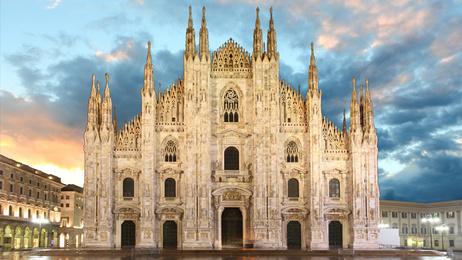
< li >< strong > Attractions: See Leonardo da Vinci’s < em > The Last Supper (book tickets months in advance), marvel at the magnificent Gothic < strong > Milan Cathedral (Duomo) , and shop in the Galleria Vittorio Emanuele II.
< li >< strong > Food & Drink: Enjoy aperitivo culture—a pre-dinner drink accompanied by a buffet of snacks. Try risotto alla Milanese (saffron risotto) and cotoletta alla Milanese (breaded veal cutlet).
< / ul >
< h2 > Stage 5: The Return Journey through the Alps
< h3 > Return via Innsbruck & Neuschwanstein Castle
< p > The journey north takes you back through Innsbruck. A key stop on the German side is < strong > Neuschwanstein Castle , the fairytale castle that inspired Disney. It requires advanced booking for timed entry tickets. The view from Marienbrücke (Mary’s Bridge) is iconic.
< h3 > Final Stop: Munich & Return to Frankfurt
< p > Your grand tour concludes with a final return to Munich for perhaps one more beer hall visit, before taking a fast train or driving back to Frankfurt to conclude your journey.
< h2 > Summary and Final Travel Tips
< ul >
< li >< strong > Packing: Pack for all seasons—layers are essential. Comfortable walking shoes are non-negotiable.
< li >< strong > Money: Switzerland uses Swiss Francs (CHF), while Germany and Austria use Euros (EUR). Italy also uses Euros. Have a mix of cash and card.
< li >< strong > Language: English is widely spoken in tourist areas, but learning basic greetings in German and Italian (< em > “Guten Tag,” “Grazie” ) is appreciated.
< li >< strong > Pace Yourself: This itinerary is packed. Don’t be afraid to skip one museum or sight to simply sit in a piazza and soak in the atmosphere. That is often where the real magic of European travel lies.
< / ul >