Barcelona, Girona & Figueres: A Catalan Triangle Adventure
This travel guide outlines a classic loop itinerary starting and ending in Barcelona, venturing into the heart of Catalonia to explore the medieval charm of Girona and the surrealist wonder of Figueres. This journey offers a perfect blend of metropolitan energy, historical depth, and artistic genius, providing a comprehensive taste of the region’s diverse offerings.
Trip Overview and Itinerary
This suggested route is ideally covered over 4 to 5 days, allowing for a deep exploration of each location without feeling rushed. The logical progression connects three distinct Catalan cities with efficient public transport.
Day 1 & 2: Barcelona. Explore the iconic modernist architecture, vibrant neighborhoods, and bustling markets.
Day 3: Day trip to Figueres. Immerse in the world of Salvador Dalí at the Teatre-Museu Gala Salvador Dalí.
Day 4: Day trip to Girona. Walk through medieval history, admire the cathedral, and stroll along the Onyar River.
Day 5: Final explorations in Barcelona and departure.
An alternative is to stay overnight in Girona, which offers a more relaxed pace and the chance to experience the city’s enchanting atmosphere after the day-trippers have left.
Part 1: Barcelona – The Vibrant Capital
Barcelona, the cosmopolitan capital of Spain’s Catalonia region, is famed for its art and architecture. The fantastical works of Antoni Gaudí dot the city, alongside a stunning Gothic Quarter, beautiful beaches, and a culinary scene that is both innovative and deeply traditional.
Top Attractions in Barcelona
La Sagrada Família: Gaudí’s unfinished masterpiece is the city’s most iconic landmark. Its intricate facades and soaring, tree-like interior columns are a testament to modernist architecture. Booking tickets online well in advance is essential.
Park Güell: A colorful public park with gardens and architectural elements located on Carmel Hill. It offers panoramic views of the city and showcases Gaudí’s playful, organic style. Timed entry tickets are highly recommended.
Gothic Quarter (Barri Gòtic): The historic heart of Barcelona, a maze of narrow medieval streets filled with Roman ruins, charming plazas like Plaça Reial, and the impressive Barcelona Cathedral.
Casa Batlló & La Pedrera: Two of Gaudí’s most famous residential buildings on the Passeig de Gràcia. Casa Batlló, with its skeletal facade, and La Pedrera, with its wavy stone facade and surreal rooftop chimneys, are both open for tours.
La Rambla: A bustling, tree-lined pedestrian street running through the city center. While famously touristy, it’s a vibrant spectacle of street performers, kiosks, and cafes. Visitors should be vigilant against pickpockets here.
Mercat de la Boqueria: Located just off La Rambla, this is one of Europe’s largest and most famous food markets. It’s a sensory overload of fresh produce, juices, seafood, and local delicacies.
Montjuïc: A broad hill overlooking the city, home to the Magic Fountain light show, the National Art Museum of Catalonia (MNAC), the Poble Espanyol open-air museum, and lush gardens.
Food & Drink in Barcelona
Catalan cuisine is diverse, from seafood to mountain dishes. Key experiences include:
Tapas: Sample small plates like patatas bravas (spicy potatoes), pimientos de padrón (blistered peppers), and jamón ibérico (cured ham).
Paella: Traditionally a Valencian dish, it is widely available. Authentic paella is made with rice, saffron, and seasonal ingredients like rabbit or seafood.
Seafood: Try fideuà, a paella-like dish made with short noodles instead of rice, or fresh grilled fish at a beachfront xiringuito (beach bar).
Cava: Catalonia’s celebrated sparkling wine, perfect for celebrations or a casual aperitif.
Crema Catalana: The local version of crème brûlée, a creamy custard with a caramelized sugar top.
Transportation in Barcelona
Barcelona has an excellent public transportation system.
Metro & Buses: The TMB network is extensive and efficient. The Hola BCN! travel card offers unlimited travel for 2 to 5 days on most public transport.
Walking: Many of the central attractions are within walking distance of each other, especially in the Ciutat Vella (Old City).
Taxis & Ride-Sharing: Readily available and reasonably priced for shorter distances or late-night travel.
Bicing: The city’s bike-sharing scheme is primarily for residents, but numerous private bike rental shops cater to tourists.
Accommodation Tips for Barcelona
Neighborhood choice greatly impacts the experience.
Gothic Quarter / El Born: Ideal for those who want to be in the historic heart, with easy access to nightlife, restaurants, and major sights. Can be noisy at night.
Eixample: A more modern, grid-planned district known for its upscale shopping and concentration of Modernist architecture, including the Sagrada Família. Generally quieter.
Gràcia: A formerly independent village, it retains a bohemian, village-like feel with charming plazas and independent shops. Excellent for dining.
Barceloneta / Port Olímpic: Perfect for travelers prioritizing beach access, with a lively atmosphere full of seafood restaurants and bars.
Part 2: Girona – The Medieval Jewel
A short train ride north of Barcelona lies Girona, a beautifully preserved medieval city straddling the Onyar River. Its compact old town is one of the most evocative in Spain, boasting a rich Jewish history, a formidable cathedral, and ancient city walls.
Top Attractions in Girona
Girona Cathedral: perched at the top of a monumental Baroque staircase, this cathedral features the widest Gothic nave in the world. Its treasury houses a magnificent Tapestry of Creation.
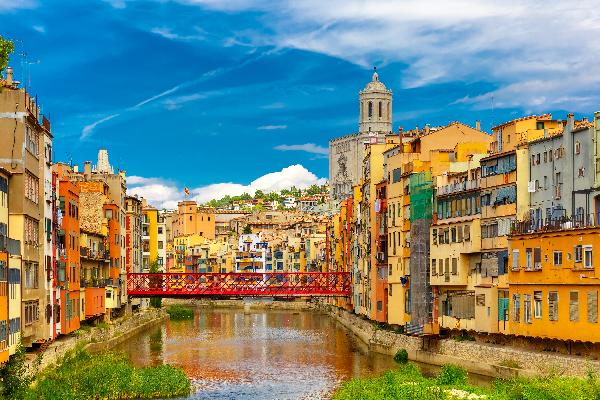
The Onyar Houses: The iconic, brightly painted houses lining the Onyar River provide Girona’s most photographed view. The metal Pont de les Peixateries Velles (Eiffel Bridge) offers the best vantage point.
The Jewish Quarter (El Call): One of the best-preserved Jewish quarters in Europe, a labyrinth of narrow cobblestone alleys and stone stairways. The Museum of Jewish History provides context to this important community.
The City Walls (Passeig de la Muralla): Walk along the remnants of the ancient Carolingian and medieval walls for stunning views over the city and surrounding countryside.
Arab Baths (Banys Àrabs): A well-preserved 12th-century Romanesque building inspired by Islamic and Roman bathhouses, featuring an elegant central cupola.
Plaça de la Independència: A grand neoclassical square in the Mercadal district, surrounded by arcades and bustling with cafes and restaurants.
Food & Drink in Girona
Girona is a gastronomic powerhouse, home to El Celler de Can Roca, repeatedly voted the world’s best restaurant. While securing a table there is a challenge, the city’s culinary excellence trickles down everywhere.
Xuixo: A must-try local pastry from Girona: a cylindrical, deep-fried dough filled with crema catalana and dusted with sugar.
Empordanesa Salad: A typical salad from the region featuring escarole, cod, olives, and a garlic and oil dressing.
Butifarra: A classic Catalan sausage, often served with white beans (botifarra amb mongetes).
Game Meats and Mushrooms: The inland regions provide excellent game and wild mushrooms, featured in stews and sauces.
Transportation: Barcelona to Girona and Within
Train: The high-speed AVE train from Barcelona-Sants station takes approximately 38 minutes. Regional trains (Rodalies) are cheaper but take around 1 hour and 20 minutes. The train station in Girona is a 15-20 minute walk from the old town.
Bus: Companies like Sagalés offer bus services from Barcelona’s Nord bus station. The journey takes about 1 hour and 20 minutes.
Within Girona:The historic center is entirely walkable. The city also has a local bus network for reaching areas outside the center.
Accommodation Tips for Girona
Staying within or on the edges of the old town is highly recommended to fully soak in the medieval atmosphere. Charming boutique hotels and guesthouses are housed in historic buildings. For a quieter stay, look for accommodations just outside the main walls.
Part 3: Figueres – The Surrealist Dream
The primary reason to visit Figueres is to experience the Teatre-Museu Gala Salvador Dalí, a monument to the famous surrealist artist who was born here. The museum itself is a work of art, designed by Dalí to be a total surrealist experience.
Top Attraction in Figueres: The Dalí Theatre-Museum
Housed in a former municipal theatre, the museum was conceived and curated by Dalí himself. It holds the largest and most diverse collection of his works, spanning his entire career.
The Building: The facade, topped with giant eggs and statues, sets the tone. The former theatre courtyard is dominated by a installation featuring a Cadillac and a raining statue.
The Collection: Highlights include iconic paintings like “Galatea of the Spheres,” “The Basket of Bread,” and “Port Lligat Madonna.” It also features jewelry designs, sculptures, and mechanical installations.
The Mae West Room: A famous optical illusion where a room furnished to resemble the face of the actress Mae West can only be seen correctly from a single vantage point.
The Jewellery Room: Displays Dalí’s exquisite and fantastical jewellery designs.
Tickets: It is absolutely crucial to book tickets online in advance to avoid extremely long queues, especially during peak season.
Other Attractions in Figueres
Toy Museum of Catalonia (Museu del Joguet de Catalunya): A fascinating collection of historical toys, including some that belonged to famous artists like Dalí and Federico García Lorca.
Sant Ferran Castle (Castell de Sant Ferran): Located on a hill just outside the town center, this 18th-century fortress is one of the largest in Europe. Visitors can explore its vast parade grounds and cisterns.
Food & Drink in Figueres
The cuisine in Figueres shares much with Girona’s but has its own local specialties from the Alt Empordà region.
Suculent:The region is known for its high-quality meats and hearty stews.
Seafood:The proximity to the Costa Brava means excellent fish and shellfish are readily available.
Empordà Wines:The surrounding Empordà DO wine region produces excellent reds, whites, and rosés. Many local restaurants feature them prominently.
Transportation: Barcelona to Figueres and Within
Train:The high-speed AVE train does not go directly to Figueres. Travelers typically take a high-speed or regional train to Figueres-Vilafant station (about 55 minutes from Barcelona), which is a short taxi or local bus ride from the town center. Slower regional trains go to Figueres station in the town center (approx. 2 hours).
Bus:Sagalés and other companies operate direct buses from Barcelona’s Nord bus station to Figueres, taking about 2 hours and 15 minutes.
Combining Girona & Figueres:A popular and efficient option is to take an early train to Girona, explore the city, and then take an afternoon bus from Girona to Figueres (approx. 45 minutes). After visiting the Dalí Museum, take a train directly back to Barcelona from Figueres-Vilafant.
Crucial Practical Information
Trip Planning & Booking
Best Time to Visit:The ideal times are spring (April-June) and autumn (September-October) when the weather is pleasant and crowds are thinner. July and August are hot and very crowded.
Tickets & Reservations:Avoid disappointment by booking major attractions (Sagrada Família, Park Güell, Dalí Museum) online weeks or even months in advance for specific time slots.
The Barcelona Card or Art Passport:The Barcelona Card offers free public transport and discounts on attractions. The Modernisme Route passport provides access to several modernist sites at a reduced price.
Cultural Insights & Etiquette
The Catalan Identity:The official language is Catalan; Spanish (Castellano) is also widely spoken. Locals appreciate any effort to use basic Catalan phrases like “Bon dia” (Good day) or “Gràcies” (Thank you). Be aware that Catalonia has a strong distinct cultural and political identity.
Siesta & Meal Times:Siesta culture is less pronounced in big cities but still exists in smaller towns. Lunch is typically from 1:30-4 PM, and dinner is very late by many standards, usually starting after 9 PM. Many restaurants do not open for dinner until 8:30 PM.
Tipping:Tipping is not as obligatory as in some countries. In restaurants, it’s customary to leave small change or round up the bill. For excellent service, 5-10% is generous.
Shopping & Souvenirs
Cava:A bottle of Catalan sparkling wine makes for an excellent gift.
Cured Meats:A vacuum-packed slice of fuet or jamón ibérico from a market like La Boqueria.
Saffron & Olive Oil:<>