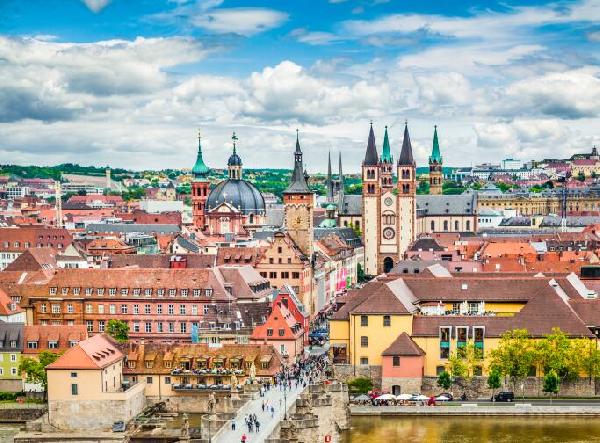
A Journey Through the Heart of Germany: Frankfurt, Würzburg, and Rothenburg
This travel guide outlines a classic German itinerary, a circular route starting and ending in Frankfurt, that takes travelers through the contrasting landscapes of modern finance, sublime baroque architecture, and a perfectly preserved medieval fairy tale. The journey from Frankfurt to Würzburg and then to Rothenburg ob der Tauber offers a profound glimpse into the diverse soul of Germany, blending urban energy, historical grandeur, and romantic small-town charm.
Trip Overview and Logistics
This route is designed to be efficient and scenic, primarily utilizing Germany’s excellent rail system (Deutsche Bahn) and optionally, the famous Romantic Road bus. The total distance covered is approximately 350 kilometers (220 miles). A recommended duration for this trip is 4 to 5 days, allowing for a thorough exploration of each location without feeling rushed.
Recommended Duration: 4-5 days.
Primary Transport: Train (Deutsche Bahn). The journey from Frankfurt to Würzburg is about 1 hour by ICE (high-speed train), Würzburg to Rothenburg is about 1 hour by regional train (with a change in Steinach), and Rothenburg back to Frankfurt is about 2.5-3 hours by regional train.
Alternative Transport: The Romantic Road Coach (Europabus) connects Würzburg, Rothenburg, and other picturesque towns, but requires advance booking and is seasonal.
Best Time to Visit: Late spring (May-June) and early autumn (September-October) offer pleasant weather and fewer crowds. The Christmas season is magical, especially in Rothenburg, but also extremely busy.
Frankfurt: The Gateway
Frankfurt am Main, often simply called Frankfurt, is Germany’s financial hub and transportation nucleus. While known for its soaring skyscrapers, forming the only significant skyline in the country (dubbed “Mainhattan”), it possesses a charming and historic old town that has been meticulously reconstructed.
Top Attractions in Frankfurt
Römerberg: This is the historic heart of Frankfurt, a picturesque square lined with beautifully reconstructed half-timbered houses. The Römer itself is the city hall, a complex of buildings with a history spanning over six centuries.
Frankfurt Cathedral (Kaiserdom): Not technically a cathedral but an imperial collegiate church, this Gothic building was the election and coronation site for Holy Roman Emperors. Climbing the tower rewards visitors with a stunning panoramic view of the city.
Städel Museum: One of Germany’s most important art museums, housing a world-class collection spanning from the Middle Ages to modern art, including works by Dürer, Rembrandt, Monet, and Picasso.
Main Tower: For the best view of the modern skyline, the Main Tower’s public viewing platform is unparalleled. It’s the only skyscraper that allows public access to its rooftop.
Palmengarten: A magnificent botanical garden offering a peaceful escape from the urban bustle with a variety of climate-controlled greenhouses and beautifully landscaped grounds.
Frankfurt Food & Drink
Frankfurt has a distinct culinary scene. Must-tries include:
Grüne Soße (Green Sauce): A cold herb sauce made with seven specific herbs, sour cream, and yogurt, traditionally served with boiled potatoes and eggs or meat.
Frankfurter Würstchen: Long, thin, smoked sausages, typically eaten with bread and mustard.
Apfelwein (Ebbelwoi): Frankfurt’s signature tart apple cider. The best place to experience it is in the traditional apple wine pubs in the Sachsenhausen district.
Handkäse mit Musik: A regional specialty of sour milk cheese (“hand cheese”) with a marinade of vinegar, oil, and onions (“mit Musik” – with music, a humorous reference to its after-effects).
Transportation in Frankfurt
Frankfurt Airport (FRA) is one of Europe’s busiest hubs. The city center is easily accessible via S-Bahn (suburban train) lines S8 and S9 (approx. 15 minutes). Within the city, an efficient public transport system (RMV) of U-Bahn (subway), trams, and buses covers all major attractions. A Frankfurt Card offers unlimited travel and discounts on museums.
Accommodation Tips for Frankfurt
For first-time visitors, staying in the city center (Innenstadt) near the Hauptbahnhof (main station) or the Römerberg provides easy access to transport and sights. The Bahnhofsviertel district near the station has a vibrant nightlife but can be seedy at night. For a more upscale experience, the Westend or banking district offers luxury hotels.
Würzburg: The Baroque Jewel
A short train ride east from Frankfurt lies Würzburg, the capital of Lower Franconia and a city defined by its magnificent baroque and rococo architecture. Situated on the Main River amidst vineyards, it is the northern gateway to the Romantic Road and a UNESCO World Heritage site.
Top Attractions in Würzburg
Würzburg Residence (Würzburger Residenz): A masterpiece of Baroque architecture, this monumental palace was built for the prince-bishops in the 18th century. The highlight is the grand staircase crowned by Giovanni Battista Tiepolo’s breathtaking fresco, the largest ceiling fresco in the world. The Hofkirche chapel and the Imperial Hall are equally stunning.
Marienberg Fortress (Festung Marienberg): This formidable fortress perched on a hill across the river was the former home of the prince-bishops. The walk up (or bus ride) offers spectacular views of Würzburg. It houses the Main-Franconian Museum and the Fürstenbau Museum.
Old Main Bridge (Alte Mainbrücke): A beautiful 15th-century stone bridge adorned with statues of saints. It has become a social hub where people gather to enjoy a glass of local Franconian wine while watching the sunset over the fortress.
St. Kilian’s Cathedral (Würzburger Dom): A Romanesque cathedral that is one of the largest in Germany, featuring striking modern stained glass by Georg Meistermann.
The Court Garden (Hofgarten): Surrounding the Residence, these beautifully manicured gardens are perfect for a leisurely stroll.
Würzburg Food & Drink
Würzburg is at the heart of the Franconian wine region, known for its dry, mineral-rich white wines, especially Silvaner.
Franconian Wine: Visit a traditional wine bar (“Bocksbeutel” is the distinct flat, round bottle used in the region) to sample local wines.
Franconian Cuisine: Hearty dishes like “Schäufele” (slow-roasted pork shoulder with crispy skin), “Blaue Zipfel” (sausages cooked in a vinegar-onion broth), and various potato dumplings.
Winzerfest: If visiting in late May/early June, this is one of Germany’s largest wine festivals.
Transportation in Würzburg
The main train station (Würzburg Hbf) is a major hub. Most attractions in the city center are within walking distance from each other. Trams and buses are available for reaching the fortress or other outlying areas.
Accommodation Tips for Würzburg
Staying in or near the Altstadt (Old Town) allows for easy exploration on foot. There are also charming guesthouses and hotels on the right bank of the Main River, near the fortress, offering beautiful views.
Rothenburg ob der Tauber: The Medieval Dream
A journey further south along the Romantic Road leads to Rothenburg ob der Tauber, arguably Germany’s most famous and well-preserved medieval town. Perched high above the Tauber River valley, its intact 14th-century walls, cobblestone lanes, and fachwerk (half-timbered) houses create an almost surreal, storybook atmosphere.
Top Attractions in Rothenburg
Town Walls and Walk: A must-do activity is walking the covered sentry walk along the top of the town’s fortifications. The entire loop is about 2.5 miles and offers unique views into the town and surrounding countryside.
Market Square (Marktplatz): The central hub of Rothenburg, dominated by the Town Hall (Rathaus). Visitors can climb the Rathaus tower for a magnificent view over the red-tiled roofs.
Plönlein: This iconic corner—a small square with a half-timbered house splitting two streets—is one of the most photographed spots in Germany.
Criminal Museum (Mittelalterliches Kriminalmuseum): A fascinating and sometimes gruesome museum detailing medieval law and order, with exhibits on torture devices, shame masks, and legal history.
St. Jakob’s Church (St. Jakobskirche): A beautiful Gothic church housing the magnificent Holy Blood Altar carved by Tilman Riemenschneider.
The Night Watchman’s Tour: A highly entertaining and informative evening tour led by a character dressed as the town’s medieval night watchman. It provides historical context in a engaging storytelling format.
Rothenburg Food & Drink
The food in Rothenburg is classic Franconian fare with some local specialties.
Schneeballen (Snowballs): The town’s signature pastry. Strips of shortcrust pastry are formed into a ball and deep-fried, then dusted with powdered sugar or coated in chocolate, nuts, or other toppings.
Franconian Bratwurst: Typically shorter and thicker than other German sausages, often served with sauerkraut or potato salad.
Local Beer:
Transportation in Rothenburg
Rothenburg’s train station is located just outside the city walls. The primary connection is via a shuttle train to Steinach, where you change for trains to Würzburg or other destinations. The town itself is best explored on foot. The Romantic Road bus also stops here.
Accommodation Tips for Rothenburg
For an authentic experience, stay within the old town walls in one of the many historic guesthouses or small hotels. This allows you to experience the magical atmosphere of the town after the day-trippers have left. Booking well in advance is essential, especially during peak season and the Christmas market.
The Journey: From Rothenburg back to Frankfurt
The return journey to Frankfurt from Rothenburg is typically done by train. The most common route involves taking a regional train from Rothenburg to Steinach, then changing to a train heading towards Würzburg or directly to other hubs like Aschaffenburg or Hanau, before finally connecting to a train to Frankfurt Hauptbahnhof. While it involves changes, the regional trains offer a scenic view of the Bavarian and Hessian countryside. The total travel time is usually between 2.5 to 3.5 hours. Travelers should check schedules on the Deutsche Bahn website or app for precise connections.
Cultural Insights and Practical Tips
Punctuality: Germans value punctuality highly. This is especially true for public transport; trains are famously on time.
Cash Culture: While credit cards are becoming more accepted, Germany still has a strong preference for cash (EC-Karte – German debit card – is also very common). It’s advisable to always have some euros on hand, especially in smaller towns and guesthouses.
Sundays and Holidays: Most shops are closed on Sundays and public holidays. Restaurants, cafes, and attractions remain open, but plan accordingly for groceries or shopping.
Greetings: A simple “Guten Tag” (Good day) is a polite greeting. In more formal situations or in shops/restaurants, it’s customary to say “Guten Tag” upon entering and “Auf Wiedersehen” when leaving.
Pfand System: Germany has a bottle deposit system (“Pfand”). When buying drinks in plastic or glass bottles at supermarkets, you pay a deposit which you get back when you return the empty bottle to a store.
The Language: While English is widely spoken in tourist areas, learning a few basic German phrases will be appreciated and can enhance your experience.