A Grand Tour of Southern Italy: Rome to the Amalfi Coast and Puglia
This comprehensive travel guide outlines an epic journey through the heart of Southern Italy, from the timeless capital of Rome, through the archaeological wonders of Pompeii and the dramatic beauty of the Amalfi Coast, to the unique trulli dwellings of Alberobello and the Baroque splendor of Lecce. This itinerary is designed for travelers seeking a deep immersion into the history, culture, cuisine, and stunning landscapes that define this vibrant region.
Itinerary Overview
This circular route begins and ends in Rome, leveraging Italy’s efficient rail and road networks. The journey is best experienced over a period of two to three weeks to fully appreciate each destination. The general flow is: Rome → Pompeii (base in Naples or Sorrento) → Amalfi Coast (Positano, Amalfi) → Matera → Puglia (Alberobello, Ostuni, Lecce, Bari) → with an optional side trip to the Isle of Capri and a stop in Potenza. The return leg travels from Lecce/Bari back to Naples and then to Rome.
Primary Destinations: Rome, Pompeii, Naples, Positano, Amalfi, Matera, Alberobello, Ostuni, Lecce, Bari.
Key Themes: Ancient Roman History, Renaissance & Baroque Art, Coastal Scenery, Unique Architecture, Culinary Delights.
Recommended Duration: 14-21 days.
Chapter 1: Rome – The Eternal City
Rome, Italy’s capital, is a sprawling metropolis where nearly 3,000 years of global history, art, and architecture are on display. From the awe-inspiring ruins of the Roman Empire to the spiritual majesty of Vatican City, Rome is an unforgettable start to any Italian adventure.
Key Attractions
The Colosseum, Roman Forum, and Palatine Hill: The iconic symbol of ancient Rome. A combined ticket grants access to all three sites, offering a profound glimpse into the heart of the Roman Empire.
Vatican City: An independent city-state and the center of the Catholic world. Must-sees include St. Peter’s Basilica (climb the dome for panoramic views), the Vatican Museums, and the Sistine Chapel with Michelangelo’s ceiling.
Pantheon: A marvel of ancient engineering, this perfectly preserved Roman temple, with its massive unsupported dome, is free to enter.
Trevi Fountain and Spanish Steps: Baroque masterpieces and popular gathering spots. Tossing a coin into the Trevi Fountain ensures your return to Rome.
Piazza Navona: A beautiful elliptical square featuring Bernini’s Fountain of the Four Rivers and Borromini’s church of Sant’Agnese in Agone.
Food & Drink
Roman cuisine is robust and flavorful. Seek out traditional trattorias in neighborhoods like Trastevere or Testaccio.
Pasta Classics: Cacio e Pepe (cheese and pepper), Carbonara (egg, cheese, guanciale), Amatriciana (tomato, guanciale, pecorino).
Supplì: Deep-fried rice balls stuffed with mozzarella.
Carciofi alla Romana/Judía: Artichokes cooked Roman-style (braised) or Jewish-style (fried).
Gelato: Enjoy authentic gelato from shops using natural ingredients.
Transportation & Accommodation
Rome has two major airports: Fiumicino (FCO) and Ciampino (CIA). The city’s Metro, bus, and tram network is extensive. A Roma Pass can offer discounts and free public transport. For accommodation, central neighborhoods like Monti, Trastevere, and near Termini Station offer good accessibility.
Chapter 2: South to Campania: Pompeii, Naples, and the Royal Palace of Caserta
Leaving Rome, a high-speed train (approx. 1 hour) whisks you south to Naples, the vibrant, chaotic, and passionate capital of Campania. This region is the birthplace of pizza and a gateway to some of Italy’s most famous sites.
Royal Palace of Caserta (Reggia di Caserta)
Often a stop between Rome and Naples, this 18th-century palace is a UNESCO World Heritage site and one of the largest royal residences in the world. Its magnificent apartments and vast park with fountains and waterfalls are often compared to Versailles.
Transport: Easily accessible from the Caserta train station, a short walk from the palace.
The Archaeological Marvel of Pompeii
The ancient Roman city frozen in time by the eruption of Mount Vesuvius in 79 AD is a must-visit. Walking its stone streets offers a hauntingly intimate look into daily life in the Roman Empire.
Highlights: The Forum, Villa of the Mysteries with its stunning frescoes, amphitheater, and plaster casts of the victims.
Transport: The Circumvesuviana train from Naples or Sorrento stops at “Pompei Scavi-Villa dei Misteri”.
Tip: Hire a licensed guide or purchase a detailed map/audio guide; the site is vast.
Naples: The City of Contrasts
Naples is intense, raw, and breathtakingly beautiful. It is a city of immense cultural wealth, from underground catacombs to opulent palaces.
Attractions: Explore the Spaccanapoli district, Naples National Archaeological Museum (home to many artifacts from Pompeii), the Sansevero Chapel with its veiled Christ sculpture, and the underground ruins of Napoli Sotterranea.
The Food: This is the home of pizza. Go to a historic pizzeria like L’Antica Pizzeria da Michele or Sorbillo for a classic Margherita. Also try Sfogliatella (a shell-shaped pastry), Ragù Napoletano, and fresh seafood.
Accommodation: Stay in the historic center for easy access to sights or in the more upscale Chiaia district.
Chapter 3: The Amalfi Coast & Capri Island
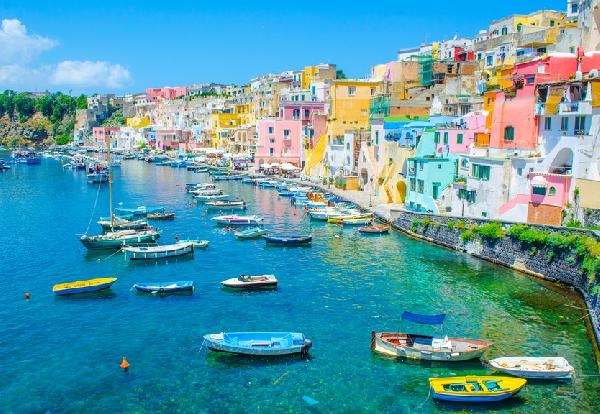
A landscape of dramatic cliffs, pastel-colored villages, and sparkling blue seas, the Amalfi Coast is Italy’s glamorous playground.
Positano
The most photogenic town on the coast, Positano cascades down the mountainside to a small beach. It’s known for its chic fashion boutiques, steep narrow lanes, and stunning views.
Activities: Relax on Spiaggia Grande, hike the “Path of the Gods” (Sentiero degli Dei), or take a boat tour along the coast.
Food: Fresh fish, lemon-based dishes (like Delizia al Limone), and pasta with local seafood.
Amalfi
The historic namesake of the coast was a powerful maritime republic. Its centerpiece is the striking Arab-Norman Cathedral of St. Andrew.
Activities: Visit the cathedral and its Cloister of Paradise. Take a bus or boat to the nearby enchanting village of Ravello, known for its beautiful gardens (Villa Cimbrone, Villa Rufolo).
The Isle of Capri
A short ferry ride from Naples, Sorrento, or Positano, Capri is synonymous with luxury and natural beauty.
Attractions: The Blue Grotto (Grotta Azzurra), the Gardens of Augustus, Via Krupp, and the chairlift to Monte Solaro for breathtaking island views.
Towns: Capri Town is chic and bustling, while Anacapri is quieter and more residential.
Transportation & Accommodation on the Coast
SITA buses run along the main coastal road but can be crowded in summer. Ferries are a scenic and often faster alternative for moving between towns. Driving is not recommended due to narrow roads and limited parking. Accommodation is expensive; consider staying in Sorrento or Salerno as more affordable bases.
Chapter 4: Matera – The City of Stones
Traveling east from Naples into the Basilicata region, you arrive at Matera, one of the world’s oldest continuously inhabited settlements. Its ancient cave dwellings, known as “Sassi,” are a UNESCO World Heritage site and a European Capital of Culture.
Attractions: Explore the Sassi di Matera (Sasso Caveoso and Sasso Barisano), visit a rock-hewn church like Chiesa di Santa Maria de Idris, and tour a restored cave house (casa grotta). The modern Musma museum showcases contemporary sculpture in a cave setting.
Cultural Insight: Once known as “the shame of Italy” for its poverty, Matera has been miraculously transformed into a premier tourist destination and a film location for major movies like “The Passion of the Christ.”
Food: Try bread from Matera (Pane di Matera), a protected product with a unique shape and flavor, and orecchiette pasta with cruschi peppers (dried sweet peppers).
Accommodation: Stay in a cave hotel (albergo diffuso) for a unique experience sleeping in a beautifully restored ancient dwelling.
Transport: Matera is best reached by train to Ferrandina Scalo with a connecting bus, or by bus from Bari or Naples.
Chapter 5: Discovering Puglia – The Heel of Italy’s Boot
The region of Puglia offers a different pace and aesthetic from the Amalfi Coast, characterized by vast olive groves, whitewashed hilltop towns, and unique architectural forms.
Alberobello
Famous for its Trulli, unique dry-stone huts with conical roofs that are a UNESCO World Heritage site. The Rione Monti district has over 1,000 of these fascinating structures, many now housing shops and B&Bs.
Ostuni
The “White City,” perched on a hill overlooking the Adriatic Sea. Its labyrinthine old town is a dazzling maze of whitewashed buildings, arches, and staircases leading to a majestic cathedral at the top.
Lecce
The “Florence of the South,” renowned for its exuberant Baroque architecture crafted from the local soft, golden limestone. The Basilica di Santa Croce and Piazza del Duomo are masterpieces.
Food in Puglia: Orecchiette con cime di rapa (pasta with turnip tops), Taralli (savory rings similar to crackers), Burrata cheese (from Andria), fresh seafood from the Adriatic coast, and Primitivo wine.
Bari
The bustling regional capital has a charming old town (Bari Vecchia) where you can watch nonnas making orecchiette pasta in the streets. The Basilica di San Nicola, which holds the relics of Saint Nicholas (Santa Claus), is a major pilgrimage site.
A Note on Potenza
The regional capital of Basilicata, Potenza is often passed through on train routes. While it has a pleasant historic center, it primarily serves as a transportation hub rather than a major tourist destination on this itinerary.
Chapter 6: Practical Travel Information
Getting Around
Train: Trenitalia and Italo offer high-speed connections between major cities (Rome-Naples-Bari). Regional trains serve smaller towns but are slower.
Car Rental: Offers maximum flexibility for exploring rural Puglia and Basilicata but is a liability on the Amalfi Coast and in city centers. Book ZTL (Limited Traffic Zone)-friendly accommodation with parking.
Buses: Essential for the Amalfi Coast (SITA) and connecting smaller towns in the south (e.g., Ferrovie del Sud Est in Puglia).
Ferries: Operate frequently between Naples, Capri, Ischia, and the Amalfi Coast towns.
Accommodation Tips
- Book well in advance for peak season (June-August) on the Amalfi Coast and in popular Puglian towns.
- Consider agriturismi (farm stays) in Puglia for an authentic rural experience with home-cooked food.
- Masserie (fortified farmhouses) in Puglia are often converted into luxurious hotels.
Cultural Insights & Etiquette
Aperitivo: A pre-dinner drink (often around 6-8 PM) that sometimes comes with complimentary snacks.
Siesta/Riposo: Many smaller shops close in the afternoon (approx. 1 PM – 4/5 PM).
Dress Code: Cover shoulders and knees when entering churches.
Meal Times: Lunch is typically 1 PM-2:30 PM; dinner starts late, rarely before 7:30 PM, often closer to 9 PM.
“Caffè Culture”: Coffee is usually consumed standing at a bar. A “caffè” is an espresso. Cappuccino is a morning drink.
A Journey Through Time and Beauty
The route from Rome through Southern Italy is more than just a vacation; it is a passage through layers of human history and diverse landscapes. It contrasts imperial grandeur with simple cave dwellings, chaotic urban energy with serene coastal vistas, and Baroque extravagance with unique vernacular architecture. By embracing the local pace, savoring the regional cuisines, and exploring beyond the main sights, travelers will discover the profound and passionate soul of Italy’s Mezzogiorno.