A Grand Tour of Southern Italy and Sicily: Rome to the Amalfi Coast and Beyond
This itinerary takes you on an unforgettable journey through the heart of ancient history, vibrant street life, and breathtaking landscapes. From the imperial capital of Rome to the ruins of Pompeii, the chaotic charm of Naples, and the layered cultural tapestry of Sicily, this tour is a deep dive into the soul of Southern Italy. The route is a loop, starting and ending in Rome, efficiently covering a stunning variety of experiences.
Part 1: The Mainland – Rome, Pompeii, and Naples
Rome: The Eternal City
Your adventure begins in Rome, a city where millennia of history are woven into the fabric of modern life. There is no gentle introduction; you are immediately immersed in a sprawling open-air museum.
The Historic Core: Start at the Colosseum, an icon of imperial power. Booking a skip-the-line ticket with a guided tour is essential to understand the scale and brutality of the gladiatorial games. Adjacent lies the Roman Forum, the political and social heart of ancient Rome. Walking among the ruins of temples and basilicas, you can almost hear the echoes of Cicero and Caesar. A short walk away, the Palatine Hill offers a greener, more tranquil perspective and stunning views over the Forum.
Vatican City: A day dedicated to the world’s smallest independent state is a must. The Vatican Museums are vast; pre-booked tickets are non-negotiable to avoid hours-long queues. Focus on the highlights: the Raphael Rooms and, of course, the Sistine Chapel. The sheer magnitude of Michelangelo’s ceiling is overwhelming. Afterwards, enter St. Peter’s Basilica, a monumental display of Renaissance and Baroque architecture, housing Michelangelo’s poignant Pietà.
Piazzas and Fountains: Spend an evening wandering from the bustling Piazza Navona, with its Bernini fountains, to the Pantheon, a miraculously preserved Roman temple. The journey culminates at the Trevi Fountain, especially magical when illuminated at night. Toss a coin with your right hand over your left shoulder to ensure your return to Rome.
Food & Drink: Roman cuisine is robust and simple. Must-tries include Cacio e Pepe (cheese and pepper pasta), Carbonara (egg, cheese, guanciale pasta), and Supplì (fried rice balls). For a quick, authentic lunch, join the locals at a tavola calda (hot table) for pizza al taglio (pizza by the slice).
Transport Tip: Rome is walkable, but the Metro is efficient for connecting major sites like the Colosseum and Vatican. Purchase a Roma Pass for discounted transport and museum entry.
Pompeii: A City Frozen in Time
A high-speed train from Roma Termini to Napoli Centrale, followed by a short ride on the Circumvesuviana local train, brings you to the gates of Pompeii. The eruption of Mount Vesuvius in 79 AD preserved this Roman city under volcanic ash, offering an unparalleled snapshot of daily life.
Walking through the cobbled streets is a haunting experience. You’ll see bakeries with petrified loaves of bread, homes with intricate mosaics, and plaster casts of victims captured in their final moments. Key sites include the Forum, the Amphitheatre, the Lupanar (brothel) with its famous frescoes, and the Villa of the Mysteries. The scale is immense; plan for at least 4-5 hours and wear comfortable shoes. Hiring a licensed guide on-site or downloading a detailed audio guide is highly recommended to bring the ruins to life.
Local Insight: The Circumvesuviana train can be crowded and is known for pickpockets. Keep your valuables secure and be vigilant.
Naples: The Chaotic Heart of the South
Naples is a city of intense contrasts—elegant galleries beside sprawling markets, serene bayside vistas alongside chaotic, narrow streets. It is the birthplace of pizza and a city that lives with passion.
Archaeological Treasures: The National Archaeological Museum is essential. It houses the finest artifacts from Pompeii and Herculaneum, including stunning mosaics and the Farnese Marble sculptures. This visit provides context and color to the ruins you’ve just seen.
Historic Center: A UNESCO World Heritage site, it’s a labyrinth of alleys and churches. Explore the Spaccanapoli street that literally “splits Naples,” and visit the Naples Cathedral, home to the vial of San Gennaro’s blood.
Waterfront & Castles: Stroll along the Via Caracciolo for beautiful views of Vesuvius and the Bay of Naples. Visit the majestic Castel dell’Ovo and the larger Maschio Angioino.
Food & Drink: This is pizza mecca. Go to a historic pizzeria like Da Michele or Sorbillo for a classic, soft-crust Margherita. Also try street food like Arancini (fried rice balls), Sfogliatella (a shell-shaped pastry), and fresh seafood.
Transport Tip: Naples is your gateway to Sicily. Overnight here before catching an early morning ferry or a short flight to Palermo.
Part 2: The Sicilian Circuit – Palermo to Taormina
Palermo: The Lively Capital
Arriving in Palermo by ferry or plane feels like entering another world. The capital of Sicily is a vibrant, noisy, and captivating fusion of Norman, Arab, and Baroque influences.
Arabo-Norman Route: A UNESCO-listed collection of sites showcasing Palermo’s unique heritage. Don’t miss the Palatine Chapel within the Norman Palace, whose walls are covered in breathtaking Byzantine mosaics. The nearby Cathedral of Palermo is an architectural chronicle in itself, blending various styles over centuries.
Markets & Street Life: Immerse yourself in the chaos of the Ballarò or Vucciria markets. The air is thick with the scent of grilled seafood, fresh produce, and shouting vendors. It’s a sensory overload and the true heart of the city.
Quattro Canti: This beautiful Baroque square at the intersection of two main streets perfectly represents the city’s elegant decay.
Food & Drink: Palermo’s street food is legendary. Try Pane e Panelle (chickpea fritter sandwiches), Sfincione (Sicilian pizza), and for the brave, Pani ca Meusa (a spleen sandwich). For pasta, Pasta con le Sarde (pasta with sardines, wild fennel, and pine nuts) is a classic.
Agrigento: The Valley of the Temples
A train or bus ride south brings you to one of the most spectacular archaeological sites in the world. The
Valley of the Temples is a string of magnificent Doric temples perched on a ridge overlooking the sea.
The
Temple of Concordia, one of the best-preserved Greek temples in the world, is utterly majestic, especially at sunset when the golden stone glows. The scale of the ruins, including the towering columns of the Temple of Juno and the shattered remains of the Temple of Zeus, is a powerful reminder of the wealth and power of the ancient Greek colony of Akragas.
Syracuse: The Greek Jewel
Traveling east to Syracuse, you find a city with a rich Greek past. The focus is on the archaeological park on the island of
Ortigia, connected to the mainland by bridges.
Neapolis Archaeological Park: Home to a magnificent Greek Theatre still used for performances today, a vast Roman Amphitheatre, and the eerie Ear of Dionysius, a limestone cave with extraordinary acoustics.
Ortigia Island: A beautiful tangle of medieval streets centered around the stunning Piazza del Duomo. The cathedral itself is spectacular, built incorporating the columns of an ancient Temple of Athena. At the island’s tip, the freshwater spring of Fonte Aretusa, with its papyrus plants, is a serene spot.
Catania: The Baroque City Under Etna
Catania, built from black lava stone, has a gritty, energetic character. It sits dramatically in the shadow of Mount Etna, which has both destroyed and defined it.
The central
Piazza del Duomo is a UNESCO Baroque masterpiece, featuring the elephant statue (“u Liotru”) emblematic of the city and the imposing cathedral. Don’t miss the bustling fish market (La Pescheria), a theatrical display of shouting vendors and incredible seafood. Catania is also a great base for exploring Etna.
Food & Drink: The city is famous for Pasta alla Norma (with eggplant, tomato, and ricotta salata). Also try horse meat, a local specialty often served as bresaola or in ragù.
Mount Etna: To the Summit of Europe’s Highest Volcano
A day trip to Mount Etna is a must. Numerous tour operators from Catania or Taormina offer guided excursions. You’ll drive through surreal lava landscapes and ancient craters. Most tours take you to approximately 2,900 meters via cable car and 4×4 vehicles (the summit area is often restricted due to volcanic activity). The views over Sicily and the smoking craters are otherworldly. Wear warm clothing and sturdy shoes, as it can be cold and windy even in summer.
Taormina: The Beautiful Cliffside Resort
Perched high on a cliff overlooking the Ionian Sea, Taormina is Sicily’s most famous and picturesque resort town. It’s elegant, chic, and offers stunning panoramas.
The crown jewel is the
Ancient Greek Theatre (Teatro Antico). While its structure is largely Roman, the location is unparalleled, with a direct frame of Mount Etna and the sea from the stage. Spend time wandering the beautiful Corso Umberto, a pedestrianized street filled with shops and cafes, and visit the public gardens (Giardini della Villa Comunale) for more breathtaking views. Take the cable car down to the beach area at Isola Bella, a tiny nature reserve.
Cefalù: The Charming Fishing Village
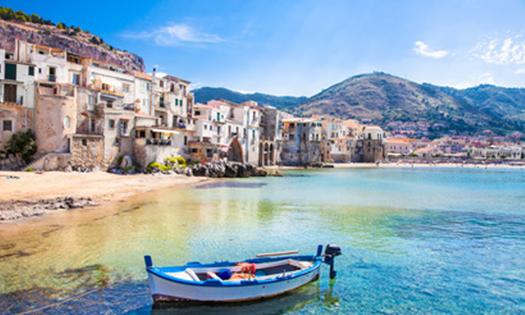
On your journey back towards Palermo, stop at Cefalù. This postcard-perfect medieval town boasts a stunning sandy beach and a magnificent Norman Cathedral, another UNESCO site with superb mosaics rivaling those in Palermo. Climb to the top of La Rocca for panoramic views of the town’s red-tiled roofs and the turquoise sea.
The Journey’s End: Return to Naples and Rome
The final leg involves taking a ferry or flight from Palermo back to Naples. From Naples, a high-speed train will whisk you back to Rome in just over an hour, allowing you to reflect on an incredible journey through time and culture before your flight home.
A Note on Transportation in Sicily
Sicily is best explored with a combination of trains and buses. Trains are comfortable for main routes (e.g., Palermo-Agrigento, Messina-Catania-Syracuse), but slower regional services connect smaller towns. For maximum flexibility, especially to reach sites like the Valley of the Temples from Agrigento station or to visit smaller hill towns, renting a car is highly recommended. However, driving in major cities like Palermo or Catania can be challenging due to traffic and restricted access zones (ZTL).
Culinary Conclusion
This tour is as much a gastronomic pilgrimage as a historical one. From Roman pasta to Neapolitan pizza and Sicilian street food, each region offers distinct flavors shaped by history, geography, and sheer passion. Be adventurous—try the local specialties, visit bustling markets, and always save room for gelato.
A Final Practical Tip: Pace Yourself
The Golden Rule:
The pace of this itinerary is demanding. To avoid burnout, consider prioritizing what matters most to you. It might be worth spending an extra day in Rome at the start to recover from jet lag or adding a rest day on a Sicilian beach between archaeological sites. Southern Italy operates on its own timetable; embrace delays as part of the experience. This journey through history, art, and vibrant street life will leave you with memories that last a lifetime.
The true traveler finds beauty in everything, from Rome’s grand piazzas to Naples’ chaotic alleys and Sicily’s sun-baked ruins.