A Comprehensive Travel Guide to Iceland’s Ring Road & Snæfellsnes Peninsula
This guide details a classic Icelandic itinerary, looping from the capital through the famed Golden Circle, along the dramatic South Coast, and culminating in the mystical landscapes of the Snæfellsnes Peninsula. It is a journey through a land of elemental forces, where fire and ice have sculpted a terrain of unparalleled beauty.
Day 1: Arrival and Acclimation in Reykjavík
Your Icelandic adventure begins in Reykjavík, the world’s northernmost capital. Despite its small size, the city pulses with a vibrant energy, fueled by a rich cultural scene and a profound connection to nature.
Attractions & Experiences:
Hallgrímskirkja: This iconic Lutheran church, resembling the basalt columns of Iceland’s landscape, dominates the city skyline. Take the elevator to the top of the bell tower for a panoramic view of the colorful rooftops, the sea, and the distant mountains.
Harpa Concert Hall: A masterpiece of modern architecture, Harpa’s geometric glass facade reflects the sky and harbor. Even if you don’t attend a performance, wandering through its shimmering interior is a must.
Sun Voyager (Sólfar): This striking steel sculpture on the waterfront resembles a Viking longship, representing a “dream of hope, progress, and freedom.” It is a beautiful spot for photography, especially at sunset.
Laugavegur Street: The main shopping street is lined with boutiques, art galleries, cafes, and restaurants. It’s the perfect place to feel the city’s pulse.
Food & Culture: Reykjavík’s food scene has exploded in recent years. For a classic Icelandic experience, try plokkfiskur (a hearty fish stew) or a lamb hot dog from the famous Bæjarins Beztu Pylsur stand. The city is also known for its coffee culture and thriving nightlife. Culturally, visit the National Museum of Iceland or the Saga Museum to gain deep insights into the nation’s Viking history and sagas.
Practical Tip: Consider purchasing a Reykjavík City Card if you plan to visit multiple museums and use public transport. It offers excellent value. Also, be prepared for all weather; the Icelandic saying “þetta reddast” (it will all work out) applies perfectly to its unpredictable climate.
Day 2: The Classic Golden Circle
The Golden Circle is the most popular tourist route in Iceland, encompassing three spectacular sites within a relatively short driving distance from Reykjavík.
Þingvellir National Park: This is a site of immense historical and geological significance. It was here, at the Alþingi, that the world’s oldest existing parliament was established in 930 AD. Geologically, you can literally walk between two tectonic plates—the North American and Eurasian—in the Almannagjá gorge. The Silfra Fissure, filled with crystal-clear glacial water, is a world-renowned snorkeling and diving spot.
Geysir Geothermal Area: The Great Geysir, from which all others get their name, is now mostly dormant. However, its neighbor, Strokkur, reliably erupts every 5-10 minutes, shooting a column of boiling water up to 40 meters into the air. The entire area is a bubbling, steaming testament to the geothermal forces beneath your feet.
Gullfoss Waterfall: The “Golden Falls” is a breathtaking two-tiered cascade that plummets 32 meters into a rugged canyon. On a sunny day, you are almost guaranteed to see a rainbow forming in the powerful mist. The sheer power and roar of the water are humbling.
Transportation: The Golden Circle is easily navigable by rental car. The total driving loop is approximately 300 km. Alternatively, numerous tour companies offer day trips from Reykjavík.
Local Insight: For a less crowded experience, visit these sites early in the morning or later in the evening. Consider adding a stop at the Friðheimar tomato farm for a unique lunch inside a greenhouse.
Day 3: South Coast to a Southern Town
Heading east along Route 1 (the Ring Road), the landscape transforms into a vast black sand plain backed by glaciers and volcanoes.
Seljalandsfoss & Gljúfrabúi: This elegant waterfall is unique because you can walk on a path that goes completely behind the curtain of water—be prepared to get wet! A short walk to the left reveals the hidden waterfall Gljúfrabúi, which is partially concealed within a canyon. You can wade through a stream to enter the cavern and witness this magical sight.
Skógafoss: Further east is the mighty Skógafoss, one of Iceland’s biggest and most iconic waterfalls. A staircase alongside it leads to a viewing platform at the top, offering spectacular views of the coastline. Legend says a Viking treasure is buried behind the powerful cascade.
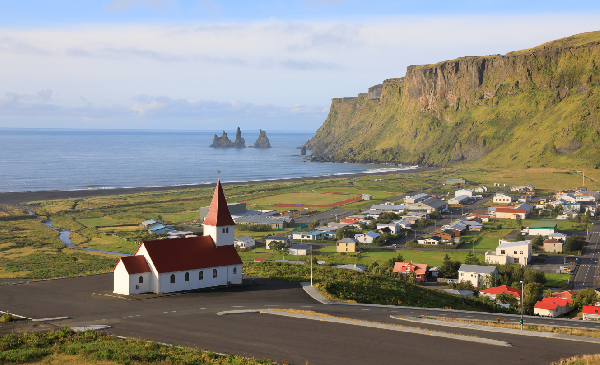
The Southern Town (e.g., Vík or Kirkjubæjarklaustur): You will overnight in a small town along the South Coast. Vík í Mýrdal is Iceland’s southernmost village, dramatically situated beneath the Mýrdalsjökull glacier. It’s a perfect base for exploring the surrounding wonders.
Food & Accommodation: Dinner will likely be at your hotel or a local restaurant in town. Expect simple, hearty meals often featuring fresh seafood or lamb. Accommodation ranges from comfortable hotels to guesthouses; booking well in advance is crucial.
Day 4: Black Sands, Glaciers, and Icebergs
This day is dedicated to some of Iceland’s most dramatic and otherworldly landscapes.
Reynisfjara Black Sand Beach: Near Vík, this is one of the most famous black sand beaches in the world. Its stunning beauty is matched by its deadly power. Beware of “sneaker waves” that can appear without warning and drag people out to sea. Admire the towering basalt sea stacks of Reynisdrangar and the hexagonal basalt columns of the cave Hálsanefshellir.
Skaftafell / Vatnajökull National Park: This area is part of the vast Vatnajökull National Park, home to Europe’s largest glacier. It’s a hub for glacier hiking and ice climbing tours, which are highly recommended for an up-close experience with the ice (always with a certified guide).
Jökulsárlón Glacier Lagoon & Diamond Beach: The journey culminates at Jökulsárlón, a profound and beautiful glacial lagoon filled with icebergs calved from the Breiðamerkurjökull glacier. Take a boat tour (amphibian or zodiac) to navigate among the blue, white, and black ice sculptures. Across the road, on the “Diamond Beach,” smaller icebergs wash ashore on the black sand, glistening like jewels against the dark backdrop—a photographer’s paradise.
Overnight in a Southern Town: You will return to your accommodation in the South Coast region after a long but unforgettable day.
Day 5: Return to Reykjavík via the Blue Lagoon
The drive back to Reykjavík retraces part of your route but offers new perspectives. The main event of the day is a stop at Iceland’s most famous geothermal spa.
The Blue Lagoon: Located in a dramatic lava field on the Reykjanes Peninsula, the Blue Lagoon’s milky-blue, mineral-rich waters are world-renowned. The silica mud is excellent for your skin. It’s a place of pure relaxation and a perfect way to unwind after days of exploration.
Practical Tip: Booking your slot at the Blue Lagoon weeks or even months in advance is absolutely mandatory, as it sells out consistently. The Comfort package is the most popular, including a towel, a drink, and a silica mud mask.
Evening in Reykjavík: Enjoy a final dinner in the capital, perhaps splurging on one of its excellent fine-dining restaurants that focus on New Nordic cuisine using local ingredients.
Day 6: The Magical Snæfellsnes Peninsula
Often called “Iceland in Miniature,” the Snæfellsnes Peninsula packs volcanoes, glaciers, black sand beaches, charming fishing villages, and dramatic coastlines into one easily accessible region.
Attractions & Experiences:
Mount Kirkjufell: Iceland’s most photographed mountain, often paired with the nearby Kirkjufellsfoss waterfalls. Its distinct arrowhead shape is iconic.
Snæfellsjökull National Park: Dominated by the Snæfellsjökull glacier-capped volcano, which Jules Verne made famous as the entrance to the center of the Earth in his novel. The park features incredible lava formations, such as the Vatnshellir Lava Cave and the Lóndrangar basalt cliffs.
Arnarstapi & Hellnar: Two picturesque coastal villages connected by a stunning coastal hiking trail. Look for the majestic stone arch of Gatklettur and the basalt column formations.
Black Church of Búðir (Búðakirkja): A small, stark black wooden church set alone in a field of lava, creating an incredibly atmospheric and photogenic scene.
Djúpalónssandur & Dritvík: A beautiful black pebble beach littered with the rusted remains of a shipwreck. Here, you can test your strength on four historic “lifting stones” that fishermen once used.
Transportation & Food: A rental car is essential for exploring Snæfellsnes at your own pace. The loop from Reykjavík and back is a full-day trip of over 400 km. Stop for lunch in one of the charming villages like Stykkishólmur or Grundarfjörður for fresh seafood soup or fish and chips.
Day 7: Departure from Reykjavík
On your final day, enjoy a leisurely Icelandic breakfast in Reykjavík. You might have time for some last-minute souvenir shopping for authentic Icelandic wool sweaters (
lopapeysa) or artisanal crafts before heading to Keflavík International Airport for your departure.
General Travel Tips for Iceland
Best Time to Visit: Summer (June-August) offers midnight sun, lush green landscapes, and accessible roads. Winter (November-March) provides chances to see the Northern Lights but has limited daylight and challenging road conditions. Shoulder seasons (April-May, September-October) offer a balance.
Transportation: Renting a car provides maximum flexibility. A 4×4 is recommended outside of summer and is essential for any F-road (mountain road) travel. Always check road.is and safetravel.is for conditions.
Packing: Pack layers! A waterproof and windproof outer shell is non-negotiable. Also essential are warm mid-layers (fleece/wool), sturdy waterproof hiking boots, swimwear for hot pools, and a reusable water bottle (Icelandic tap water is among the best in the world).
Budgeting: Iceland is expensive. Save money by booking accommodation early, buying groceries from Bonus or Krónan supermarkets for picnics, and limiting restaurant meals.
Respect for Nature: This is paramount. Never drive off-road. Always stay on marked paths. Heed all warning signs at beaches and cliffs. The weather can change in an instant.
A journey through Iceland is more than a vacation; it’s an immersion into a raw and powerful natural world that will leave you with a profound sense of awe and memories to last a lifetime.