A Comprehensive Travel Guide: The Ultimate Norwegian Fjord & City Adventure
This itinerary, starting and ending in Oslo, Norway, is a classic journey through the heart of the country’s most stunning landscapes. It combines the cultural vibrancy of its two main cities with the raw, majestic beauty of the fjords, mountains, and valleys in between. The route from Oslo to Bergen, encompassing the Sognefjord and Hardangerfjord, is often referred to as “Norway in a Nutshell,” and offers an unparalleled travel experience.
Route Overview: Oslo → Hemsedal → Flåm → Gudvangen → Voss → Bergen → Norheimsund → Eidfjord → Geilo → Oslo
This circular tour is typically undertaken over 7 to 10 days. It utilizes a combination of Norway’s efficient public transport system—including trains, buses, and ferries—and offers opportunities for self-driving. The following guide provides a detailed day-by-day breakdown, focusing on practical information, key attractions, and local culture.
1. Oslo: The Modern Capital
Oslo, the capital of Norway, is a city where modern architecture meets deep-rooted history, all set against the backdrop of the Oslofjord and vast forests.
Attractions & Activities
The Viking Ship Museum (Vikingskipshuset): Home to three incredibly well-preserved Viking ships from the 9th century, along with various artifacts. (Note: The museum is currently closed for relocation and will reopen as part of the new Museum of the Viking Age in 2026/2027. Check for updates).
The Fram Museum (Frammuseet): Showcases the polar ship Fram, used in groundbreaking expeditions to the Arctic and Antarctic by legends like Fridtjof Nansen and Roald Amundsen.
The Norwegian Museum of Cultural History (Norsk Folkemuseum): An extensive open-air museum with over 150 historical buildings, including a stunning stave church.
The Opera House (Operahuset): An architectural masterpiece with a sloping marble roof that you can walk on, offering spectacular views of the city and fjord.
Vigeland Sculpture Park (Vigelandsparken): A unique park featuring over 200 bronze and granite sculptures by Gustav Vigeland, located within the larger Frogner Park.
Aker Brygge & Tjuvholmen: A vibrant waterfront area with shops, restaurants, and the Astrup Fearnley Museum of modern art.
Food & Drink
Traditional: Try Fårikål (mutton and cabbage stew), Kjøttkaker (Norwegian meatballs), or fresh shrimp from the Oslofjord.
Modern Nordic: Oslo has a thriving food scene. Sample New Nordic cuisine at restaurants that focus on local, seasonal ingredients.
Street Food: Visit Vulkan Street Food or Vippa for a diverse range of international and local street food in a casual setting.
Transportation
Oslo’s city center is walkable, and it has an excellent public transport system (Ruter) comprising buses, trams, metro (T-bane), and ferries. The Oslo Pass offers free travel on public transport and free entry to many museums.
Accommodation Tips
Areas like Grünerløkka are trendy and vibrant, while Karl Johans gate (the main street) is central for sightseeing. Major hotel chains and boutique options are available throughout the city. Book well in advance during summer.
2. Oslo to Hemsedal: Gateway to the Mountains
The journey from Oslo to Hemsedal is a scenic transition from lowland forests to dramatic mountain terrain. Hemsedal is a premier destination for skiing in winter and hiking in summer.
Transportation
The drive takes approximately 3.5 hours via the E16 highway. Alternatively, take a train from Oslo to Gol, followed by a short bus ride to Hemsedal (total journey time around 4 hours).
Attractions & Activities
Hiking: Explore trails for all levels. A popular hike is to the top of Røggen or Høgevarde for breathtaking panoramic views.
Hemsedal Ski Resort: In winter, it’s one of Norway’s largest ski centers, with slopes for all abilities.
Fishing and Glacier Visits:
Summer offers fishing in pristine lakes and guided tours to nearby glaciers.
Cultural Insight
Hemsedal represents the Norwegian concept of
“friluftsliv” (open-air life), where connection with nature is a fundamental part of daily life and culture.
3. Hemsedal to Flåm & The Flåm Railway
The journey continues deeper into fjord country towards Flåm, a tiny village located at the inner end of the Aurlandsfjord, a branch of the world’s longest and deepest fjord, the Sognefjord.
Transportation
The drive from Hemsedal to Flåm takes about 2.5 hours, passing through stunning mountain passes and valleys like the Lærdal Valley.
The Flåm Railway (Flåmsbana)
This is one of the world’s steepest railway lines on normal tracks. The 20-kilometer journey from Flåm up to Myrdal is a masterpiece of engineering, climbing 864 meters and offering unparalleled views of waterfalls, deep ravines, and snow-capped mountains.
Key Sights: The train makes a photo stop at the powerful Kjosfossen waterfall, where you might even see a performance by a mythical “Huldra” (forest spirit).
Tickets: Book tickets well in advance, especially during peak season.
Attractions in Flåm
Flåm Railway Museum: Learn about the incredible history and construction of the railway.
Aurlandsfjord Cruise: Take a scenic ferry from Flåm to Gudvangen (often included in the “Norway in a Nutshell” tour).
Stegastein Viewpoint: A spectacular viewing platform jutting out 30 meters from the mountainside, 650 meters above the Aurlandsfjord. Accessible by bus or car from Flåm.
4. Flåm to Gudvangen & The Nærøyfjord
The ferry journey from Flåm to Gudvangen is arguably one of the most beautiful boat trips in the world.
The Ferry Journey
The ferry sails through the Aurlandsfjord and into the narrow, dramatic Nærøyfjord. This fjord is a UNESCO World Heritage site, flanked by steep mountainsides, roaring waterfalls, and small farms clinging to the slopes.
Gudvangen
Gudvangen is a small village set at the end of the Nærøyfjord. It is home to the Viking Valley (Njardarheimr), a living museum where you can experience Viking life, culture, and craftsmanship firsthand.
5. Gudvangen to Voss: The Adventure Capital
From Gudvangen, a bus takes you through the steep Stalheimskleiva road (with hairpin bends) to Voss.
Transportation
The bus ride from Gudvangen to Voss takes about 1.5 hours and is incredibly scenic.
Attractions & Activities in Voss
Adventure Sports: Voss is famous for its extreme sports. Activities include skydiving, paragliding, white-water rafting, and kayaking.
Voss Gondola (Hangursbanen): Ride to the top of Mount Hangur for hiking, mountain biking, or dining with a view.
Voss Church (Vangskyrja): A stone church from 1277 with a rich history.
6. Voss to Bergen: The Gateway to the Fjords
The train journey from Voss to Bergen is the final leg of the Bergen Railway (Bergensbanen), crossing the high mountains before descending towards the coast.
Transportation
The train from Voss to Bergen takes about 1 hour and 15 minutes.
7. Bergen: The Historic Hanseatic Port
Bergen, Norway’s second city, is surrounded by seven mountains and is a city rich in history and culture, famously known as the gateway to the fjords.
Attractions & Activities
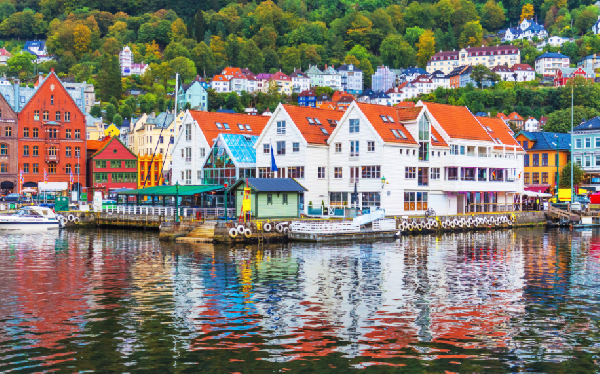
Bryggen Hanseatic Wharf: A UNESCO World Heritage site, these colorful wooden houses are the iconic image of Bergen. Explore the narrow alleyways and visit the Hanseatic Museum.
Fløyen Mountain: Take the Fløibanen funicular to the top of Mount Fløyen for stunning views of the city and fjords. There are numerous hiking trails at the top.
Fish Market (Fisketorget): A vibrant market offering fresh seafood, fruit, vegetables, and local crafts. A great place to try whale sausage or freshly cooked shrimp.
Bergenhus Fortress: One of Norway’s oldest and best-preserved stone fortifications, featuring Håkon’s Hall and the Rosenkrantz Tower.
KODE Art Museums: One of the largest museums for art, craft, design, and music in the Nordic countries.
Food & Drink
Seafood: Bergen is synonymous with fresh fish. Don’t miss traditional fish soup or locally caught salmon and cod.
Bergensk Fiskesuppe: A distinctive, creamy fish soup that is a local specialty.
Skillingsboller: A cinnamon bun that is a classic Bergen pastry.
Cultural Insight
Bergen has a reputation for rain (it rains about 240 days a year!), so be prepared with waterproof clothing. The locals say “there’s no such thing as bad weather, only bad clothing.” This resilience and love for their city despite the weather is a key part of Bergensers’ identity.
8. Bergen to Norheimsund & The Hardangerfjord
The journey now heads into the region of the Hardangerfjord, known as Norway’s orchard, famous for its blossoming fruit trees in spring.
Transportation
A bus or car ride from Bergen to Norheimsund takes about 1.5 to 2 hours, following the beautiful Hardangerfjord.
Norheimsund
A charming village on the shores of the fjord. Visit the
Steinsdalsfossen waterfall, where you can walk on a path behind the falling water without getting wet—a truly unique experience.
9. Norheimsund to Eidfjord: Heart of the Hardangerfjord
The journey continues along the fjord to Eidfjord, a area of dramatic natural beauty.
Attractions & Activities in Eidfjord
Vøringsfossen Waterfall: One of Norway’s most famous waterfalls, with a total drop of 182 meters. New viewing platforms offer thrilling perspectives.
Hardangervidda Nature Centre: An interactive museum showcasing the flora, fauna, and geology of the Hardangervidda mountain plateau, Europe’s largest high mountain plateau.
Fjord Cruises: Take a boat trip on the serene Eidfjord arm to fully appreciate the surrounding mountains.
10. Eidfjord to Geilo: Return to the Mountains
The route from Eidfjord to Geilo involves crossing part of the Hardangervidda plateau, a starkly beautiful landscape of rocks, lakes, and reindeer.
Transportation
The drive takes about 1.5 hours.
Geilo
A well-known ski resort situated between Oslo and Bergen. In summer, it’s a hub for hiking, biking, and fishing. It offers a peaceful mountain atmosphere before the return to Oslo.
11. Geilo to Oslo: The Final Journey
The train ride from Geilo to Oslo on the Bergensbanen is considered one of the world’s most beautiful train journeys. It traverses wild mountain terrain, passes Finse (the highest station on the Norwegian railway network), and descends through forested valleys back to the capital.
Transportation
The train journey takes approximately 3.5 hours.
Practical Travel Tips for Norway
Best Time to Travel
Summer (June-August): The most popular time with long daylight hours (midnight sun in parts), warmest weather, and all attractions/transportation running. Also the busiest and most expensive.
Shoulder Seasons (May & September): Fewer crowds, lower prices, and beautiful spring blossoms or autumn colors. Weather can be more unpredictable.
Winter (December-March):A magical time for skiing, seeing the Northern Lights (inland), and experiencing snow-covered landscapes. Some attractions may have limited hours.
Cost:
Food:
Tickets:
Accommodation: