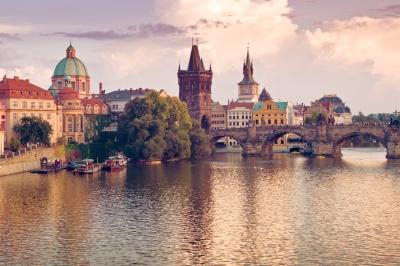
A Comprehensive Travel Guide: The Heart of Europe Circuit
This guide details a classic circuit through the historic and culturally rich heart of Europe, covering the Czech Republic, Austria, Hungary, and Slovakia. This itinerary is designed to showcase imperial cities, breathtaking alpine landscapes, charming towns, and a deep dive into Central European history and culture.
Itinerary Overview
The journey is a circular route starting and ending in Prague, logically connecting major highlights and hidden gems. The recommended duration for a comfortable trip is 14-16 days.
Start & End: Prague, Czech Republic
Primary Countries: Czech Republic, Austria, Hungary, Slovakia
Key Destinations: Prague → Český Krumlov → Salzburg → Hallstatt → St. Wolfgang → Melk → Vienna → Budapest → Bratislava → Brno → Kutná Hora → Prague
Transportation: A mix of trains, buses, and boats offers the most scenic and efficient travel.
Prague (Praha), Czech Republic
The “City of a Hundred Spires” is a fairy-tale metropolis built over centuries, with architecture spanning Romanesque, Gothic, Baroque, and Art Nouveau.
Key Attractions
Prague Castle: The largest ancient castle complex in the world. It includes St. Vitus Cathedral, the Old Royal Palace, and Golden Lane.
Charles Bridge: A historic 14th-century bridge adorned with baroque statues, best experienced at sunrise to avoid crowds.
Old Town Square: Home to the Astronomical Clock, which puts on a hourly show, and the Týn Church.
Jewish Quarter (Josefov): A poignant area with a rich history, including several synagogues and the Old Jewish Cemetery.
Food & Drink
Traditional Dishes: Svíčková (marinated beef with cream sauce), Vepřo-knedlo-zelo (roast pork with dumplings and cabbage), and Guláš.
Drinks: World-famous Pilsner Urquell and other Czech beers are a must-try. Becherovka, a herbal liqueur, is a local specialty.
Transportation & Accommodation
Prague’s public transport (metro, trams) is excellent. Purchase a multi-day pass for convenience. Stay in districts like Old Town (Stare Mesto) for proximity to sights, or Vinohrady for a more local, residential feel.
Český Krumlov, Czech Republic
A UNESCO World Heritage site, this small town is a perfectly preserved medieval gem nestled in a loop of the Vltava River.
Key Attractions
Český Krumlov Castle: The second largest castle complex in the country, featuring a stunning Baroque theatre and expansive gardens.
Old Town: Get lost in the labyrinth of cobblestone streets lined with Renaissance and Gothic burghers’ houses.
Vltava River: Rafting or canoeing on the river provides a unique perspective of the town.
Transportation from Prague
Regular buses from Prague’s Na Knížecí or Florenc stations take approximately 3 hours. Shuttle services are also a popular and convenient option.
Salzburg, Austria
The birthplace of Mozart and the setting for “The Sound of Music,” Salzburg is a baroque city set against the backdrop of the Alps.
Key Attractions
Hohensalzburg Fortress: One of the largest and best-preserved medieval castles in Europe, offering panoramic views.
Mirabell Palace and Gardens: Famous from the “Sound of Music,” these beautifully manicured gardens are a delight.
Getreidegasse: The city’s main shopping street, known for its ornate wrought-iron shop signs.
Mozart’s Birthplace: A museum dedicated to the composer’s life and work.
Food & Drink
Traditional Dishes: Salzburger Nockerl (a sweet soufflé), Bosna (a type of sausage), and Mozartkugel (chocolate praline).
Drinks: Enjoy coffee and pastries at a traditional Kaffeehaus, a staple of Austrian culture.
Hallstatt & St. Wolfgang湖区 (Lake District), Austria
This region is home to some of the most spectacular lake and mountain scenery in Europe.
Hallstatt
A picture-perfect village on the shore of Lake Hallstatt, it’s a UNESCO site known for its salt mines and serene beauty.
Attractions: Take the funicular to the Salt Mines or the “World Heritage View” lookout point. Visit the Bone House (Beinhaus) at St. Michael’s Chapel.
St. Wolfgang & The Salzkammergut
A charming village on the Wolfgangsee, part of the larger Salzkammergut lake district.
Attractions: Ride the historic Schafbergbahn cog railway to the summit of Schafberg for breathtaking 360-degree views. Take a boat cruise on the lake.
Transportation & Accommodation
Travel between towns by bus and boat. Staying in Hallstatt can be expensive; consider nearby towns like Obertraun or Bad Ischl for more options. The region is best explored with a base for 2-3 nights.
Melk, Austria
A small town on the Danube, famous for its magnificent Benedictine abbey, which marks the western gateway to the Wachau Valley.
Key Attraction
Melk Abbey: A stunning Baroque masterpiece perched on a rocky outcrop. Its library and marble hall are particularly impressive.
Vienna (Wien), Austria
The imperial capital of the Habsburg Empire, Vienna is a city of exquisite music, art, and coffeehouse culture.
Key Attractions
Schönbrunn Palace: The former summer residence of the Habsburgs, with vast gardens and the world’s oldest zoo.
St. Stephen’s Cathedral: The magnificent Gothic centerpiece of the city.
Belvedere Palace: Houses an incredible art collection, including Gustav Klimt’s “The Kiss.”
Vienna State Opera: Attend a world-class performance or take a guided tour.
The Hofburg: The former imperial palace, now home to museums, the Spanish Riding School, and the Austrian president’s office.
Food & Drink
Traditional Dishes: Wiener Schnitzel, Tafelspitz (boiled beef), and Sachertorte (chocolate cake).
Coffeehouse Culture: Spend an afternoon at a classic Viennese coffeehouse like Café Central or Café Sacher, reading newspapers and enjoying a Melange coffee.
Budapest, Hungary
“The Pearl of the Danube,” Budapest is actually two cities—Buda and Pest—unified in 1873. It is known for its thermal baths, grand architecture, and vibrant nightlife.
Key Attractions
Buda Castle & Fisherman’s Bastion: On the Buda side, offering stunning views over the Danube and Parliament. Fisherman’s Bastion is a fairytale-like terrace.
Hungarian Parliament Building: An iconic Gothic Revival building on the Pest side, best seen from across the river or on a guided tour.
Thermal Baths: Relax at the vast Széchenyi Baths (in City Park) or the art nouveau Gellért Baths.
Great Market Hall:A great place to sample local food and buy souvenirs.
Food & Drink
Traditional Dishes: Goulash (a hearty stew), Lángos (fried dough with toppings), and Chicken Paprikash.
Drinks: Tokaji wine (a sweet dessert wine) and Pálinka (a strong fruit brandy).
Bratislava, Slovakia
The compact capital of Slovakia, situated on the Danube near the borders of Austria and Hungary. It offers a charming old town and a relaxed atmosphere.
Key Attractions
Bratislava Castle: Overlooking the city, the castle offers history and great views.
Old Town (Staré Mesto): Wander through the pedestrianized center to see sights like St. Martin’s Cathedral, the Old Town Hall, and quirky statues like Čumil (the “Man at Work”).
UFO Tower: Located on the SNP Bridge, it offers a unique observation deck and restaurant.
Transportation from Budapest
A very pleasant 2-hour boat ride up the Danube connects Budapest and Bratislava. Trains and buses are also frequent and take a similar amount of time.
Brno & Kutná Hora (Return to Prague Circuit)
The final leg of the journey explores two significant Czech cities before returning to Prague.
Brno
The Czech Republic’s second city and the capital of Moravia. It has a vibrant student population and a more modern, laid-back feel than Prague.
Attractions: Špilberk Castle with its former notorious prison, the functionalist Villa Tugendhat (a UNESCO site), and the Cathedral of St. Peter and Paul.
Kutná Hora
A historic town famed for its silver mines. It is a popular day trip from Prague.
Attractions:
Sedlec Ossuary (Bone Church):A small chapel in the suburb of Sedlec decorated with the bones of 40,000-70,000 people.
St. Barbara’s Church:A magnificent Gothic cathedral dedicated to the patron saint of miners.
The Italian Court:A former royal mint and residence.
Crucial Practical Information
Transportation Summary
Trains:The rail networks in Austria and the Czech Republic are excellent (ÖBB, ČD). Book Austrian trains in advance for cheaper “Sparschiene” tickets.
Buses:A very efficient and often cheaper alternative, especially in the Czech Republic (e.g., RegioJet, FlixBus). Ideal for Prague to Český Krumlov.
Cars:Renting a car offers flexibility, especially in the Austrian Lake District, but can be a hassle in city centers where parking is limited and expensive.
Tickets:A Eurail Pass covering these countries can be cost-effective if traveling extensively by train. Otherwise, point-to-point tickets are fine.
Cuisine Across the Region
The culinary traditions share similarities but have distinct national characters. Expect hearty meat dishes (pork, beef, duck), dumplings (knedlíky), stews (goulash), and freshwater fish. Pastries and desserts are a strong point throughout Austria and Hungary. Each country also boasts its own proud beer-brewing tradition.
Cultural Insights & Etiquette
Tipping:Tipping is customary. Round up the bill or leave 10-15% in restaurants if service is not included. Tip taxi drivers and tour guides.
Greetings:A simple handshake is common. Use formal titles (Herr/Frau in German-speaking areas) until invited to use first names.
Cafe Culture:
Spa Culture: