A Comprehensive Travel Guide: Madrid and Toledo
This guide provides a detailed itinerary for exploring Spain’s vibrant capital, Madrid, and taking a day trip to the breathtakingly historic UNESCO World Heritage city of Toledo. This combination offers travelers the perfect blend of modern energy and ancient charm.
Part 1: Madrid – The Spanish Capital’s Vibrant Heart
Madrid, located in the heart of the Iberian peninsula, is a city that pulsates with life. Known for its elegant boulevards, sprawling parks, world-class art museums, and relentless nightlife, it is a metropolis that embraces both tradition and modernity.
Top Attractions in Madrid
The Prado Museum (Museo Nacional del Prado): More than just an art gallery, the Prado is one of the world’s premier repositories of European art, with a formidable collection of works by Spanish masters like Velázquez, Goya, and El Greco, as well as Bosch, Titian, and Rubens.
Royal Palace (Palacio Real): The official residence of the Spanish Royal Family, though now used primarily for state ceremonies. With over 3,000 rooms, it is the largest functioning royal palace in Europe. Visitors can tour opulent staterooms, the Royal Armory, and the Pharmacy.
Retiro Park (Parque del Buen Retiro): A 125-hectare green oasis in the city center. Key features include the large boating lake, the stunning Glass Palace (Palacio de Cristal), and the Monument to Alfonso XII. It’s a perfect place for a stroll, a rowboat ride, or simply to people-watch.
Puerta del Sol: A bustling public square considered the symbolic center of Spain. It is home to the famous clock whose bells mark the traditional eating of the Twelve Grapes on New Year’s Eve, and the “Kilometer Zero” plaque, the point from which all radial roads in Spain are measured.
Plaza Mayor: A grand, arcaded square in the heart of Hapsburg Madrid. Lined with cafes and restaurants, it has been the scene of markets, bullfights, coronations, and executions throughout its history.
Reina Sofía Museum (Museo Nacional Centro de Arte Reina Sofía): Spain’s national museum of 20th-century art, housing masterpieces like Pablo Picasso’s monumental anti-war mural, Guernica, alongside works by Dalí and Miró.
Madrid’s Culinary Scene
Madrid offers a diverse and delicious food scene, from traditional taverns to avant-garde markets.
Cocido Madrileño: A hearty chickpea-based stew, perfect for a cold day. It’s typically served in multiple courses.
Bocata de Calamares: A simple but iconic sandwich of fried squid rings in a crusty bread roll, best enjoyed in the bars around Plaza Mayor.
Churros con Chocolate: The classic Madrid breakfast or late-night snack. Dip fried dough churros into a thick, rich cup of hot chocolate. Chocolatería San Ginés is the most famous spot.
Tapa Hopping: Explore the neighborhoods of La Latina (Calle Cava Baja) or Huertas (Calle de las Huertas) by hopping from bar to bar, enjoying a small plate and a drink at each stop.
Mercado de San Miguel: A beautiful iron-frame market near Plaza Mayor. It’s a gourmet tapas market where you can sample a wide variety of high-quality Spanish products, from Iberian ham to fresh oysters.
Getting Around Madrid
Madrid has an excellent and affordable public transportation system.
Metro: The Madrid Metro is extensive, efficient, and one of the best ways to travel across the city quickly.
Bus: The EMT bus network covers the entire city and is useful for routes not served by the metro, especially at night.
Cercanías: The local commuter train network is perfect for reaching attractions on the outskirts, like the Wanda Metropolitano stadium or for connections to the airport.
Walking: The city center is very walkable, with many major attractions clustered together.
BiciMAD: The city’s public bicycle-sharing system is a great way to explore larger parks and boulevards.
Accommodation Tips for Madrid
Choosing the right neighborhood is key to your Madrid experience.
Centro (Sol / Huertas): Ideal for first-time visitors who want to be in the middle of the action. It can be noisy but is steps away from major sights.
Salamanca: An upscale neighborhood known for its luxury boutiques, fine dining, and elegant atmosphere. Offers a quieter, more refined stay.
Chueca / Malasaña: Trendy and vibrant neighborhoods known for their nightlife, independent boutiques, and hipster cafes. Great for a younger crowd or those seeking a bohemian vibe.
La Latina: The heart of old Madrid, famous for its Sunday flea market (El Rastro) and its concentration of traditional tapas bars.
Atocha / Retiro: A more business-like area, but well-connected by train and metro, and adjacent to the beautiful Retiro Park.
Part 2: Toledo – The City of Three Cultures
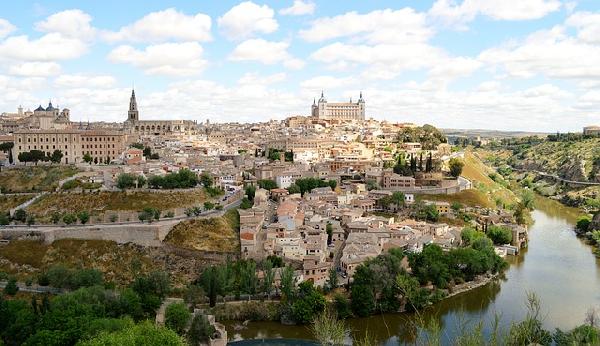
Perched on a hill overlooking the Tajo River, Toledo is a monumental city that served as a former capital of Spain. Known as the “City of Three Cultures” for its historical coexistence of Christian, Muslim, and Jewish communities, its well-preserved architecture tells a story of artistic and cultural fusion.
Transportation: Madrid to Toledo and Back
Toledo is an easy day trip from Madrid, approximately one hour away.
By High-Speed Train (AVE / Avant): The fastest and most comfortable option. Trains depart from Madrid’s Puerta de Atocha station and arrive at Toledo’s stunning modernist station. The journey takes about 30 minutes. It is highly recommended to book tickets in advance online.
By Bus: A more economical option. Buses operated by ALSA depart from Madrid’s Plaza Elíptica bus station and take about 1 to 1.5 hours, dropping you off near the city center.
By Car: Renting a car offers flexibility but navigating Toledo’s narrow, medieval streets can be challenging and parking is limited outside the city walls.
Getting Around Toledo: The city is best explored on foot. Be prepared for steep, cobbled streets. There are also public escalators that help transport visitors from the river level up to the main part of the old town.
Top Attractions in Toledo
Toledo Cathedral (Catedral Primada): A masterpiece of High Gothic architecture. Its interior is breathtaking, featuring an enormous altarpiece, the transparente (a Baroque alabaster window), El Greco’s famous painting The Disrobing of Christ, and a treasury filled with priceless artifacts.
Alcázar of Toledo: A massive square fortress that dominates the Toledo skyline. It now houses the Army Museum (Museo del Ejército), which details Spain’s military history.
Monastery of San Juan de los Reyes (Monasterio de San Juan de los Reyes): A stunning Isabelline Gothic monastery built by the Catholic Monarchs to commemorate their victory. The cloister is particularly beautiful.
Synagogue of Santa María la Blanca: A former synagogue built in 1180 under Moorish rule. Its interior is a stunning example of Mudejar architecture, with white walls, forest-like arches, and intricate stuccowork, showcasing the Jewish community’s prosperity and the blending of cultures.
El Greco Museum (Museo del Greco): Dedicated to the painter Doménikos Theotokópoulos, known as El Greco, who spent much of his life in Toledo. The museum recreates his home and displays a collection of his works.
Church of Santo Tomé: Home to El Greco’s most celebrated masterpiece, The Burial of the Count of Orgaz, a monumental painting that is a must-see for any art lover.
Toledo’s Local Specialties
Toledo’s cuisine is rich and heavily influenced by its hunting traditions and Moorish past.
Partridge Stew (Perdiz Estofado): The most iconic dish of Toledo, a slow-cooked game bird stew often prepared with wine and herbs.
Carcamusas: A humble but delicious pork stew with tomatoes, peas, and white wine, typically served as a tapa.
Marzipan (Mazapán): Toledo’s most famous sweet. This confection of almonds, sugar, and egg is crafted by local nuns into various shapes and is a traditional Christmas treat, though available year-round. Santo Tomé is a renowned brand to look for.
Manchego Cheese: Spain’s most famous cheese, made from sheep’s milk in the nearby region of La Mancha. It’s perfect with a glass of local wine.
A Sample One-Day Toledo Itinerary from Madrid
Morning: Take an early high-speed train from Madrid-Atocha to Toledo. Upon arrival, use the public escalators to enter the old town.
First Stop: Visit the breathtaking Toledo Cathedral to avoid the largest crowds.
Mid-Morning: Walk to the Church of Santo Tomé to see El Greco’s The Burial of the Count of Orgaz.
Lunch: Enjoy a traditional lunch of Partridge Stew or Carcamusas at a restaurant in the Jewish Quarter.
Afternoon: Explore the Synagogue of Santa María la Blanca and the Monastery of San Juan de los Reyes to appreciate the “City of Three Cultures.”
Late Afternoon: Stop by a marzipan shop like Santo Tomé for souvenirs before walking back to the station for your return train to Madrid.
Cultural Insights and Practical Tips
The Siesta and Meal Times
Understanding Spanish timetables is crucial. The siesta is less common in big cities like Madrid now, but many smaller shops may still close between 2:00 PM and 5:00 PM. Meal times are late: lunch is typically from 2:00 PM to 4:00 PM, and dinner is rarely before 9:00 PM, often starting at 10:00 PM.
The Art of Tapeo
Tapeo is not just eating; it’s a social ritual. It involves moving from bar to bar, having a small tapa and a drink (a caña – small beer, or a tinto de verano – red wine with soda) at each one. It’s acceptable to stand at the bar and your napkins or toothpicks are often counted at the end to calculate your bill.
Shopping and Souvenirs
Toledo: Look for damascene handicrafts (metal inlaid with gold or silver on black steel), marzipan, and swords (Toledo has been a center of sword-making for centuries).
Madrid: For food items, visit a specialty food market like Mercado de San Antón or Mercado de San Miguel. For fashion and gifts, explore the shops in Salamanca or the unique boutiques in Chueca.
A Note on Safety
Madrid and Toledo are generally very safe for tourists. However, as with any major tourist destination, it is important to be vigilant against pickpocketing, especially in crowded areas like Puerta del Sol, on public transport, and in busy markets. Keep valuables secure and out of sight.
A Perfect Fusion of Old and New
A journey from Madrid to Toledo offers an unparalleled glimpse into the soul of Spain. Madrid provides the dynamic pulse of contemporary Spanish life—its art, its food, its energy. Just a short journey away, Toledo offers a profound sense of history, a place where Christian, Muslim, and Jewish histories are woven into the very stones of its streets. Together, they create a complete and unforgettable Spanish travel experience.