A Comprehensive Travel Guide: Czech Republic, Austria, and Slovakia
This guide details a classic Central European itinerary, a circular route beginning and ending in Vienna. This journey connects the imperial grandeur of Austria with the fairy-tale charm of the Czech Republic and the understated appeal of Slovakia. Travelers will experience world-class music, breathtaking alpine landscapes, historic town centers, and rich culinary traditions.
Itinerary Overview
The proposed route is designed for efficiency and a gradual build-up of scenic beauty:
Vienna → České Budějovice → Český Krumlov → St. Wolfgang Lake District → Hallstatt → Salzburg → Mondsee → Melk → Vienna. This 10 to 14-day journey is best undertaken by a combination of train and bus, with occasional use of boats on the lakes.
Vienna, Austria: The Imperial Capital
Vienna, the starting point, is a city steeped in history, music, and art. As the former capital of the Habsburg Empire, its streets are lined with magnificent architecture, from Gothic cathedrals to Baroque palaces.
Key Attractions
Schönbrunn Palace: The former summer residence of the Habsburgs. Visitors can tour the opulent state rooms and wander through the vast, beautifully manicured gardens, which include a maze and the world’s oldest zoo.
St. Stephen’s Cathedral (Stephansdom): The magnificent Gothic cathedral is the symbol of Vienna. Climbing the South Tower offers a panoramic view of the city.
Belvedere Palace: A stunning Baroque palace complex housing an impressive art collection, including Gustav Klimt’s famous painting, “The Kiss.”
Vienna State Opera: One of the world’s leading opera houses. Attending a performance is a quintessential Viennese experience, but guided tours are also available.
Naschmarkt: Vienna’s most popular market, offering a vibrant mix of fresh produce, spices, cheeses, and international food stalls. It’s an ideal spot for lunch.
Food & Drink
Wiener Schnitzel: A thin, breaded, and fried veal cutlet, traditionally served with potato salad or parsley potatoes.
Sacher-Torte: A famous Viennese chocolate cake with a thin layer of apricot jam, invented at the Hotel Sacher.
Apfelstrudel: A classic pastry filled with warm, spiced apples, raisins, and breadcrumbs.
Viennese Coffee Culture: Spend an afternoon at a traditional coffee house like Café Central or Café Sacher, enjoying a Melange (espresso with steamed milk) and a slice of cake.
Transportation & Accommodation
Vienna has an excellent and efficient public transport system (U-Bahn, trams, buses). The Vienna City Card offers unlimited travel and discounts on attractions. For accommodation, the Innere Stadt (1st district) is central but expensive. More affordable options can be found in districts like Mariahilf or Leopoldstadt.
České Budějovice, Czech Republic: The Home of Budweiser
The first stop after leaving Vienna is this pleasant Czech city, known for its large central square and its famous brewery. It serves as a convenient gateway to Český Krumlov.
Key Attractions
Přemysl Otakar II Square: One of the largest square in Central Europe, surrounded by colorful Baroque burghers’ houses and the Town Hall with its ornate statues.
Black Tower (Černá věž): A 16th-century tower that provides a fantastic view over the city and the surrounding countryside.
Budweiser Budvar Brewery: Take a tour to see where the original Budweiser beer has been brewed since 1895. The tour concludes with a tasting of the fresh, unpasteurized lager.
Transportation from Vienna
The most direct route is by train or bus. The train journey takes approximately 3 hours with a change in Linz or Gmunden. Buses operated by companies like RegioJet or FlixBus are often faster and more direct, taking around 2.5 to 3 hours.
Český Krumlov, Czech Republic: The Fairy-Tale Town
A UNESCO World Heritage site, Český Krumlov is a breathtakingly beautiful town nestled in a loop of the Vltava River. Its historic center looks as if it has been preserved in a time capsule from the Renaissance era.
Key Attractions
Český Krumlov Castle: The second-largest castle complex in the Czech Republic. Highlights include the stunning Baroque theater, the Cloak Bridge, and the castle tower which offers iconic views of the town.
Old Town: A labyrinth of narrow, cobblestone lanes lined with historic houses, charming shops, and traditional pubs. The main square, Náměstí Svornosti, is the heart of the town.
Vltava River: Rafting or canoeing down the river is a popular activity, providing unique perspectives of the town and castle.
Egon Schiele Art Centrum: Dedicated to the famous Austrian painter Egon Schiele, who lived here for a time, as well as other 20th and 21st-century art.
Food & Drink
Traditional Czech Cuisine: Try dishes like Svíčková (marinated beef with a creamy vegetable sauce), Goulash, or Duck with cabbage and dumplings.
Trdelník: A sweet pastry cooked over an open fire and rolled in sugar and nuts. While popular with tourists, it’s a tasty treat.
Local Beer: Sample beers from local breweries like Eggenberg.
Transportation & Accommodation
České Budějovice to Český Krumlov is a short 30-45 minute bus ride. Buses are frequent and affordable. In Český Krumlov, the entire town is easily walkable. Accommodation ranges from pensions and guesthouses within the historic center to hotels on the outskirts. Booking in advance is essential during peak season.
St. Wolfgang Lake District & Hallstatt: Alpine Majesty
This leg of the journey enters the heart of Austria’s Salzkammergut region, famous for its pristine lakes and dramatic mountain scenery.
St. Wolfgang and the Schafbergbahn
The charming village of St. Wolfgang sits on the shore of the Wolfgangsee. Its main attraction is the Schafbergbahn, a historic cog railway that climbs to the summit of the Schafberg mountain (1,783m). The views from the top over the surrounding lakes and Alps are spectacular.
Hallstatt: A UNESCO Gem
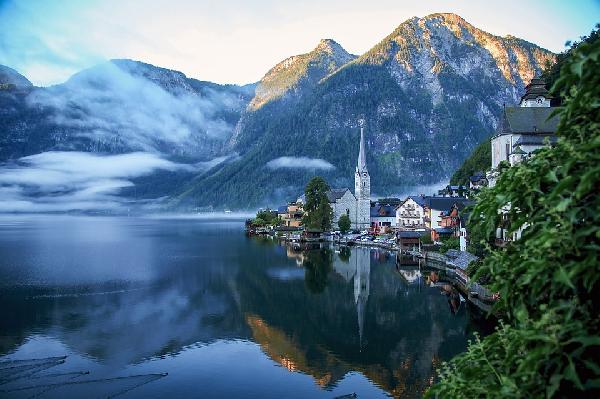
Hallstatt is a picture-perfect village nestled between the Hallstätter See and towering mountains. Its history is tied to salt mining, dating back thousands of years.
Hallstatt Skywalk “Welterbeblick”: A viewing platform located high above the town, accessible by funicular, offering breathtaking “postcard” views.
Salt Mine (Salzwelten): Take the funicular up and tour the world’s oldest salt mine, which includes wooden slides and an underground salt lake.
Bone House (Beinhaus): Located in St. Michael’s Chapel, this small charnel house contains painted skulls of former villagers, a unique local tradition.
Market Square (Marktplatz): The central square lined with 16th-century houses and offering direct access to the lake.
Transportation Between Towns
Traveling from Český Krumlov to this region requires careful planning. The most common route is by shuttle bus or public bus to Linz or Salzburg, then transferring to a train to Bad Ischl or Attnang-Puchheim, followed by a local train to St. Wolfgang or Hallstatt. From St. Wolfgang to Hallstatt, one can take a bus or a combination of bus and boat for a scenic journey.
Salzburg, Austria: The City of Music
Salzburg, the birthplace of Mozart and the setting for “The Sound of Music,” is a baroque city of immense cultural wealth.
Key Attractions
Hohensalzburg Fortress: One of the largest and best-preserved medieval castles in Europe. It towers over the city and can be reached on foot or by funicular.
Mirabell Palace and Gardens: The beautiful gardens are a UNESCO World Heritage site and feature prominently in “The Sound of Music.”
Getreidegasse: The city’s most famous shopping street, known for its ornate wrought-iron shop signs.
Mozart’s Birthplace (Geburtshaus): The house where Wolfgang Amadeus Mozart was born in 1756, now a museum dedicated to his life and work.
Salzburg Cathedral (Dom): A magnificent 17th-century Baroque cathedral in the heart of the old city.
Food & Drink
Salzburger Nockerl:A sweet soufflé dessert that is a signature dish of the city, meant to represent the three surrounding mountains.
Bosna:A popular street food consisting of a grilled sausage with curry powder, onions, and sauces in a bun.
Mozartkugeln (Mozart Balls): Marzipan, nougat, and dark chocolate balls named after the city’s famous son. The original is from confectioner Fürst.
Mondsee (Moon Lake) and Melk Abbey
The journey back towards Vienna includes two more stunning stops along the Austrian Danube.
Mondsee
The town of Mondsee sits on the shore of the lake of the same name. It is famously known as the filming location for the wedding scene in “The Sound of Music” at its beautiful Basilica of St. Michael. The town itself is charming and makes for a pleasant stop to enjoy the lakeside atmosphere.
Melk Abbey (Stift Melk)
A masterpiece of Baroque architecture, Melk Abbey is perched on a rocky outcrop overlooking the Danube River. The Benedictine abbey’s library and church are particularly opulent. It marks the western gateway to the Wachau Valley, a UNESCO cultural landscape known for its vineyards and charming towns like Dürnstein.
Transportation to Vienna
From Salzburg to Mondsee is a short train or bus ride. From Mondsee, travelers can take a bus to Melk. Finally, from Melk, there are frequent direct trains to Vienna’s Wien Hauptbahnhof (main station), with a journey time of approximately one hour.
Bratislava, Slovakia: A Capital Detour (Optional)
While not on the main itinerary listed, Bratislava, the capital of Slovakia, is only an hour from Vienna by train or boat. For travelers with extra time, it makes for an excellent day trip or overnight stop.
Bratislava Castle: The iconic four-towered castle overlooking the Danube River and the old town.
Old Town (Staré Mesto):A compact and lively historic center with charming squares, cafes, and quirky statues like Čumil (the “Man at Work”).
UFO Tower:A bridge tower with a flying-saucer-shaped observation deck offering 360-degree views of the city.
Practical Travel Tips
Best Time to Visit
Spring (April-June) & Autumn (September-October): Ideal weather, fewer crowds, and beautiful scenery (spring blooms or autumn colors).
Summer (July-August): Warm weather but also peak tourist season. Accommodation prices are at their highest, and popular sites can be very crowded.
Winter (December):Crowds thin out, and Christmas markets in Vienna, Salzburg, and Český Krumlov are magical. However, some attractions may have shorter hours.
Budgeting and Currency
Austria: Uses the Euro (€). It is generally the most expensive country on this itinerary.
Czech Republic: Uses the Czech Crown (CZK). Prices are more moderate than in Austria.
Slovakia: Uses the Euro (€). Generally more affordable than Austria.
Cultural Etiquette
- A simple greeting in the local language is appreciated: “Guten Tag” (German) or “Dobrý den” (Czech).
- Tipping is customary. In restaurants, it is common to round up the bill or leave 5-10% for good service.
- When entering someone’s home, a shop, or sometimes even a traditional restaurant, it is polite to offer a greeting.
Sustainable Travel
- The public transportation network in this region is excellent. Utilize trains and buses to minimize your carbon footprint.
- Crowding is a major issue in small towns like Hallstatt and Český Krumlov. Consider visiting outside peak hours (early morning or late afternoon) and staying overnight to support local businesses beyond day-tripping.
- Respect local customs and regulations, particularly regarding noise in residential areas and proper disposal of waste.
This Central European circuit offers an unforgettable journey through centuries of history, diverse cultures, and some of the continent’s most stunning natural landscapes. With careful planning and an open mind, travelers will discover the unique soul of this fascinating region.