A Catalan Journey: Barcelona, Tarragona, and Sitges
This travel guide outlines a classic and enriching loop through the heart of Catalonia, starting and ending in the vibrant metropolis of Barcelona, while diving into the ancient Roman history of Tarragona and the charming coastal allure of Sitges. This itinerary offers a perfect blend of urban energy, profound history, and Mediterranean relaxation.
Barcelona: The Capital of Catalan Modernism
Barcelona is a city that needs no introduction. A pulsating hub of art, architecture, gastronomy, and beach life, it serves as the ideal starting point for your adventure. The city’s unique character is defined by the fantastical works of Antoni Gaudí and the lively, sprawling boulevard of La Rambla.
Key Attractions in Barcelona
La Sagrada Família: Gaudí’s unfinished masterpiece is more than a church; it is the symbol of Barcelona. The sheer scale and detail of the facades, representing the Nativity, Passion, and Glory, are breathtaking. Inside, the forest-like columns and the kaleidoscopic effect of the stained-glass windows create an ethereal atmosphere. Tip: Book tickets online well in advance to skip the massive queues and choose a time slot for optimal light.
Park Güell: A public park that feels like a fairy-tale world. Originally designed as a housing estate, it is now a UNESCO World Heritage Site. Explore the iconic mosaic dragon, the serpentine bench on the main terrace offering panoramic city views, and the colonnaded market hall. Insight: The “Monumental Zone” requires a timed ticket, but much of the park is free to access.
Gothic Quarter (Barri Gòtic): Get lost in the narrow, winding medieval streets of the city’s oldest quarter. Discover remnants of the Roman wall, the impressive Barcelona Cathedral, and hidden plazas like Plaça Reial. This area is best explored on foot without a strict plan.
Casa Batlló & La Pedrera: Two more of Gaudí’s residential wonders on the prestigious Passeig de Gràcia. Casa Batlló, with its skeletal organic facade, and La Pedrera (Casa Milà), with its undulating stone exterior and surreal rooftop chimney park, showcase his unparalleled imagination.
La Boqueria Market (Mercat de Sant Josep): A sensory overload in the best way possible. This famous market off La Rambla is a vibrant spectacle of fresh produce, juices, Iberian ham, cheese, and seafood. Tip: Go early to avoid the worst crowds and enjoy a fresh oyster and cava at one of the central bars.
Food & Drink in Barcelona
Catalan cuisine is robust and diverse. Must-try dishes include
“pa amb tomàquet” (bread rubbed with tomato and garlic), “calçots” (seasonal grilled spring onions with romesco sauce), and various seafood and rice dishes. Tapas hopping is a way of life. For a more formal meal, seek out a “Menú del Día” (Menu of the Day) for a great-value lunch. Don’t miss trying Cava, Catalonia’s excellent sparkling wine.
Transportation in Barcelona
Barcelona has an excellent and efficient public transport system. The
T-casual card offers 10 journeys on metro, buses, and trains within Zone 1 and is highly cost-effective. The metro is the fastest way to cover long distances, while buses often provide more scenic routes. For getting to and from the airport, the Aerobús is a dedicated and frequent shuttle service.
Tarragona: A Walk Through Roman History
A short train ride south of Barcelona lies Tarragona, a city where ancient history is woven into the modern urban fabric. Once the capital of Roman Hispania, Tarragona boasts some of the most significant Roman ruins outside Italy, all designated as a UNESCO World Heritage Site.
Key Attractions in Tarragona
The Roman Amphitheatre: Dramatically situated by the Mediterranean Sea, this 2nd-century amphitheatre was where gladiators fought. The setting is spectacular, with views of the sea from the stone tiers. You can also see the remains of a Visigothic basilica and a Romanesque church within the same complex.
Prat de la Riba Archaeological Walk: This elevated pathway takes you past a remarkable section of the Roman Circus, where chariot races were held. You can see the vaults that supported the seating and explore the interior passages, offering a real sense of the structure’s immense scale.
The Provincial Forum: Once the administrative heart of the Roman province, this site features the remains of a vast square surrounded by basilicas and temples. The scale of the columns gives a hint of its former grandeur.
The Cathedral: Located in the highest part of the old town, Tarragona’s Cathedral is a beautiful blend of Romanesque and Gothic architecture. The cloister is particularly lovely, with intricate carvings and a peaceful atmosphere.
The Balcony of the Mediterranean (Balcó del Mediterrani): A wrought-iron railing overlooking the sea and the city’s main beach, Platja del Miracle. Local tradition says touching the railing brings good luck.
Food & Culture in Tarragona
Tarragona’s cuisine is heavily influenced by its Roman past and its location on the “Costa Daurada” (Golden Coast). Look for
“romesco” sauce, which originates from nearby Tarragona province, perfect with fish. The seafood, especially bluefish and shellfish, is exceptional. The city is also known for its vibrant human tower building competitions, known as “Castells”. Check local listings to see if any performances are scheduled during your visit.
Getting from Barcelona to Tarragona
The most convenient way to travel is by train. Regional (Rodalies) trains (R14 line) depart frequently from Barcelona-Sants or Passeig de Gràcia stations. The journey takes about 1 hour to 1 hour 30 minutes. High-speed (AVE/MD) trains are faster (around 30 minutes) but depart from Barcelona-Sants and arrive at Camp de Tarragona station, which is further from the city center.
Sitges: The Charming Coastal Getaway
Located halfway between Tarragona and Barcelona, Sitges provides a perfect contrast to the historical weight of Tarragona. This elegant coastal town is known for its beautiful beaches, charming old quarter, vibrant festival culture, and its status as a welcoming and liberal hotspot.
Key Attractions in Sitges
The Old Town (Casc Antic): A labyrinth of narrow, white-washed streets leading down to the sea. It’s filled with boutique shops, art galleries, and cozy restaurants. It’s a delight to wander through without a specific destination.
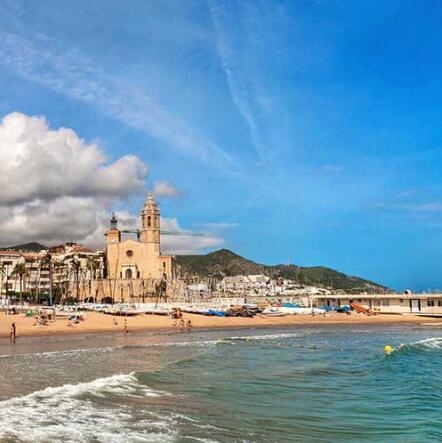
Sant Bartomeu & Santa Tecla Church: The iconic seafront church that dominates Sitges’ skyline. Perched on a promontory, it offers stunning views of the coastline and is particularly beautiful at sunset.
The Beaches: Sitges boasts 17 beaches along its coastline. The central beaches like “Platja de Sant Sebastià” are lively and easily accessible. For a more relaxed atmosphere, walk west to “Platja de la Barra” or “Platja Balmins”.
Cau Ferrat Museum: The former home-workshop of artist Santiago Rusiñol, a key figure in Catalan Modernism. The museum houses his collection of art, including works by El Greco and Picasso, as well as ancient forged iron pieces.
The Maricel Museum: Located next to Cau Ferrat, this museum offers a comprehensive collection of art from the 10th to the 20th century in beautifully arranged rooms that overlook the sea.
Food & Vibe in Sitges
Sitges has a sophisticated dining scene. Being a coastal town, seafood is paramount. Try “xató,” a local salad with codfish, tuna, anchovies, and a special romesco-like sauce. The town is famous for its nightlife and festivals, most notably the Sitges Film Festival (focusing on fantasy and horror films) and its extravagant Carnival celebrations, which are among the best in Spain.
Getting from Tarragona to Sitges
The train is again the best option. Take a regional (Rodalies) train from Tarragona station heading north towards Barcelona. Sitges is a stop on this line (R2S). The journey takes approximately 45-60 minutes. The train station in Sitges is a short 10-minute walk from the old town and beaches.
The Return to Barcelona from Sitges
The journey from Sitges back to Barcelona is straightforward and quick. Regional trains (R2S line) run very frequently from Sitges to Barcelona-Sants, Passeig de Gràcia, and Estació de França. The ride takes only about 35-45 minutes, making it an effortless conclusion to your loop.
Practical Travel Tips for Your Journey
Best Time to Visit: Late spring (May-June) and early autumn (September-October) offer ideal weather—warm and sunny without the intense heat and crowds of July and August.
Accommodation: Base yourself in Barcelona for the entire trip as it’s the main transport hub. Day trips to Tarragona and Sitges are perfectly manageable. However, staying a night in Tarragona allows for a more relaxed exploration.
The Train Network: The Rodalies de Catalunya network is your best friend for this itinerary. Purchase a T-casual card in Barcelona; it can be used for all regional train journeys within its designated zones (this trip falls within Zone 1 to 4, but a T-casual from Barcelona covers it). It’s much cheaper than buying individual point-to-point tickets.
Language: The official languages are Catalan and Spanish (Castellano). While English is widely spoken in tourist areas, learning a few basic phrases in Catalan or Spanish (like “Bon dia” / “Buenos días” for good morning, “Gràcies” / “Gracias” for thank you) is greatly appreciated.
Safety: Catalonia is generally very safe. However, as in any major tourist destination, be vigilant against pickpocketing, especially in crowded areas like La Rambla, on public transport, and at the beach. Keep valuables secure and out of sight.
Pacing Your Trip: This itinerary can be done over 4-5 days: 2-3 days for Barcelona, 1 day for Tarragona, and 1 day for Sitges. Adjust based on your personal travel style.
This journey from Barcelona to Tarragona to Sitges encapsulates the very essence of Catalonia: its boundless creativity, its layered history etched in stone, and its deep connection to the sun-drenched Mediterranean coast.